
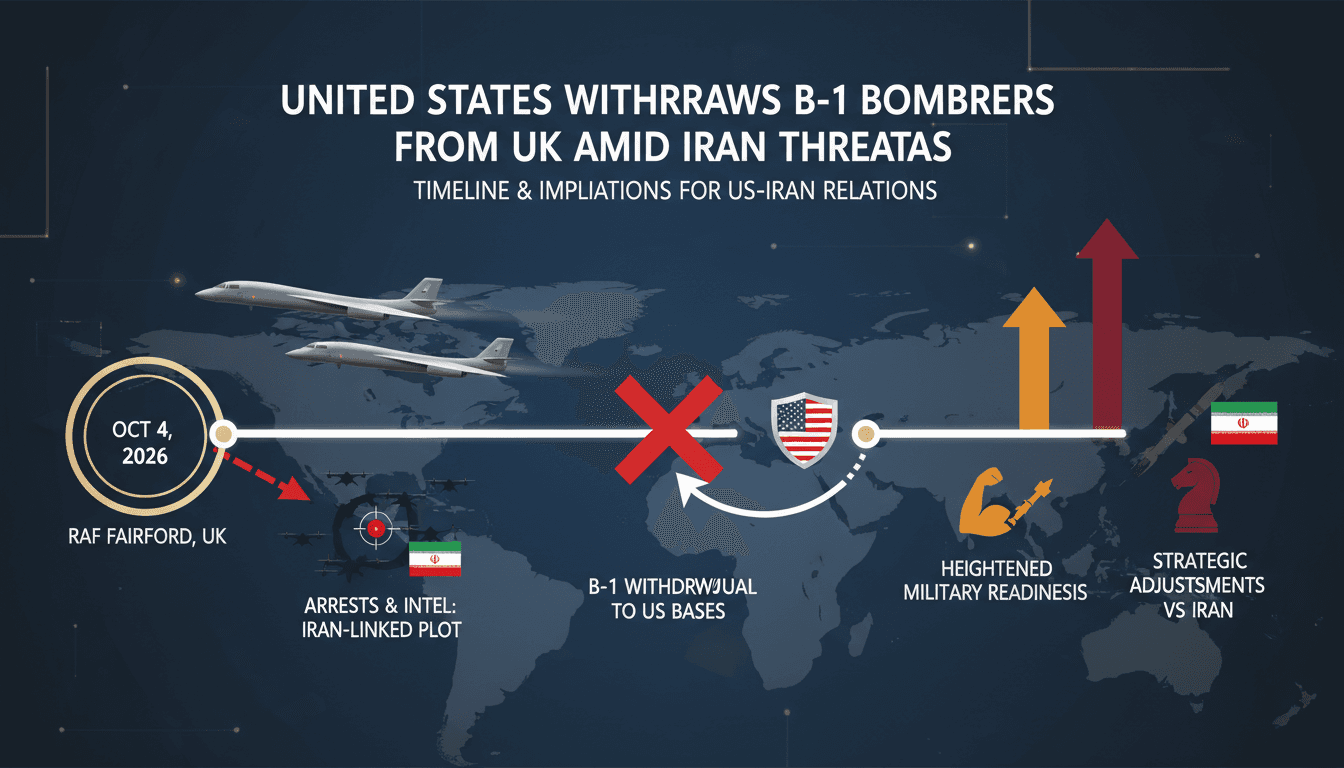
United States Withdraws B-1 Bombers from UK Base Amid Iran-Linked Security Threats
Why it matters
This withdrawal reflects heightened tensions in U.S.-Iran relations, impacting military readiness and geopolitical stability.
What happened (in 30 seconds)
- On October 4, 2026, the U.S. withdrew all 12 B-1 Lancer bombers from RAF Fairford, UK.
- This decision followed arrests related to a suspected Iran-linked plot involving drones near the base.
- The Pentagon described the move as a precautionary measure amid ongoing military operations against Iranian targets.
The context you actually need
- The B-1 bombers were previously deployed to support U.S. strikes on Iranian missile sites threatening shipping in the Strait of Hormuz.
- Security incidents on September 27, including arrests of five men, raised alarms about potential threats to U.S. forces.
- Intelligence reports indicated an imminent drone threat linked to Iran, prompting a rapid and unplanned withdrawal of military assets.
What's really happening
The U.S. withdrawal of B-1 bombers from RAF Fairford is a direct response to escalating security threats linked to Iran. This decision was not made lightly; it reflects a complex interplay of intelligence assessments, operational security, and geopolitical strategy. The arrests near the base on September 27 highlighted vulnerabilities that U.S. forces face in foreign deployments, particularly in regions with heightened tensions.
The B-1 bombers were stationed in the UK as part of a broader strategy to deter Iranian aggression, particularly in the Strait of Hormuz, a critical maritime route for global oil shipments. The presence of these bombers was intended to project power and reassure allies in Europe and the Middle East. However, the recent intelligence indicating a potential drone threat, reminiscent of previous Iranian operations, necessitated a swift reassessment of operational security.
The Pentagon's decision to withdraw the bombers underscores a shift in military posture, prioritizing the safety of personnel and assets over maintaining a forward presence. This move, while precautionary, signals to both allies and adversaries that the U.S. is responsive to emerging threats, even if it means temporarily reducing its military footprint in strategic locations.
Moreover, the diplomatic fallout from this incident is significant. Iran's denial of involvement and the summoning of the British ambassador indicate a potential escalation in rhetoric, which could further complicate U.S.-Iran relations. The U.S. government, led by President Donald Trump, has framed the withdrawal as a necessary precaution, but it also raises questions about the effectiveness of current strategies to contain Iranian influence.
In the broader context, this incident may influence military planning and resource allocation within the U.S. Department of Defense. As threats evolve, the U.S. may need to reconsider its deployment strategies, potentially leading to increased military presence in other regions or a shift towards more flexible, rapid-response capabilities.
Who feels it first (and how)
- Military personnel stationed at RAF Fairford, facing increased operational risks.
- Defense contractors involved in U.S. military operations, potentially seeing shifts in contracts and resource allocation.
- International businesses operating in or near conflict zones, facing heightened security concerns and potential disruptions.
- Geopolitical analysts and policymakers, needing to reassess strategies in light of changing military dynamics.
What to watch next
- Future intelligence reports on Iranian activities, as they will shape U.S. military responses and strategic planning.
- Diplomatic exchanges between the U.S., UK, and Iran, which could indicate shifts in regional stability and security policies.
- Military redeployments or adjustments in U.S. forces in response to evolving threats, impacting global military presence and readiness.
The U.S. has withdrawn all B-1 bombers from RAF Fairford.
Increased scrutiny on U.S.-Iran relations and potential military adjustments in response to threats.
The long-term implications for U.S. military strategy in Europe and the Middle East.
Frequently Asked Questions
- Why it matters?
- This withdrawal reflects heightened tensions in U.S.-Iran relations, impacting military readiness and geopolitical stability.
- What happened (in 30 seconds)?
- On October 4, 2026, the U.S. withdrew all 12 B-1 Lancer bombers from RAF Fairford, UK. This decision followed arrests related to a suspected Iran-linked plot involving drones near the base. The Pentagon described the move as a precautionary measure amid ongoing military operations against Iranian targets.
- What's really happening?
- The U.S. withdrawal of B-1 bombers from RAF Fairford is a direct response to escalating security threats linked to Iran. This decision was not made lightly; it reflects a complex interplay of intelligence assessments, operational security, and geopolitical strategy. The arrests near the base on September 27 highlighted vulnerabilities that U.S. forces face in foreign deployments, particularly in regions with heightened tensions. The B-1 bombers were stationed in the UK as part of a broader stra
- Who feels it first (and how)?
- Military personnel stationed at RAF Fairford, facing increased operational risks. Defense contractors involved in U.S. military operations, potentially seeing shifts in contracts and resource allocation. International businesses operating in or near conflict zones, facing heightened security concerns and potential disruptions. Geopolitical analysts and policymakers, needing to reassess strategies in light of changing military dynamics.
- What to watch next?
- Future intelligence reports on Iranian activities, as they will shape U.S. military responses and strategic planning. Diplomatic exchanges between the U.S., UK, and Iran, which could indicate shifts in regional stability and security policies. Military redeployments or adjustments in U.S. forces in response to evolving threats, impacting global military presence and readiness.
Arabic-language coverage of international news and geopolitics.
"RT Arabic is a Russian state-funded outlet often criticized for promoting Kremlin-aligned narratives."
— A47 Editor
واشنطن تسحب قاذفات "بي-1" من بريطانيا
Washington has withdrawn its B-1 bombers stationed at Fairford Air Base, located northwest of London, and returned them to one of its bases in the United States, according to a Pentagon official reported by Reuters.
Arabic-language political and world news coverage for UAE readers.
"Emarat Al Youm world coverage usually presents international developments through a UAE and Arab audience lens."
— A47 Editor
الولايات المتحدة تسحب كل قاذفاتها من قاعدة فيرفورد البريطانية الولايات المتحدة تسحب كل قاذفاتها من قاعدة فيرفورد البريطانية
The United States confirmed on Sunday that it has withdrawn all of its bombers from the RAF Fairford base in the UK, following recent developments in the region. This move marks a significant shift in the U.S. military presence in Europe, particularl...
Arabic-language reporting on global and regional news.
"BBC Arabic is part of the BBC, generally regarded for editorial standards and broad international coverage."
— A47 Editor
الولايات المتحدة تسحب جميع قاذفاتها من قاعدة "فيرفورد" الجوية البريطانية
The United States has withdrawn all of its bombers from the British airbase of Fairford, a decision reported to be military rather than political, made at the operational level and communicated by the U.S. military to its British counterpart.
Pan-Arab political news and analysis.
"Al-Quds Al-Arabi is a London-based Arabic newspaper known for political coverage."
— A47 Editor
واشنطن تسحب جميع قاذفاتها المتمركزة في قاعدة فيرفورد البريطانية
The U.S. Air Force has withdrawn all bombers stationed at the Fairford military base in England, which were utilized for potential strikes against Iran, following an investigation into a terrorist attack targeting the Royal Air Force base. The bomber...
Arabic-language coverage of international news and geopolitics.
"RT Arabic is a Russian state-funded outlet often criticized for promoting Kremlin-aligned narratives."
— A47 Editor
أمريكا تجلي نصف قاذفات "بي-1 لانسر" الاستراتجية من قاعدة "فيرفورد" البريطانية
American strategic bombers of the B-1 Lancer model have been observed departing from the RAF Fairford base in the UK, indicating the conclusion of a temporary deployment or a repositioning of forces. This movement reflects ongoing adjustments in mili...