
Israel Expands Military Infrastructure in Southern Quneitra, Syria
Why it matters
The Sufa 53 project represents a significant shift in Israeli military strategy, potentially altering the balance of power in the region.
What happened (in 30 seconds)
- On October 4, 2026, Israeli forces resumed construction on the Sufa 53 military engineering project in southern Quneitra, Syria.
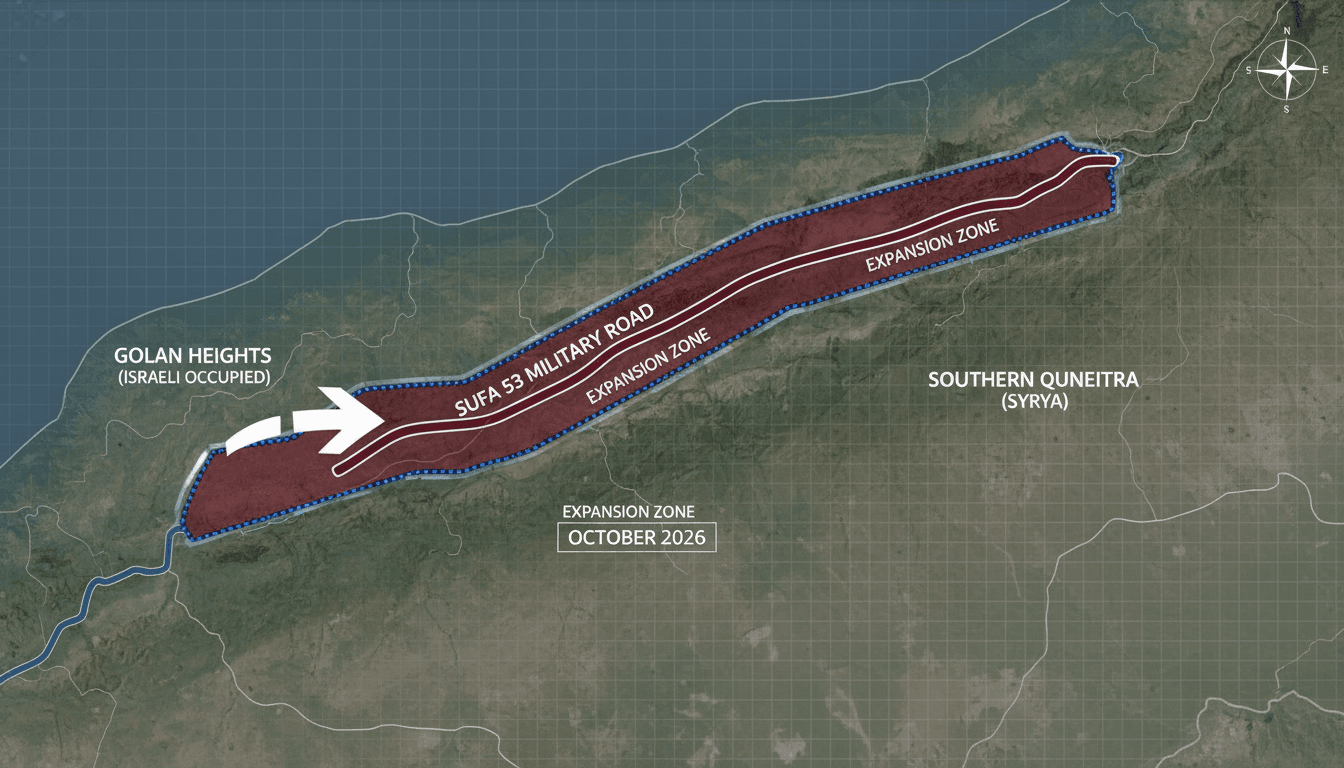
- The initiative involves an 8-meter-wide military road with 5-meter-high earth berms and trenches, transforming the buffer zone into a controlled security belt.
- Syrian military sources view this expansion as a move from isolated fortifications to a connected infrastructure for enhanced surveillance and control.
The context you actually need
- The Sufa 53 project began in mid-2022 and has gradually expanded southward, now covering approximately 70 kilometers.
- Following the collapse of the Assad regime in December 2024, Israeli military operations intensified, leading to increased incursions into the UN-monitored buffer zone.
- Syrian assessments frame the project as a response to perceived threats, viewing it as a shift from separation to an Israeli-controlled security corridor.
What's really happening
The Sufa 53 project is a strategic military initiative by Israel aimed at enhancing its operational capabilities along the Golan Heights border with Syria. Initiated in mid-2022, the project has evolved from isolated fortifications to a comprehensive network of military infrastructure designed to facilitate rapid movement, surveillance, and control over the region.
As of October 2026, Israeli forces have resumed excavation and construction activities, focusing on areas west of Al-Asha and Al-Rafid, moving toward the Yarmouk basin. This expansion includes the establishment of an 8-meter-wide military road, flanked by 5-meter-high earth berms and trenches, which serve as both defensive structures and observation posts. The infrastructure now spans approximately 70 kilometers, functioning as a de facto second control line parallel to the 1974 separation line established by the Disengagement of Forces Agreement.
The implications of this project are significant. By transforming the buffer zone into a controlled security belt, Israel is not only enhancing its military presence but also altering the operational landscape in southern Syria. This shift allows for greater surveillance capabilities and rapid response to any perceived threats from Syrian territory. The Syrian military and security sources have condemned these developments, framing them as a violation of international agreements and a direct threat to Syrian sovereignty.
The expansion of the Sufa 53 project follows a broader trend of increased Israeli military activity in the region, particularly after the fall of the Assad regime. This has led to a re-evaluation of security strategies among neighboring countries, including Jordan and Qatar, which have expressed concerns over the creation of a new de facto line of control. The Syrian Foreign Ministry has called for international intervention to halt these activities, highlighting the potential for escalating tensions in an already volatile region.
In summary, the Sufa 53 project is not merely a military engineering initiative; it represents a strategic recalibration by Israel in response to changing geopolitical dynamics. The establishment of a connected infrastructure within the buffer zone could have far-reaching consequences for regional stability and security.
Who feels it first (and how)
- Local Syrian communities: Increased military presence may lead to heightened tensions and instability in the region.
- Israeli Defense Forces: Enhanced operational capabilities and control over the Golan Heights.
- Regional governments: Countries like Jordan and Qatar may need to reassess their security strategies in response to the new Israeli military posture.
What to watch next
- International diplomatic responses: Monitor how global powers react to Israel's expansion and whether any sanctions or resolutions are proposed.
- Military movements: Keep an eye on further Israeli military activities in the region, particularly any escalations or new infrastructure developments.
- Syrian government actions: Watch for potential military or diplomatic responses from Syria, including calls for international intervention.
The Sufa 53 project is ongoing and expanding.
Increased tensions between Israel and Syria, with potential international diplomatic fallout.
The long-term impact on regional stability and security dynamics.
Frequently Asked Questions
- Why it matters?
- The Sufa 53 project represents a significant shift in Israeli military strategy, potentially altering the balance of power in the region.
- What happened (in 30 seconds)?
- On October 4, 2026, Israeli forces resumed construction on the Sufa 53 military engineering project in southern Quneitra, Syria. The initiative involves an 8-meter-wide military road with 5-meter-high earth berms and trenches, transforming the buffer zone into a controlled security belt. Syrian military sources view this expansion as a move from isolated fortifications to a connected infrastructure for enhanced surveillance and control.
- What's really happening?
- The Sufa 53 project is a strategic military initiative by Israel aimed at enhancing its operational capabilities along the Golan Heights border with Syria. Initiated in mid-2022, the project has evolved from isolated fortifications to a comprehensive network of military infrastructure designed to facilitate rapid movement, surveillance, and control over the region. As of October 2026, Israeli forces have resumed excavation and construction activities, focusing on areas west of Al-Asha and Al-R
- Who feels it first (and how)?
- Local Syrian communities: Increased military presence may lead to heightened tensions and instability in the region. Israeli Defense Forces: Enhanced operational capabilities and control over the Golan Heights. Regional governments: Countries like Jordan and Qatar may need to reassess their security strategies in response to the new Israeli military posture.
- What to watch next?
- International diplomatic responses: Monitor how global powers react to Israel's expansion and whether any sanctions or resolutions are proposed. Military movements: Keep an eye on further Israeli military activities in the region, particularly any escalations or new infrastructure developments. Syrian government actions: Watch for potential military or diplomatic responses from Syria, including calls for international intervention.
Arabic political reporting and analysis.
"Arabic Post is a digital outlet focused on politics and regional affairs."
— A47 Editor
“سوفا 53” يتجه جنوباً.. مصادر تكشف كيف تتوسع إسرائيل على حدود سوريا وإقامتها حزاماً أمنياً
Israel has resumed excavation and land clearing activities as part of the 'Sufa 53' project in southern Quneitra, with military and engineering vehicles moving towards the Yarmouk Basin, marking a significant expansion of operations that began in nor...
Arabic-language coverage of international news and geopolitics.
"RT Arabic is a Russian state-funded outlet often criticized for promoting Kremlin-aligned narratives."
— A47 Editor
سوريا تدين "الانتهاكات الإسرائيلية" واستكمال العمل فيما يسمى "خط سوفا 53" بريف القنيطرة
Syria has condemned in the strongest terms the violations committed by Israeli forces, particularly the recent completion of work on what is referred to as 'Sufa Line 53' in the Quneitra countryside, which constitutes a blatant violation of internati...
Arabic-language coverage of political affairs and current events.
"Okaz political coverage typically follows mainstream Saudi framing on national and regional affairs."
— A47 Editor
ماهو مشروع «سوفا 53» الإسرائيلي في الجولان؟
Israeli forces resumed excavation work on the 'Sofa 53' project in southern Quneitra, with reports of military incursions in the villages of Saida and Abidin in western Daraa. The project, which began in mid-2022, involves constructing an eight-meter...