
Abu Dhabi Court Orders Husband to Reimburse Wife Dh300,000 for Family Expenses
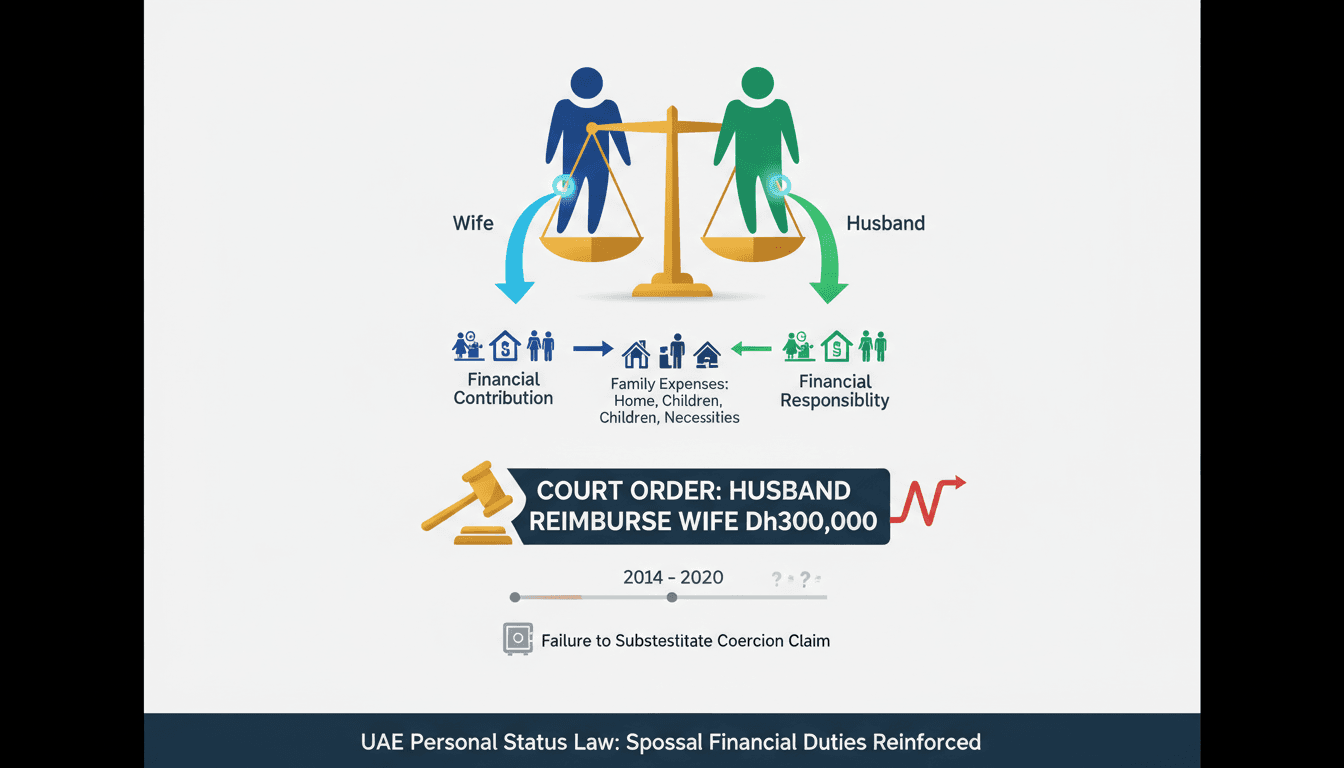
Why it matters
This case reinforces the legal framework surrounding spousal financial responsibilities, impacting family law practices across the UAE.
What happened (in 30 seconds)
- On October 14, 2026, the Abu Dhabi Family, Civil and Administrative Claims Court ordered a husband to reimburse his wife Dh300,000 for family expenses she covered alone.
- The ruling confirmed the validity of a signed promissory note acknowledging the debt, rejecting the husband's claim of coercion.
- This judgment highlights the enforcement of financial responsibilities under UAE personal status law, particularly regarding family maintenance.
The context you actually need
- UAE personal status law mandates that husbands are primarily responsible for family maintenance, including living expenses and child support.
- The wife in this case assumed these financial obligations during the husband's documented financial difficulties from 2014 to mid-2020.
- The promissory note served as a formal acknowledgment of the husband's debt, which the court upheld as valid and enforceable.
What's really happening
The Abu Dhabi Family Court's ruling is a significant affirmation of spousal financial responsibilities under UAE law. The case centers on a promissory note, a legal instrument that serves as a written acknowledgment of a debt. In this instance, the husband had signed the note, which documented his obligation to reimburse his wife for Dh300,000 in family expenses incurred during a period of financial hardship from 2014 to mid-2020.
The court's decision to uphold the promissory note indicates a strong judicial stance on enforcing financial agreements between spouses. By rejecting the husband's claim of coercion, the court emphasized the importance of personal accountability in financial matters. This ruling not only reinforces the legal validity of such agreements but also sets a precedent for future cases involving spousal debts and financial responsibilities.
Under UAE personal status law, the husband is primarily responsible for family maintenance, which includes housing, living expenses, and child support. The wife's assumption of these responsibilities during her husband's financial difficulties illustrates a common scenario in family law disputes. The court's ruling serves as a reminder that financial obligations cannot be easily dismissed or ignored, even in the context of personal relationships.
This case also highlights the broader implications for family law in the UAE. As more couples navigate financial challenges, the enforcement of promissory notes and similar agreements may become increasingly relevant. Legal practitioners and family law experts will likely pay close attention to this ruling as it may influence future cases and the interpretation of spousal financial responsibilities.
Moreover, the ruling could have a ripple effect on how financial disputes are resolved in family courts across the UAE. It underscores the necessity for clear documentation of financial agreements between spouses, as well as the importance of understanding one's legal rights and obligations in the context of family law.
Who feels it first (and how)
- Married couples: Particularly those facing financial difficulties, as they may need to navigate similar legal obligations.
- Legal professionals: Family law attorneys will need to adapt their practices to align with this ruling and its implications.
- Financial advisors: They may need to educate clients on the importance of formalizing financial agreements within marriages.
What to watch next
- Increased legal clarity: Watch for more cases that may further define spousal financial responsibilities under UAE law.
- Potential legislative changes: Monitor any discussions around amending personal status laws to address evolving family dynamics and financial obligations.
- Public awareness campaigns: Look for initiatives aimed at educating couples about their financial rights and responsibilities in marriage.
The court upheld the promissory note as valid and enforceable.
Similar cases may arise, leading to further clarification of spousal financial obligations.
The long-term impact on family law practices and potential legislative changes in the UAE.
Frequently Asked Questions
- Why it matters?
- This case reinforces the legal framework surrounding spousal financial responsibilities, impacting family law practices across the UAE.
- What happened (in 30 seconds)?
- On October 14, 2026, the Abu Dhabi Family, Civil and Administrative Claims Court ordered a husband to reimburse his wife Dh300,000 for family expenses she covered alone. The ruling confirmed the validity of a signed promissory note acknowledging the debt, rejecting the husband's claim of coercion. This judgment highlights the enforcement of financial responsibilities under UAE personal status law, particularly regarding family maintenance.
- What's really happening?
- The Abu Dhabi Family Court's ruling is a significant affirmation of spousal financial responsibilities under UAE law. The case centers on a promissory note, a legal instrument that serves as a written acknowledgment of a debt. In this instance, the husband had signed the note, which documented his obligation to reimburse his wife for Dh300,000 in family expenses incurred during a period of financial hardship from 2014 to mid-2020. The court's decision to uphold the promissory note indicates a s
- Who feels it first (and how)?
- Married couples: Particularly those facing financial difficulties, as they may need to navigate similar legal obligations. Legal professionals: Family law attorneys will need to adapt their practices to align with this ruling and its implications. Financial advisors: They may need to educate clients on the importance of formalizing financial agreements within marriages.
- What to watch next?
- Increased legal clarity: Watch for more cases that may further define spousal financial responsibilities under UAE law. Potential legislative changes: Monitor any discussions around amending personal status laws to address evolving family dynamics and financial obligations. Public awareness campaigns: Look for initiatives aimed at educating couples about their financial rights and responsibilities in marriage.
English-language coverage focused on UAE news, government updates, and domestic affairs.
"Emirates 24|7 reflects a mainstream UAE editorial perspective with strong emphasis on official and domestic developments."
— A47 Editor
Abu Dhabi court orders husband to pay wife Dh300,000 for six years of family expenses she covered alone
The Abu Dhabi Family, Civil and Administrative Court has ordered a husband to pay his wife Dh300,000 after she covered the family's living expenses for six years during his financial incapacity. The court emphasized that the husband's acknowledgment ...
Arabic-language local coverage focused on UAE domestic issues, civic affairs, and community reporting.
"Emarat Al Youm local coverage emphasizes UAE institutions, public services, and community-level developments."
— A47 Editor
إلزام زوج بردّ 300 ألف درهم لزوجته أنفقتها على الأسرة خلال عجزه المالي إلزام زوج بردّ 300 ألف درهم لزوجته أنفقتها على الأسرة خلال عجزه المالي
The Abu Dhabi Family and Civil Administrative Court has ordered a husband to repay 300,000 dirhams to his wife, an amount she spent on the family during his financial difficulties. The husband acknowledged the debt in a promissory note but claimed he...
Arabic-language local coverage focused on UAE domestic issues, civic affairs, and community reporting.
"Emarat Al Youm local coverage emphasizes UAE institutions, public services, and community-level developments."
— A47 Editor
رجل يطالب باستعادة 1.13 مليون درهم من امرأة وعدته بالزواج رجل يطالب باستعادة 1.13 مليون درهم من امرأة وعدته بالزواج
A Dubai civil court has rejected a man's lawsuit seeking the return of 1.13 million dirhams from a woman who had promised to marry him. The court's decision was based on evidence suggesting that the money was intended as a gift rather than a loan.