
U.S. Government Imposes Restrictions on SpaceX's Starshield Services for Ukraine
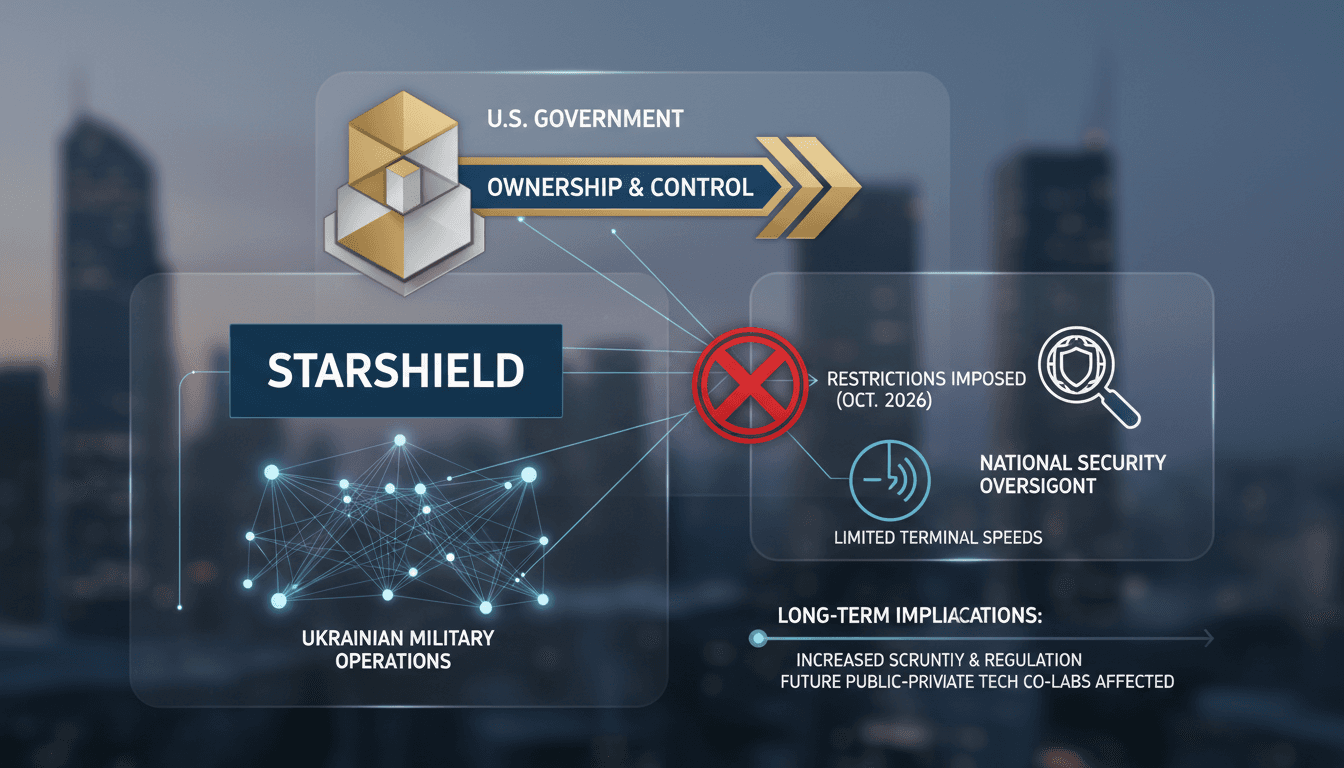
Why it matters
The operational control of Starshield by the U.S. government raises questions about the reliability and accessibility of satellite communications for allied forces.
What happened (in 30 seconds)
- Restrictions imposed: In October 2026, Ukrainian military terminals faced sudden speed limitations under 100 mph, impacting their operations.
- Government control: Elon Musk confirmed that Starshield is owned and controlled by the U.S. government, with operational decisions made by military authorities.
- Continued support: Despite restrictions, the UK government continues to invest in Starshield terminals for enhanced military capabilities.
The context you actually need
- Starshield's inception: Launched in late 2022, Starshield was developed as a secure satellite network for government use, building on the existing Starlink infrastructure.
- U.S. investment: The U.S. government has invested billions into Starshield, emphasizing its importance for national security and military operations.
- Operational differences: Unlike commercial Starlink, Starshield incorporates high-assurance cryptography and mission-specific payloads, making it a critical asset for defense.
What's really happening
Starshield represents a strategic pivot in how satellite communications are utilized for national security. Developed by SpaceX, it leverages the existing Starlink infrastructure but is tailored for government and military applications. This includes enhanced encryption and specialized payloads for communications and reconnaissance. The recent restrictions on Ukrainian military terminals highlight the delicate balance between operational support and government oversight.
The U.S. government’s ownership and control over Starshield mean that operational decisions are not solely in the hands of SpaceX but are subject to military directives. This was made clear when Elon Musk stated that any limitations on service, such as the speed caps imposed on Ukrainian terminals, are determined by U.S. defense leadership. The implications of this control are significant: while Starshield provides advanced capabilities for allied forces, it also introduces a layer of dependency on U.S. military decisions.
The restrictions imposed in October 2026 were reportedly sudden and without prior notice, causing disruptions to Ukrainian military operations that rely heavily on satellite communications for drone and defense activities. This incident underscores the potential volatility of relying on a government-controlled satellite network, where operational capabilities can be altered based on strategic considerations.
Moreover, the U.S. government’s substantial investment in Starshield—amounting to billions—indicates a long-term commitment to enhancing military communications and intelligence capabilities. This investment is not just about technology; it reflects a broader strategy to ensure that allied forces have access to secure and reliable communication channels in conflict zones.
As the geopolitical landscape evolves, the operational dynamics of Starshield will likely continue to shift, influenced by military needs and international relations. The recent restrictions serve as a reminder that while advanced technology can enhance military effectiveness, it also comes with inherent risks related to control and accessibility.
Who feels it first (and how)
- Ukrainian military: Directly impacted by the speed restrictions, affecting operational capabilities.
- U.S. defense contractors: Companies involved in satellite technology and military communications may see shifts in contracts and funding.
- Allied governments: Nations relying on Starshield for military operations must navigate the implications of U.S. control over the network.
What to watch next
- Future restrictions: Monitor any further changes to Starshield's operational capabilities, particularly regarding allied military access.
- Investment trends: Watch for shifts in U.S. government funding for satellite communications and how this impacts defense contractors.
- International responses: Observe how allied nations react to the restrictions and whether they seek alternative satellite communication solutions.
Starshield is owned and controlled by the U.S. government, with operational decisions made by military authorities.
Further restrictions on satellite communications may occur based on geopolitical developments.
The long-term impact of these restrictions on military operations and international relations remains to be seen.
Frequently Asked Questions
- Why it matters?
- The operational control of Starshield by the U.S. government raises questions about the reliability and accessibility of satellite communications for allied forces.
- What happened (in 30 seconds)?
- Restrictions imposed: In October 2026, Ukrainian military terminals faced sudden speed limitations under 100 mph, impacting their operations. Government control: Elon Musk confirmed that Starshield is owned and controlled by the U.S. government, with operational decisions made by military authorities. Continued support: Despite restrictions, the UK government continues to invest in Starshield terminals for enhanced military capabilities.
- What's really happening?
- Starshield represents a strategic pivot in how satellite communications are utilized for national security. Developed by SpaceX, it leverages the existing Starlink infrastructure but is tailored for government and military applications. This includes enhanced encryption and specialized payloads for communications and reconnaissance. The recent restrictions on Ukrainian military terminals highlight the delicate balance between operational support and government oversight. The U.S. government’s o
- Who feels it first (and how)?
- Ukrainian military: Directly impacted by the speed restrictions, affecting operational capabilities. U.S. defense contractors: Companies involved in satellite technology and military communications may see shifts in contracts and funding. Allied governments: Nations relying on Starshield for military operations must navigate the implications of U.S. control over the network.
- What to watch next?
- Future restrictions: Monitor any further changes to Starshield's operational capabilities, particularly regarding allied military access. Investment trends: Watch for shifts in U.S. government funding for satellite communications and how this impacts defense contractors. International responses: Observe how allied nations react to the restrictions and whether they seek alternative satellite communication solutions.
Tech business coverage, major deals, product launches, and Silicon Valley trends.
"WSJ’s tech section offers authoritative reporting on the intersection of technology and business, including exclusive industry analysis."
— A47 Editor
How Does Starshield Work and Who Controls It?
SpaceX has developed Starshield, a secure network designed for government use, which plays a crucial role in supporting Ukraine's war efforts. This system offers various services that enhance communication and operational capabilities in conflict zon...
U.S. business news, corporate developments, and economy.
"The Wall Street Journal is respected for deep financial and economic reporting with a center-right editorial perspective."
— A47 Editor
How Does Starshield Work and Who Controls It?
SpaceX's Starshield, a secure satellite internet service, has been crucial for Ukraine's military communications amid the ongoing conflict with Russia. Recent reports indicate that the White House has directed SpaceX to limit its services in Ukraine,...
International stories from NPR’s global desk.
"NPR is an American public media organization known for thoughtful reporting and a slightly left-leaning editorial tone."
— A47 Editor
Ukraine says its Starshield access is back
Ukraine has announced that its access to SpaceX's Starshield system has been restored, which is crucial for its offensive drone operations against Russia. This development comes after a period of restricted access that had raised significant concerns...
European current affairs, EU politics, and regional developments.
"France 24 is viewed as a globally focused outlet with balanced coverage and a European perspective."
— A47 Editor
What is Starshield, SpaceX's military version of Starlink?
SpaceX has imposed new restrictions on its Starlink services, significantly disrupting military operations in Ukraine, particularly affecting drone missions and air defenses. This decision has drawn accusations from Ukrainian officials, who claim the...