
Trump Excludes Ground Troops in Iran While Considering Air Strikes on Nuclear Site
Why it matters
The potential for US military action against Iran's nuclear facilities raises concerns about regional stability and energy prices.
What happened (in 30 seconds)
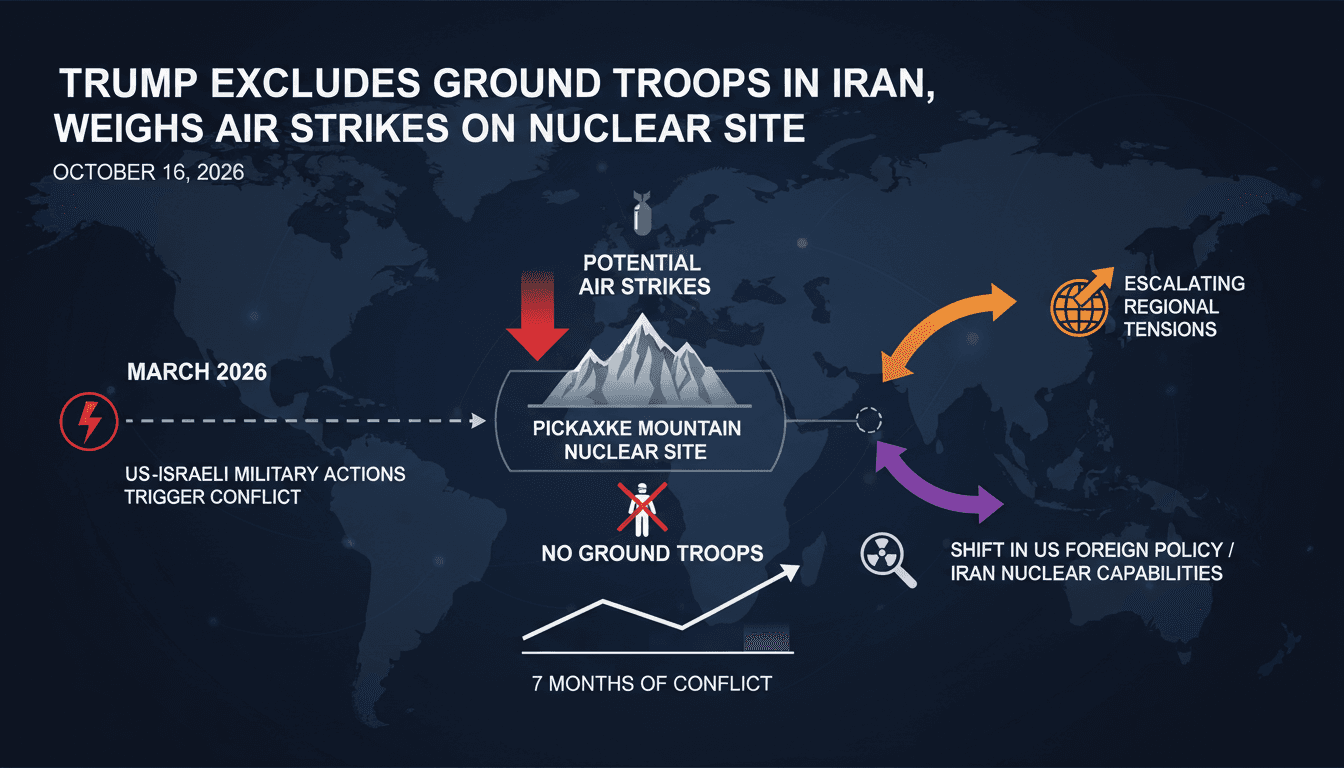
- Trump stated that the US may strike Iran's Pickaxe Mountain nuclear site but ruled out deploying ground troops.
- The US-Iran conflict has been ongoing for seven months, initiated by US-Israeli strikes targeting Iranian military and nuclear sites.
- Iranian officials dismissed Trump's threats as pretexts for aggression, maintaining a firm stance against US actions.
The context you actually need
- Pickaxe Mountain is a fortified underground facility near Natanz, described by Iran as a centrifuge assembly plant, but it has been inaccessible to international inspectors since 2020.
- The US has expressed concerns over potential covert uranium enrichment at the site, which could escalate nuclear proliferation risks.
- Trump's remarks come amid ongoing discussions with Middle Eastern leaders and major powers like Russia and China regarding denuclearization efforts.
What's really happening
The US-Iran conflict has escalated significantly since February 2026, when US-Israeli strikes targeted Iranian nuclear and military sites, marking a shift in the geopolitical landscape of the Middle East. Trump's recent statements indicate a strategic pivot towards aerial strikes rather than ground troop deployment, reflecting a desire to minimize American military casualties while still exerting pressure on Iran.
The Pickaxe Mountain facility, constructed in 2020, has become a focal point of concern due to its lack of international oversight. The absence of inspectors since 2020 raises alarms about Iran's potential to enrich uranium covertly, which could lead to the development of nuclear weapons. Trump's emphasis on rapid aerial action suggests a calculated approach to neutralize perceived threats without escalating to a full-scale ground invasion, which could provoke broader regional conflict.
The consideration of using the GBU-43/B Massive Ordnance Air Blast (MOAB) bomb highlights the seriousness of the US's military options. While Trump ruled out nuclear weapons, the mention of MOAB indicates a willingness to employ significant force against fortified targets. This approach aligns with Pentagon strategies that have been reportedly in place, focusing on striking energy infrastructure and nuclear sites if hostilities resume.
Iran's response to these threats has been dismissive, framing them as justifications for US aggression. This dynamic creates a precarious situation where both sides are posturing, potentially leading to miscalculations that could escalate into wider conflict. The ongoing war, now in its seventh month, has not shown signs of resolution, and the international community remains watchful of developments.
As the situation unfolds, the implications for global energy markets and regional stability are significant. Any military action could disrupt oil supplies, leading to price fluctuations that affect consumers and businesses worldwide. The geopolitical stakes are high, and the potential for a broader conflict looms as both nations navigate this tense standoff.
Who feels it first (and how)
- Energy sector professionals: Fluctuations in oil prices could impact profitability and operational costs.
- Investors: Market volatility may affect stock prices, particularly in energy and defense sectors.
- Travelers: Increased tensions could lead to travel advisories and heightened security measures in the region.
What to watch next
- US military movements: Any shifts in troop deployments or increased military readiness could signal imminent action.
- Iran's nuclear activities: Monitoring developments at Pickaxe Mountain and other facilities will be crucial for understanding proliferation risks.
- Global oil prices: Watch for fluctuations in response to any military actions or escalations in rhetoric.
The US-Iran conflict has been ongoing for seven months, with no resolution in sight.
Continued military posturing from both the US and Iran, with potential for aerial strikes.
The long-term impact on global energy markets and regional stability remains uncertain.
Frequently Asked Questions
- Why it matters?
- The potential for US military action against Iran's nuclear facilities raises concerns about regional stability and energy prices.
- What happened (in 30 seconds)?
- Trump stated that the US may strike Iran's Pickaxe Mountain nuclear site but ruled out deploying ground troops. The US-Iran conflict has been ongoing for seven months, initiated by US-Israeli strikes targeting Iranian military and nuclear sites. Iranian officials dismissed Trump's threats as pretexts for aggression, maintaining a firm stance against US actions.
- What's really happening?
- The US-Iran conflict has escalated significantly since February 2026, when US-Israeli strikes targeted Iranian nuclear and military sites, marking a shift in the geopolitical landscape of the Middle East. Trump's recent statements indicate a strategic pivot towards aerial strikes rather than ground troop deployment, reflecting a desire to minimize American military casualties while still exerting pressure on Iran. The Pickaxe Mountain facility, constructed in 2020, has become a focal point of
- Who feels it first (and how)?
- Energy sector professionals: Fluctuations in oil prices could impact profitability and operational costs. Investors: Market volatility may affect stock prices, particularly in energy and defense sectors. Travelers: Increased tensions could lead to travel advisories and heightened security measures in the region.
- What to watch next?
- US military movements: Any shifts in troop deployments or increased military readiness could signal imminent action. Iran's nuclear activities: Monitoring developments at Pickaxe Mountain and other facilities will be crucial for understanding proliferation risks. Global oil prices: Watch for fluctuations in response to any military actions or escalations in rhetoric.
Regional coverage and analysis focused on politics, diplomacy, and business across the Middle East.
"Al-Monitor is known for analytical reporting on Middle East politics and policy developments."
— A47 Editor
Trump rules out US troops in Iran, leaves Pickaxe Mountain strike on the table
President Donald Trump has ruled out deploying U.S. troops in Iran while keeping the option of a military strike using the GBU-43/B Massive Ordnance Air Blast Bomb, commonly referred to as the 'mother of all bombs,' on the table. This decision reflec...
Global news coverage with extensive reporting on Middle Eastern conflicts and geopolitics.
"Al Jazeera is a Qatar-based broadcaster known for wide regional coverage and alternative perspectives."
— A47 Editor
Trump rules out using a nuclear bomb on Iran: Why that matters
President Donald Trump has ruled out the use of a nuclear bomb on Iran, marking his first public statement on nuclear weapons in relation to the country. While he dismissed the nuclear option, he did not exclude the possibility of deploying the 'moth...
English-language digital publication covering business, politics, technology, and current affairs.
"The Arabian Post mixes original and syndicated-style coverage with a broad regional and global business-news orientation."
— A47 Editor
Trump leaves Iran mega-bomb option open after midterms
President Donald Trump has indicated that he is keeping the option of deploying the United States' largest conventional bomb, known as the Mother of All Bombs, against Iran open after the upcoming midterm elections. This statement was made during a r...
English-language reporting on Saudi politics, policy, and society.
"Saudi Gazette reflects mainstream Saudi institutional perspectives."
— A47 Editor
US weighs use of ‘mother of all bombs’ in potential strikes on Iran, CNN says
The US military is reportedly considering the use of the GBU-43/B Massive Ordnance Air Blast Bomb, known as the 'mother of all bombs,' in potential strikes against Iran's energy infrastructure and nuclear sites, as indicated by CNN sources. This esca...
International news coverage curated for readers in the UAE and Gulf region.
"Emirates 24|7 world coverage presents global developments through a UAE-facing and Gulf-relevant editorial lens."
— A47 Editor
US weighs use of ‘mother of all bombs’ in future Iran strikes: CNN
The US military is reportedly considering the use of the GBU-43/B Massive Ordnance Air Blast Bomb, known as the 'mother of all bombs', in potential strikes against Iranian energy infrastructure and nuclear sites if President Donald Trump orders renew...