
Houthi Drone and Missile Strikes Target Saudi Infrastructure Exposing Defense Weaknesses
Why it matters
The recent Houthi strikes highlight significant weaknesses in Saudi Arabia's air defense systems, potentially destabilizing energy markets and regional security.
What happened (in 30 seconds)
- On October 13, 2026, the Houthis launched drone and missile strikes targeting key Saudi infrastructure, including the Aramco headquarters and Riyadh's oil refinery.
- Saudi Arabia's air defenses struggled to intercept multiple incoming threats, revealing critical limitations in their operational capabilities.
- The attacks are part of a broader campaign by the Houthis to impose economic costs on Saudi Arabia amid ongoing conflict in Yemen.
The context you actually need
- The Yemen conflict began in 2014-2015, with the Houthis seizing control of Sanaa and Saudi Arabia intervening to support the Yemeni government.
- Iran's support has bolstered Houthi capabilities, enabling them to conduct sophisticated strikes against Saudi targets.
- Recent escalations in hostilities have prompted the Houthis to adopt a strategy of deep strikes, exploiting Saudi Arabia's defensive vulnerabilities.
What's really happening
The October 13 strikes mark a significant escalation in the ongoing conflict between the Houthis and Saudi Arabia, which has been simmering since the Houthis seized Sanaa in 2014. The Houthis, officially known as Ansar Allah, have increasingly relied on low-cost drones and missiles to target critical infrastructure within Saudi Arabia. This strategy is not just about causing immediate damage; it aims to impose economic and operational costs on Saudi Arabia, compelling the kingdom to reconsider its military involvement in Yemen.
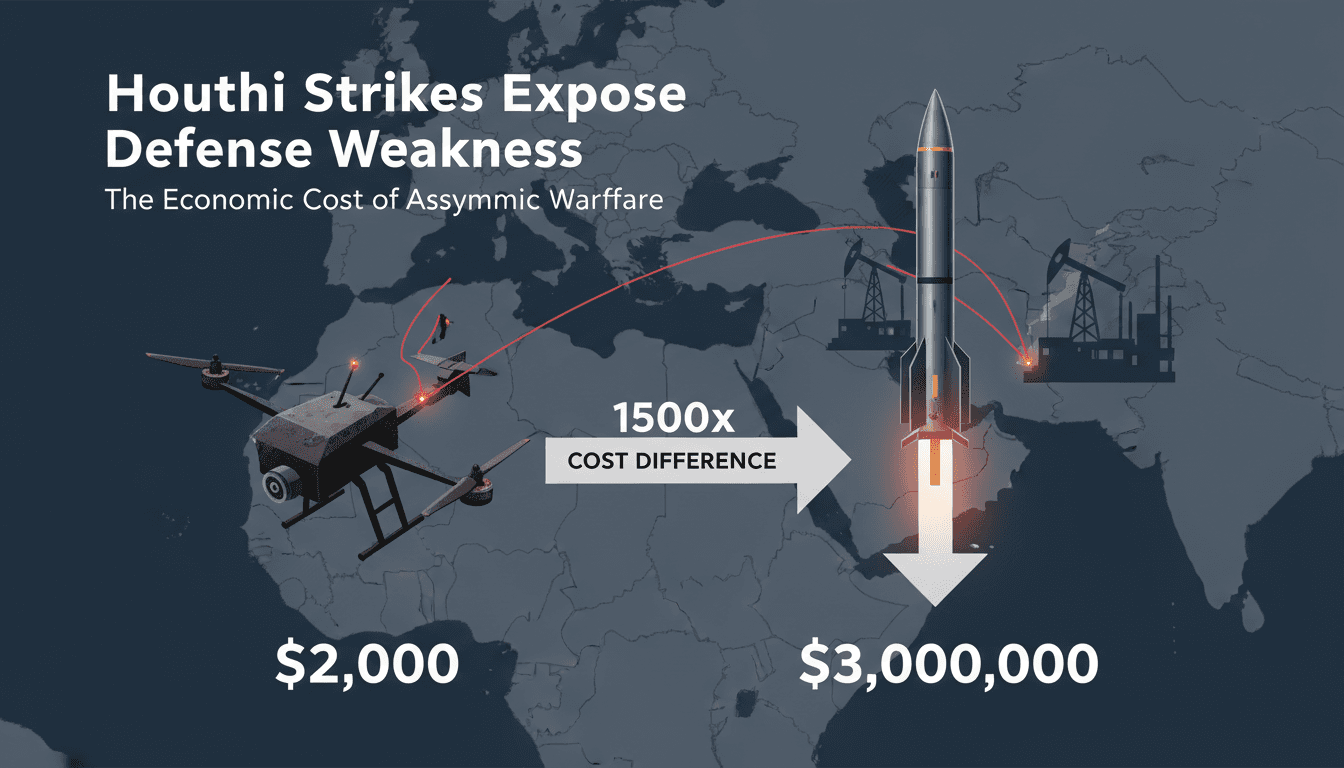
The Houthis have effectively exploited the cost asymmetry between their low-cost drones—estimated at $15,000 to $25,000 each—and Saudi Arabia's expensive interceptor missiles, such as the Patriot, which can cost over $3 million. This economic disparity allows the Houthis to sustain their offensive operations while forcing Saudi Arabia to expend significant resources on defense. The recent attacks have demonstrated that Saudi air defenses, which include advanced systems, are struggling to cope with the volume and sophistication of Houthi strikes.
The operational challenges faced by Saudi Arabia are compounded by issues in detection and coordination among its military branches. The Houthis have employed tactics that involve probing defenses with long-range drones, followed by low-altitude cruise missiles that are harder to detect and intercept. This has led to a depletion of interceptor stocks and raised questions about the effectiveness of Saudi Arabia's air defense strategy.
In response to these vulnerabilities, Saudi Arabia has sought assistance from Türkiye and Pakistan, focusing on air defense and technical support rather than offensive capabilities. However, the kingdom's procurement of additional air defense systems is a reactive measure that may not fully address the underlying issues of coordination and strategic planning.
The implications of these strikes extend beyond immediate military concerns. They have the potential to impact global oil markets, as any perceived threat to Saudi oil infrastructure can lead to volatility in prices. While production impacts have remained contained so far, the ongoing threat to critical infrastructure could lead to increased caution among investors and stakeholders in the energy sector.
Who feels it first (and how)
- Energy sector professionals: Increased volatility in oil prices could affect investment and operational decisions.
- Regional security analysts: Heightened risks in the Gulf region may lead to revised security assessments and strategies.
- Travel and tourism sectors: Potential travel advisories and flight diversions could impact tourism and business travel in the region.
What to watch next
- Saudi Arabia's military procurement: Watch for announcements regarding new air defense systems and partnerships, which could indicate a shift in strategy.
- Houthi operational tactics: Continued evolution in Houthi tactics may reveal further vulnerabilities in Saudi defenses and impact regional security dynamics.
- Global oil market reactions: Monitor fluctuations in oil prices and market sentiment as the situation develops, particularly in response to any new attacks.
The Houthis have successfully conducted drone and missile strikes against Saudi targets.
Saudi Arabia will continue to seek international assistance to bolster its air defenses.
The long-term impact on global oil markets and regional stability remains uncertain.
Frequently Asked Questions
- Why it matters?
- The recent Houthi strikes highlight significant weaknesses in Saudi Arabia's air defense systems, potentially destabilizing energy markets and regional security.
- What happened (in 30 seconds)?
- On October 13, 2026, the Houthis launched drone and missile strikes targeting key Saudi infrastructure, including the Aramco headquarters and Riyadh's oil refinery. Saudi Arabia's air defenses struggled to intercept multiple incoming threats, revealing critical limitations in their operational capabilities. The attacks are part of a broader campaign by the Houthis to impose economic costs on Saudi Arabia amid ongoing conflict in Yemen.
- What's really happening?
- The October 13 strikes mark a significant escalation in the ongoing conflict between the Houthis and Saudi Arabia, which has been simmering since the Houthis seized Sanaa in 2014. The Houthis, officially known as Ansar Allah, have increasingly relied on low-cost drones and missiles to target critical infrastructure within Saudi Arabia. This strategy is not just about causing immediate damage; it aims to impose economic and operational costs on Saudi Arabia, compelling the kingdom to reconsider i
- Who feels it first (and how)?
- Energy sector professionals: Increased volatility in oil prices could affect investment and operational decisions. Regional security analysts: Heightened risks in the Gulf region may lead to revised security assessments and strategies. Travel and tourism sectors: Potential travel advisories and flight diversions could impact tourism and business travel in the region.
- What to watch next?
- Saudi Arabia's military procurement: Watch for announcements regarding new air defense systems and partnerships, which could indicate a shift in strategy. Houthi operational tactics: Continued evolution in Houthi tactics may reveal further vulnerabilities in Saudi defenses and impact regional security dynamics. Global oil market reactions: Monitor fluctuations in oil prices and market sentiment as the situation develops, particularly in response to any new attacks.
RT is a Russian state-funded network covering global events from a Russian perspective.
"RT is widely criticized for promoting pro-Kremlin narratives and is considered by many to be a state propaganda outlet."
— A47 Editor
Saudi Arabia’s biggest problem may be its enemy’s smallest weapons
Saudi Arabia is facing escalating threats from Houthi drone and missile attacks, which have targeted critical infrastructure, including oil facilities and airports, despite the kingdom's substantial defense spending exceeding $82 billion. This ongoin...
UAE-based English-language newspaper covering regional politics, economics, and global affairs.
"The National reflects Emirati policy perspectives while maintaining international editorial standards."
— A47 Editor
What are Saudi Arabia's options as Houthi attacks escalate?
Recent missile attacks by Yemen's Houthi rebels have escalated tensions in the region, particularly following a significant strike on King Khalid International Airport in Riyadh, resulting in multiple fatalities and injuries. This incident marks a cr...
Regional coverage and analysis focused on politics, diplomacy, and business across the Middle East.
"Al-Monitor is known for analytical reporting on Middle East politics and policy developments."
— A47 Editor
Analysis-How are Yemen’s Houthis attacking Saudi Arabia so effectively?
In recent attacks, Houthi militants from Yemen have targeted Riyadh international airport and Saudi Aramco's headquarters, exposing vulnerabilities in Saudi Arabia's defense systems. These assaults resulted in significant casualties and have raised c...