
Bo Hines Faces Scrutiny Over Tether Payments During Stablecoin Legislation Role
Why it matters
This case highlights potential conflicts of interest that could undermine trust in cryptocurrency regulation and impact market stability.
What happened (in 30 seconds)
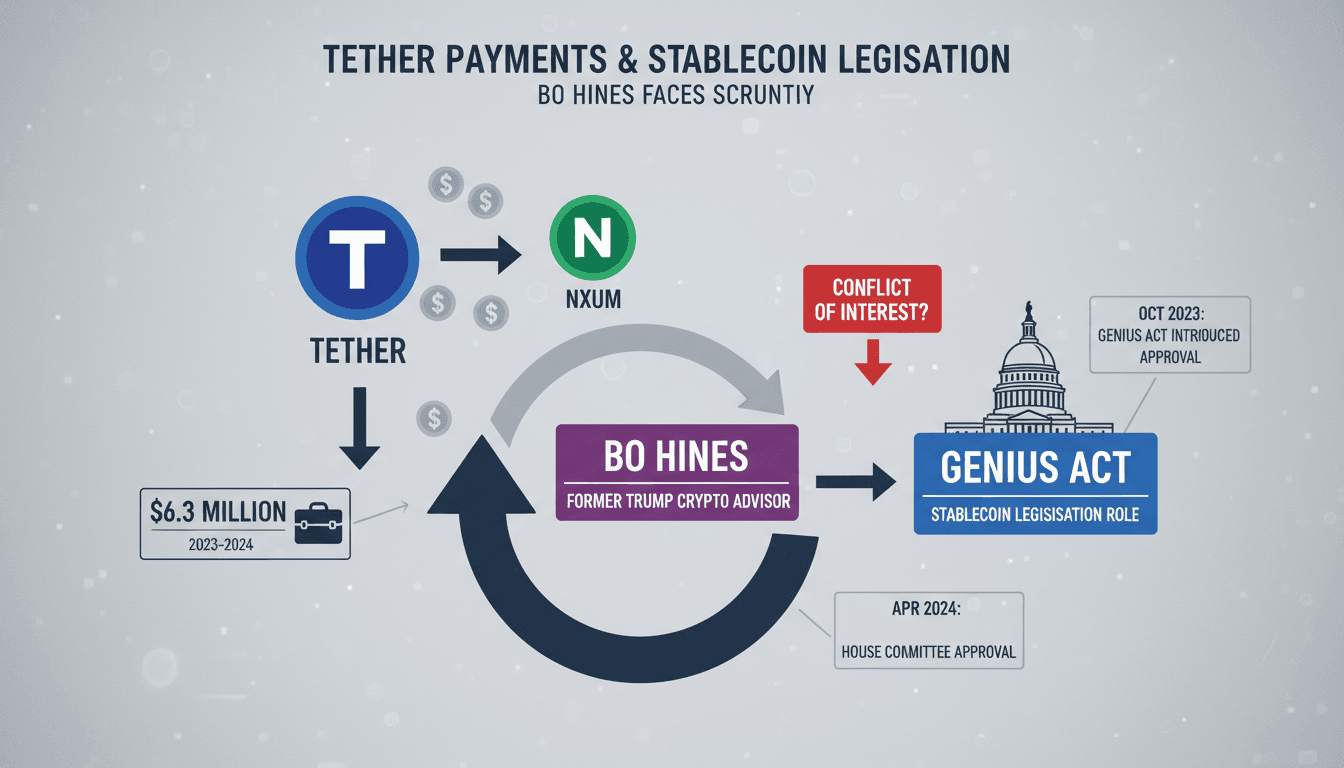
- Investigative reports revealed that Bo Hines, a former Trump crypto advisor, retained a stake in Nxum, a consulting firm that received $6.3 million from Tether while he was shaping stablecoin legislation.
- Payments from Tether began in May 2025, coinciding with Hines' role in the White House and the passage of the GENIUS Act in July 2025.
- Scrutiny has intensified regarding the Trump administration's ties to cryptocurrency firms, with ongoing congressional inquiries into Tether's operations.
The context you actually need
- The GENIUS Act, signed into law in July 2025, established federal regulations for U.S. dollar-pegged stablecoins, a critical area for Tether, the largest stablecoin issuer.
- Nxum, co-founded by Hines, entered a consulting agreement with Tether for brand and public affairs services, raising questions about the integrity of the legislative process.
- Hines' transition from the White House to Tether's U.S. division shortly after leaving his advisory role has drawn attention to the revolving door between government and private sector interests.
What's really happening
The allegations surrounding Bo Hines and his connection to Tether during the formulation of the GENIUS Act underscore a significant tension between public service and private interests in the cryptocurrency sector. Hines, who was appointed as the Executive Director of the President’s Council of Advisers on Digital Assets, played a pivotal role in shaping legislation that directly affected Tether, a major player in the stablecoin market.
The consulting firm Nxum, which Hines co-founded, entered into a lucrative agreement with Tether, receiving $6.3 million across three payments starting in May 2025. This arrangement raises critical questions about the potential for conflicts of interest, particularly as Hines was actively involved in discussions about legislative strategies while still serving in the White House. The timing of these payments, coinciding with the passage of the GENIUS Act, suggests a possible alignment of interests that could undermine the integrity of the regulatory framework being established.
The GENIUS Act was designed to create a structured environment for stablecoins, which are essential for the cryptocurrency ecosystem, providing liquidity and stability. Tether, as the issuer of USDT, had a vested interest in the legislation's compliance timelines and enforcement provisions. Hines' dual role as a government advisor and a stakeholder in a consulting firm working with Tether raises concerns about whether the legislation was crafted with the best interests of the public in mind or if it favored private entities.
As scrutiny intensifies, the implications extend beyond Hines and Nxum. The ongoing congressional inquiries into Tether's operations and its connections to other financial entities, such as Cantor Fitzgerald, signal a broader examination of the relationships between cryptocurrency firms and government officials. This situation could lead to stricter regulations and oversight, impacting how cryptocurrency firms operate and interact with policymakers.
The fallout from this investigation could reshape the regulatory landscape for stablecoins and cryptocurrency more broadly, influencing how firms approach compliance and governance. Market participants are likely to remain vigilant as they navigate the evolving regulatory environment, which may include increased transparency requirements and potential legislative changes.
Who feels it first (and how)
- Cryptocurrency firms: Increased scrutiny may lead to stricter regulations affecting operational practices and compliance costs.
- Investors: Potential instability in the stablecoin market could impact investment strategies and asset valuations.
- Regulators: Heightened focus on conflicts of interest may prompt more rigorous oversight and enforcement actions.
What to watch next
- Congressional inquiries: Ongoing investigations into Tether and its relationships with government officials could lead to significant regulatory changes.
- Market reactions: Watch for shifts in stablecoin valuations and trading volumes as the regulatory landscape evolves.
- Legislative developments: Any new proposals or amendments to the GENIUS Act could reshape the operational framework for stablecoins.
Bo Hines retained a stake in Nxum while serving as a crypto advisor.
Increased scrutiny of cryptocurrency firms and potential regulatory changes will follow.
The long-term impact on Tether's market position and the broader cryptocurrency ecosystem remains uncertain.
Frequently Asked Questions
- Why it matters?
- This case highlights potential conflicts of interest that could undermine trust in cryptocurrency regulation and impact market stability.
- What happened (in 30 seconds)?
- Investigative reports revealed that Bo Hines, a former Trump crypto advisor, retained a stake in Nxum, a consulting firm that received $6.3 million from Tether while he was shaping stablecoin legislation. Payments from Tether began in May 2025, coinciding with Hines' role in the White House and the passage of the GENIUS Act in July 2025. Scrutiny has intensified regarding the Trump administration's ties to cryptocurrency firms, with ongoing congressional inquiries into Tether's operations.
- What's really happening?
- The allegations surrounding Bo Hines and his connection to Tether during the formulation of the GENIUS Act underscore a significant tension between public service and private interests in the cryptocurrency sector. Hines, who was appointed as the Executive Director of the President’s Council of Advisers on Digital Assets, played a pivotal role in shaping legislation that directly affected Tether, a major player in the stablecoin market. The consulting firm Nxum, which Hines co-founded, entered
- Who feels it first (and how)?
- Cryptocurrency firms: Increased scrutiny may lead to stricter regulations affecting operational practices and compliance costs. Investors: Potential instability in the stablecoin market could impact investment strategies and asset valuations. Regulators: Heightened focus on conflicts of interest may prompt more rigorous oversight and enforcement actions.
- What to watch next?
- Congressional inquiries: Ongoing investigations into Tether and its relationships with government officials could lead to significant regulatory changes. Market reactions: Watch for shifts in stablecoin valuations and trading volumes as the regulatory landscape evolves. Legislative developments: Any new proposals or amendments to the GENIUS Act could reshape the operational framework for stablecoins.
Corporate leadership, finance, technology, and market trends.
"Fortune covers financial trends, leadership, and innovation with a pragmatic editorial approach."
— A47 Editor
Trump’s former top crypto advisor faces scrutiny over allegations his firm accepted millions from Tether while he shaped key stablecoin law
Bo Hines, a former top advisor to Donald Trump, is under scrutiny for allegations that his consulting firm, Nxum, accepted millions from Tether while he was involved in shaping significant legislation regarding stablecoins. Hines maintained a one-thi...
Real-time updates, analysis, and reports on the blockchain and cryptocurrency sectors.
"Crypto News delivers real-time updates, analysis, and reports on the blockchain and cryptocurrency sectors."
— A47 Editor
Tether paid $6.3M to firm tied to former Trump crypto adviser Bo Hines: report
Tether has reportedly paid $6.3 million to a consulting firm co-owned by Bo Hines, a former cryptocurrency adviser to Donald Trump, with the payment coinciding with Hines' involvement in advancing federal stablecoin legislation. This arrangement rais...
Insights and news on social issues, policy, and political movements across the United States.
"The Wall Street Journal is known for its deep political coverage, especially at the intersection of policy, regulation, and social dynamics."
— A47 Editor
Money from Tether flowed to Bo Hines’s company while he worked in the White House on landmark stablecoin legislation. Once the law passed, Tether hired him as its U.S. chief.
Money from Tether was directed to Nxum while Bo Hines was employed at the White House, where he contributed to the development of significant stablecoin legislation. Following the passage of this law, Tether appointed Hines as its U.S. chief, raising...