
Cockpit Assault on Flydubai Flight 1073 Leaves All Passengers Safe After Co-Pilot Attack
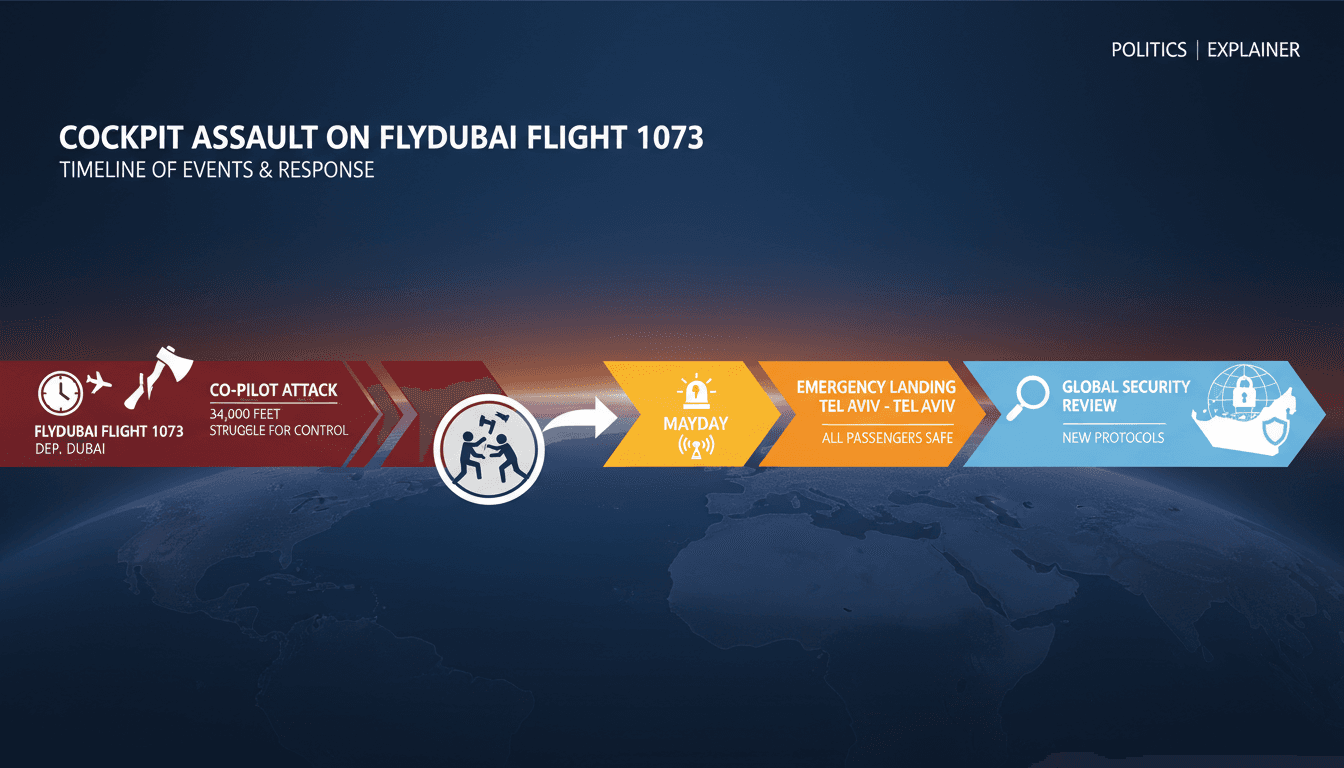
Why it matters
The incident raises critical questions about aviation security and crew vetting processes, impacting passenger confidence and operational protocols.
What happened (in 30 seconds)
- On September 30, 2026, Flydubai Flight 1073 experienced a violent cockpit assault when co-pilot Hammam al-Hammami attacked Captain Smit Machchhar with an axe.
- The aircraft plunged approximately 17,000 feet before Machchhar managed to unlock the cockpit door, allowing crew and passengers to subdue the attacker.
- All 172 individuals on board survived after an emergency diversion to Tabuk, Saudi Arabia, and the co-pilot now faces terrorism charges.
The context you actually need
- Radicalization concerns: The co-pilot had allegedly been radicalized through online content and a religious study center in Australia, indicating a broader issue of extremist influences in aviation.
- First-time meeting: Captain Machchhar and co-pilot al-Hammami met for the first time that morning, with no warning signs of the impending attack, highlighting the unpredictability of such threats.
- Passenger demographics: The flight primarily carried Israeli passengers, making the attack particularly alarming given the geopolitical tensions in the region.
What's really happening
The assault on Flydubai Flight 1073 underscores a critical vulnerability in aviation security, particularly regarding cockpit access and crew vetting. The incident reveals how radicalization can manifest in unexpected ways, even among individuals who appear to be functioning normally in their roles. The co-pilot's premeditated actions, including prior reconnaissance flights to Tel Aviv, suggest a calculated intent to cause harm, raising alarms about the effectiveness of current screening processes for airline personnel.
In the aftermath, the UAE's Attorney General confirmed that the co-pilot's actions were driven by a clear intent to crash the aircraft into Ben Gurion Airport, a fact that has intensified scrutiny on the security measures in place for both crew and passengers. The incident has prompted discussions about the accessibility of emergency equipment, such as the cockpit axe used in the attack, and whether current protocols adequately prevent such occurrences.
As the investigation unfolds, it is likely that airlines will face pressure to enhance their security measures, including more rigorous psychological evaluations and background checks for pilots. This could lead to a ripple effect across the aviation industry, with potential changes in regulations and operational standards that prioritize passenger safety over operational efficiency.
Moreover, the incident has implications for international relations, particularly between the UAE and Israel, as both nations navigate the fallout from the attack. The involvement of Israeli officials in the investigation indicates a collaborative approach to addressing the threat of aviation terrorism, which could lead to new security agreements or protocols.
Ultimately, the Flydubai incident serves as a stark reminder of the evolving nature of threats in aviation and the need for continuous adaptation of security measures to safeguard against potential attacks.
Who feels it first (and how)
- Airline executives: Increased operational costs due to enhanced security measures and potential regulatory changes.
- Passengers: Heightened anxiety and scrutiny during air travel, impacting their travel choices and experiences.
- Aviation security professionals: A demand for new training and protocols to address emerging threats and improve cockpit security.
- Governments: Pressure to collaborate on international aviation security standards and counter-terrorism efforts.
What to watch next
- Regulatory changes: Monitor for new aviation security regulations that may emerge in response to this incident, affecting crew vetting and cockpit access.
- Industry reviews: Watch for internal reviews by airlines, particularly in the UAE, that could lead to significant operational shifts in response to security concerns.
- Passenger confidence: Observe trends in passenger booking behavior and sentiment towards air travel safety in the wake of this incident.
The co-pilot faces terrorism charges and the investigation is ongoing.
Aviation security protocols will undergo significant reviews and changes in response to the attack.
The long-term impact on passenger confidence and travel patterns remains to be seen.
Frequently Asked Questions
- Why it matters?
- The incident raises critical questions about aviation security and crew vetting processes, impacting passenger confidence and operational protocols.
- What happened (in 30 seconds)?
- On September 30, 2026, Flydubai Flight 1073 experienced a violent cockpit assault when co-pilot Hammam al-Hammami attacked Captain Smit Machchhar with an axe. The aircraft plunged approximately 17,000 feet before Machchhar managed to unlock the cockpit door, allowing crew and passengers to subdue the attacker. All 172 individuals on board survived after an emergency diversion to Tabuk, Saudi Arabia, and the co-pilot now faces terrorism charges.
- What's really happening?
- The assault on Flydubai Flight 1073 underscores a critical vulnerability in aviation security, particularly regarding cockpit access and crew vetting. The incident reveals how radicalization can manifest in unexpected ways, even among individuals who appear to be functioning normally in their roles. The co-pilot's premeditated actions, including prior reconnaissance flights to Tel Aviv, suggest a calculated intent to cause harm, raising alarms about the effectiveness of current screening process
- Who feels it first (and how)?
- Airline executives: Increased operational costs due to enhanced security measures and potential regulatory changes. Passengers: Heightened anxiety and scrutiny during air travel, impacting their travel choices and experiences. Aviation security professionals: A demand for new training and protocols to address emerging threats and improve cockpit security. Governments: Pressure to collaborate on international aviation security standards and counter-terrorism efforts.
- What to watch next?
- Regulatory changes: Monitor for new aviation security regulations that may emerge in response to this incident, affecting crew vetting and cockpit access. Industry reviews: Watch for internal reviews by airlines, particularly in the UAE, that could lead to significant operational shifts in response to security concerns. Passenger confidence: Observe trends in passenger booking behavior and sentiment towards air travel safety in the wake of this incident.
UAE-based English-language newspaper covering regional politics, economics, and global affairs.
"The National reflects Emirati policy perspectives while maintaining international editorial standards."
— A47 Editor
Smit Machchhar interview: What happened inside the cockpit of flydubai Flight 1073
On September 30, 2026, flydubai Flight 1073, traveling from Dubai to Tel Aviv, experienced a critical incident when the co-pilot allegedly attacked Captain Smit Machchhar with an emergency axe, resulting in a rapid descent of over 17,000 feet and an ...
Regional coverage and analysis focused on politics, diplomacy, and business across the Middle East.
"Al-Monitor is known for analytical reporting on Middle East politics and policy developments."
— A47 Editor
Captain of flydubai plane describes blocking axe blows as co-pilot attacked
The captain of a flydubai flight, Smit Machchhar, described a harrowing incident where he blocked axe blows from his co-pilot, Hammam al-Hammami, who attempted to crash the plane during its journey from Dubai to Tel Aviv. The attack, which occurred l...
International coverage from The Guardian's global desks.
"The Guardian is known for its progressive editorial stance and in-depth analysis."
— A47 Editor
Flydubai captain describes blocking axe blows as co-pilot attacked him
Captain Smit Machchhar of Flydubai faced a harrowing attack from his co-pilot during flight FZ1073, which was en route from Dubai to Tel Aviv. The co-pilot attempted to crash the aircraft, leading Machchhar to block axe blows and scream for help whil...
Arabic-language economic and business reporting with strong UAE market relevance.
"Emarat Al Youm business coverage often centers UAE property, banking, consumer issues, and economic policy."
— A47 Editor
قائد رحلة فلاي دبي: التقيت مساعدي لأول مرة صباح يوم الرحلة ولم ألحظ عليه أي نوايا عدائية قائد رحلة فلاي دبي: التقيت مساعدي لأول مرة صباح يوم الرحلة ولم ألحظ عليه أي نوايا عدائية
The captain of Flydubai flight FZ1073, Smit Machhar, revealed that he met his co-pilot for the first time on the morning of the flight and did not observe any hostile intentions. This statement comes in the wake of a violent incident in the cockpit, ...