
Mahmoud Khalil Appeals to US Supreme Court to Stop Deportation
Why it matters
This case could set a precedent for how immigration courts handle claims of retaliatory detention based on protected speech.
What happened (in 30 seconds)
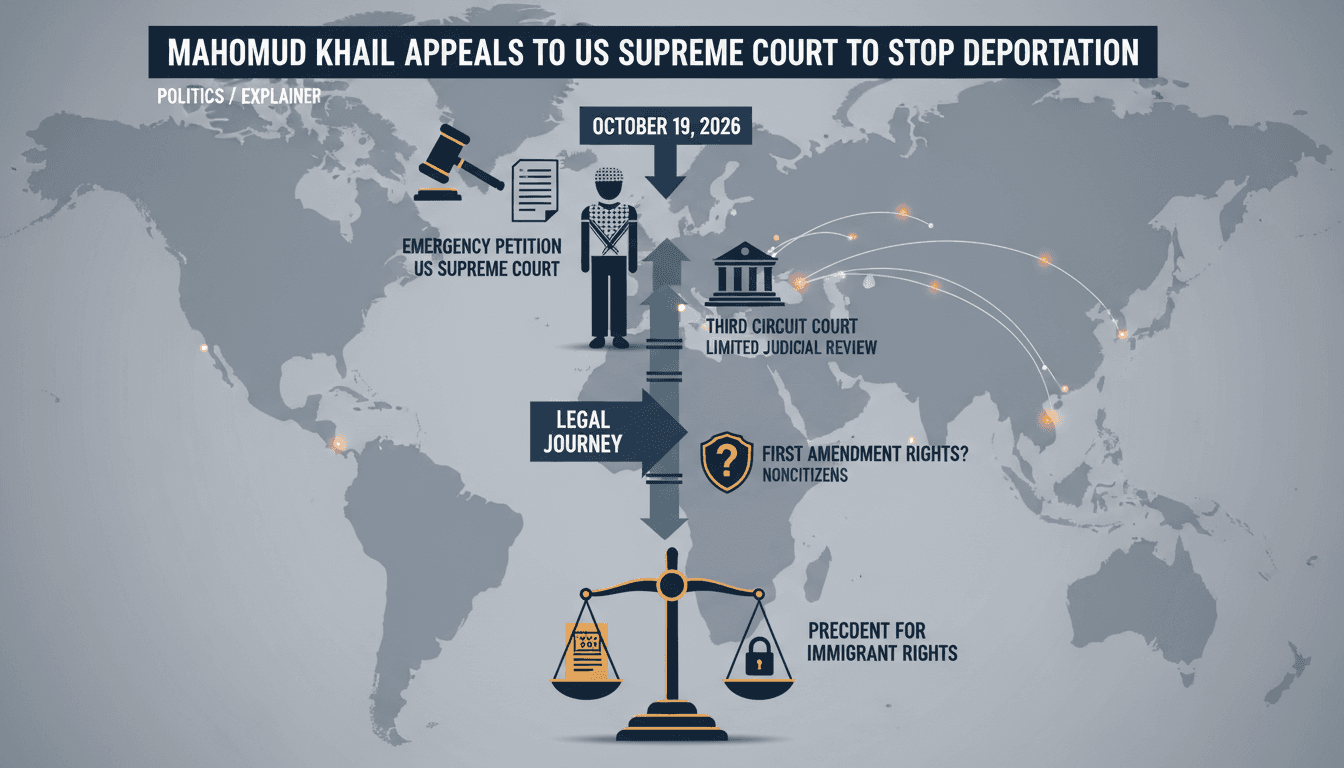
- On October 19, 2026, Mahmoud Khalil filed an emergency petition with the U.S. Supreme Court to halt his deportation proceedings.
- Khalil's legal team argues that noncitizens should have the right to challenge retaliatory detention in federal courts.
- The 3rd Circuit Court previously ruled that such claims must be directed to immigration courts, limiting judicial oversight.
The context you actually need
- Khalil, a Palestinian activist, was arrested in March 2025 for his pro-Palestinian activism at Columbia University, despite being a lawful permanent resident.
- The Trump administration's focus on enforcing immigration laws against noncitizen activists has intensified since the 2024 election, framing such activism as contrary to U.S. foreign policy.
- The 3rd Circuit's January 2026 ruling determined that federal district courts lack jurisdiction over Khalil's claims, which has raised concerns about the rights of noncitizens in similar situations.
What's really happening
Mahmoud Khalil's case is emblematic of a broader struggle over the intersection of immigration enforcement and free speech rights in the United States. Khalil, who emerged as a prominent voice for pro-Palestinian activism at Columbia University, was arrested in March 2025, highlighting the increasing scrutiny of noncitizen activists under the Trump administration's policies. His detention and subsequent legal battles underscore a significant shift in how the U.S. government approaches activism that it perceives as contrary to its foreign policy interests.
The legal framework surrounding Khalil's case is complex. The 3rd Circuit Court's ruling effectively limits the ability of noncitizens to seek judicial review of their detention based on First Amendment violations. By directing such claims to immigration courts, the ruling raises questions about the extent of judicial oversight in cases involving free speech and activism. Khalil's legal team argues that this interpretation undermines the rights of noncitizens, who should be able to challenge retaliatory actions taken against them for exercising their free speech rights.
The implications of this case extend beyond Khalil himself. If the Supreme Court agrees to hear the case and rules in his favor, it could establish a precedent that allows noncitizens to seek redress in federal courts for claims related to free speech. This would represent a significant shift in the legal landscape, potentially empowering activists and noncitizens who face similar retaliatory actions.
Conversely, a ruling against Khalil could reinforce the current framework, further entrenching the notion that immigration courts are the sole venue for such claims. This would likely deter noncitizens from engaging in activism for fear of deportation or other punitive measures. The case is not just about Khalil; it reflects a larger cultural and legal battle over the rights of noncitizens in the U.S. and the extent to which the government can regulate speech and activism.
As Khalil's case unfolds, it will be closely watched by legal experts, activists, and policymakers alike. The outcome could have lasting effects on the rights of noncitizens and the broader discourse surrounding free speech in the context of immigration enforcement.
Who feels it first (and how)
- Activists and student organizations: Increased scrutiny and potential legal repercussions for engaging in political activism.
- Legal professionals: Changes in how immigration and free speech cases are handled in courts.
- Noncitizens: Potentially diminished rights regarding free speech and activism, affecting their ability to participate in public discourse.
What to watch next
- Supreme Court's decision: The Court's choice to hear the case will signal its stance on the intersection of immigration law and free speech rights.
- Public response: Increased activism and public demonstrations in support of Khalil could influence the Court's perception of the case.
- Legislative changes: Potential shifts in immigration policy or legal frameworks surrounding noncitizen rights based on the case's outcome.
Khalil's petition is pending before the Supreme Court.
The case will attract significant media attention and public discourse on free speech and immigration rights.
The Supreme Court's timeline for a decision and its potential implications for future cases.
Frequently Asked Questions
- Why it matters?
- This case could set a precedent for how immigration courts handle claims of retaliatory detention based on protected speech.
- What happened (in 30 seconds)?
- On October 19, 2026, Mahmoud Khalil filed an emergency petition with the U.S. Supreme Court to halt his deportation proceedings. Khalil's legal team argues that noncitizens should have the right to challenge retaliatory detention in federal courts. The 3rd Circuit Court previously ruled that such claims must be directed to immigration courts, limiting judicial oversight.
- What's really happening?
- Mahmoud Khalil's case is emblematic of a broader struggle over the intersection of immigration enforcement and free speech rights in the United States. Khalil, who emerged as a prominent voice for pro-Palestinian activism at Columbia University, was arrested in March 2025, highlighting the increasing scrutiny of noncitizen activists under the Trump administration's policies. His detention and subsequent legal battles underscore a significant shift in how the U.S. government approaches activism t
- Who feels it first (and how)?
- Activists and student organizations: Increased scrutiny and potential legal repercussions for engaging in political activism. Legal professionals: Changes in how immigration and free speech cases are handled in courts. Noncitizens: Potentially diminished rights regarding free speech and activism, affecting their ability to participate in public discourse.
- What to watch next?
- Supreme Court's decision: The Court's choice to hear the case will signal its stance on the intersection of immigration law and free speech rights. Public response: Increased activism and public demonstrations in support of Khalil could influence the Court's perception of the case. Legislative changes: Potential shifts in immigration policy or legal frameworks surrounding noncitizen rights based on the case's outcome.
Global news coverage with extensive reporting on Middle Eastern conflicts and geopolitics.
"Al Jazeera is a Qatar-based broadcaster known for wide regional coverage and alternative perspectives."
— A47 Editor
Mahmoud Khalil takes deportation fight to the US Supreme Court
Mahmoud Khalil, a former student leader at Columbia University, has petitioned the US Supreme Court to review his deportation case, which follows his arrest in March 2025 during the Trump administration's crackdown on pro-Palestinian advocacy. His le...
Comprehensive coverage of Middle Eastern and global issues.
"Al Jazeera is a prominent voice from the Global South, especially the Middle East, with an emphasis on underreported stories."
— A47 Editor
Mahmoud Khalil takes deportation fight to the US Supreme Court
Mahmoud Khalil, a former student leader at Columbia University, has petitioned the US Supreme Court to review his deportation case, which follows his arrest in March 2025 during the Trump administration's crackdown on pro-Palestinian advocacy. His le...
Regional coverage and analysis focused on politics, diplomacy, and business across the Middle East.
"Al-Monitor is known for analytical reporting on Middle East politics and policy developments."
— A47 Editor
Palestinian activist Mahmoud Khalil asks US Supreme Court to hear case seeking to avoid re-arrest
Mahmoud Khalil, a Palestinian activist and Columbia University graduate, has petitioned the US Supreme Court to review a ruling by the 3rd US Circuit Court of Appeals that allows the Trump administration to potentially re-arrest and deport him. Khali...
Top international stories selected by The Guardian editors.
"The Guardian is known for its progressive editorial stance and in-depth analysis."
— A47 Editor
Mahmoud Khalil asks US supreme court to review his deportation case
Mahmoud Khalil, a former Columbia University student, has petitioned the US Supreme Court to review his deportation case, which stems from his arrest in March 2025 amid the Trump administration's crackdown on pro-Palestinian advocacy. A ruling agains...