
Trump Announces Severe Economic and Military Actions Against Iran Amid Ongoing Negotiations with Russia
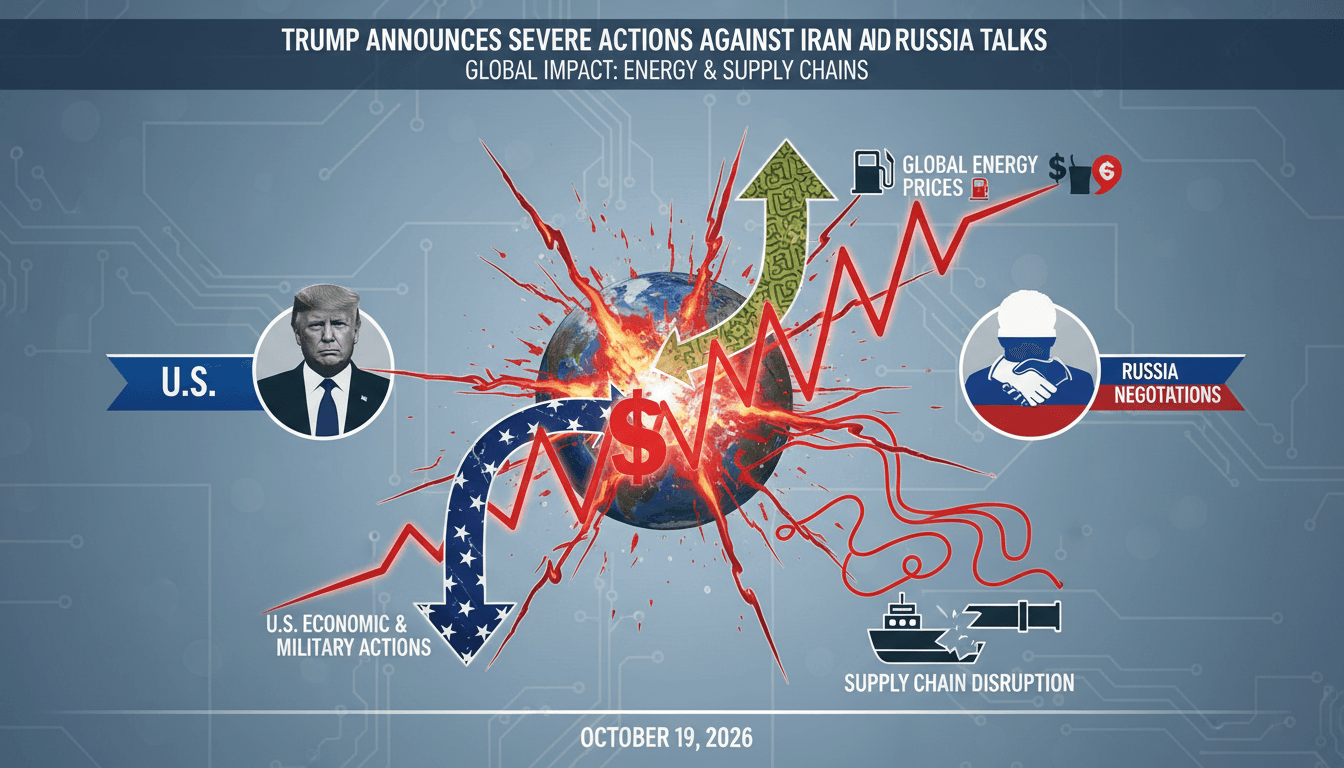
Why it matters
The U.S. strategy towards Iran could significantly impact global energy markets and geopolitical stability.
What happened (in 30 seconds)
- Trump announced severe economic and military actions against Iran while confirming ongoing negotiations with Russia.
- Russia's restraint in the Iran conflict was highlighted as a positive development by Trump, amid criticism of Ukraine's negotiation efforts.
- Energy markets reacted with volatility, particularly concerning diesel supply concerns linked to the situation.
The context you actually need
- Ongoing U.S.-Iran tensions have escalated due to previous military actions targeting Iranian nuclear and military sites.
- The geopolitical landscape is complicated by the Russia-Ukraine war, affecting energy supplies and international relations.
- Diplomatic negotiations are currently underway involving multiple parties, including Russia, Ukraine, and Iran, indicating a multifaceted approach to conflict resolution.
What's really happening
On October 19, 2026, President Trump declared that the United States is intensifying its economic and military pressure on Iran, a move that reflects a broader strategy to curb Iranian influence in the region. This announcement comes amid a backdrop of heightened tensions, following prior military actions by the U.S. and Israel targeting Iranian nuclear and military facilities. The U.S. aims to prevent Iran from developing nuclear weapons while managing its complex relationships with both Russia and China.
Trump's remarks also included a critique of Ukrainian President Volodymyr Zelenskyy, suggesting that Ukraine's negotiation strategies have been ineffective, which could further strain U.S.-Ukraine relations. The President's focus on Russia's lack of intervention in Iran is noteworthy, as it suggests a potential shift in alliances or at least a temporary alignment of interests between the U.S. and Russia regarding Iran.
The economic implications are significant. Trump's declaration of "very severe strikes" on Iran's economy could lead to disruptions in the global energy market, particularly affecting diesel supplies. The Strait of Hormuz, a critical chokepoint for oil shipments, remains a focal point of concern. Any military escalation in this region could lead to increased oil prices, impacting consumers and businesses worldwide.
Moreover, the ongoing negotiations involving Russia, Ukraine, and Iran indicate a complex web of diplomacy that could either stabilize or further destabilize the region. Russian Foreign Minister Sergey Lavrov's visit to Tehran for talks underscores the deepening cooperation between Russia and Iran, which could complicate U.S. efforts to isolate Iran economically and politically.
As these dynamics unfold, the potential for increased military engagement or economic sanctions could create ripple effects across global markets, particularly in energy and logistics sectors. The situation remains fluid, with various stakeholders vying for influence and control over the outcomes.
Who feels it first (and how)
- Energy sector professionals: Increased volatility in oil and diesel prices could impact profitability and operational costs.
- Logistics and supply chain managers: Disruptions in fuel supply could lead to higher transportation costs and delays.
- Consumers: Rising fuel prices may affect everyday expenses, particularly in regions heavily reliant on imported energy.
- Investors: Market fluctuations in response to geopolitical tensions could impact investment strategies and portfolio performance.
What to watch next
- Energy price trends: Monitoring fluctuations in oil and diesel prices will be crucial as tensions escalate.
- Diplomatic developments: Watch for updates on negotiations involving Russia, Ukraine, and Iran, as these could shift the balance of power.
- Military actions: Any escalation in military engagements in the region could lead to immediate market reactions and broader geopolitical implications.
The U.S. is applying severe economic and military pressure on Iran.
Energy prices will experience volatility due to the situation in the Middle East.
The long-term effects of U.S.-Russia negotiations on Iran and Ukraine remain uncertain.
Frequently Asked Questions
- Why it matters?
- The U.S. strategy towards Iran could significantly impact global energy markets and geopolitical stability.
- What happened (in 30 seconds)?
- Trump announced severe economic and military actions against Iran while confirming ongoing negotiations with Russia. Russia's restraint in the Iran conflict was highlighted as a positive development by Trump, amid criticism of Ukraine's negotiation efforts. Energy markets reacted with volatility, particularly concerning diesel supply concerns linked to the situation.
- What's really happening?
- On October 19, 2026, President Trump declared that the United States is intensifying its economic and military pressure on Iran, a move that reflects a broader strategy to curb Iranian influence in the region. This announcement comes amid a backdrop of heightened tensions, following prior military actions by the U.S. and Israel targeting Iranian nuclear and military facilities. The U.S. aims to prevent Iran from developing nuclear weapons while managing its complex relationships with both Russia
- Who feels it first (and how)?
- Energy sector professionals: Increased volatility in oil and diesel prices could impact profitability and operational costs. Logistics and supply chain managers: Disruptions in fuel supply could lead to higher transportation costs and delays. Consumers: Rising fuel prices may affect everyday expenses, particularly in regions heavily reliant on imported energy. Investors: Market fluctuations in response to geopolitical tensions could impact investment strategies and portfolio performance.
- What to watch next?
- Energy price trends: Monitoring fluctuations in oil and diesel prices will be crucial as tensions escalate. Diplomatic developments: Watch for updates on negotiations involving Russia, Ukraine, and Iran, as these could shift the balance of power. Military actions: Any escalation in military engagements in the region could lead to immediate market reactions and broader geopolitical implications.
Arabic-language coverage of political affairs and current events.
"Okaz political coverage typically follows mainstream Saudi framing on national and regional affairs."
— A47 Editor
ترمب: نوجه ضربات قاسية لإيران.. ونتفاوض مع روسيا بشأنها
U.S. President Donald Trump stated that the United States is delivering severe economic and military strikes against Iran, expressing optimism about the situation regarding Iran. He mentioned ongoing negotiations with Russia concerning Iran, Ukraine,...
Arabic-language coverage of international news and geopolitics.
"RT Arabic is a Russian state-funded outlet often criticized for promoting Kremlin-aligned narratives."
— A47 Editor
ترامب: تشديد العقوبات ضد روسيا قد يؤدي إلى نتيجة غير مرغوبة
U.S. President Donald Trump stated that Washington has the capability to intensify sanctions against Russia at any moment, emphasizing his reluctance to take actions that could drive Russia away from negotiations regarding the settlement in Ukraine.
Pan-Arab political news and analysis.
"Al-Quds Al-Arabi is a London-based Arabic newspaper known for political coverage."
— A47 Editor
ترامب: الهدف من إعفاء روسيا من عقوبات إبقاؤها على طاولة المفاوضات
On October 18, 2026, U.S. President Donald Trump announced his decision to exempt Russian exports from sanctions and tariffs, stating that this move aims to keep Russia engaged in negotiations regarding the ongoing conflict with Ukraine. Trump emphas...