
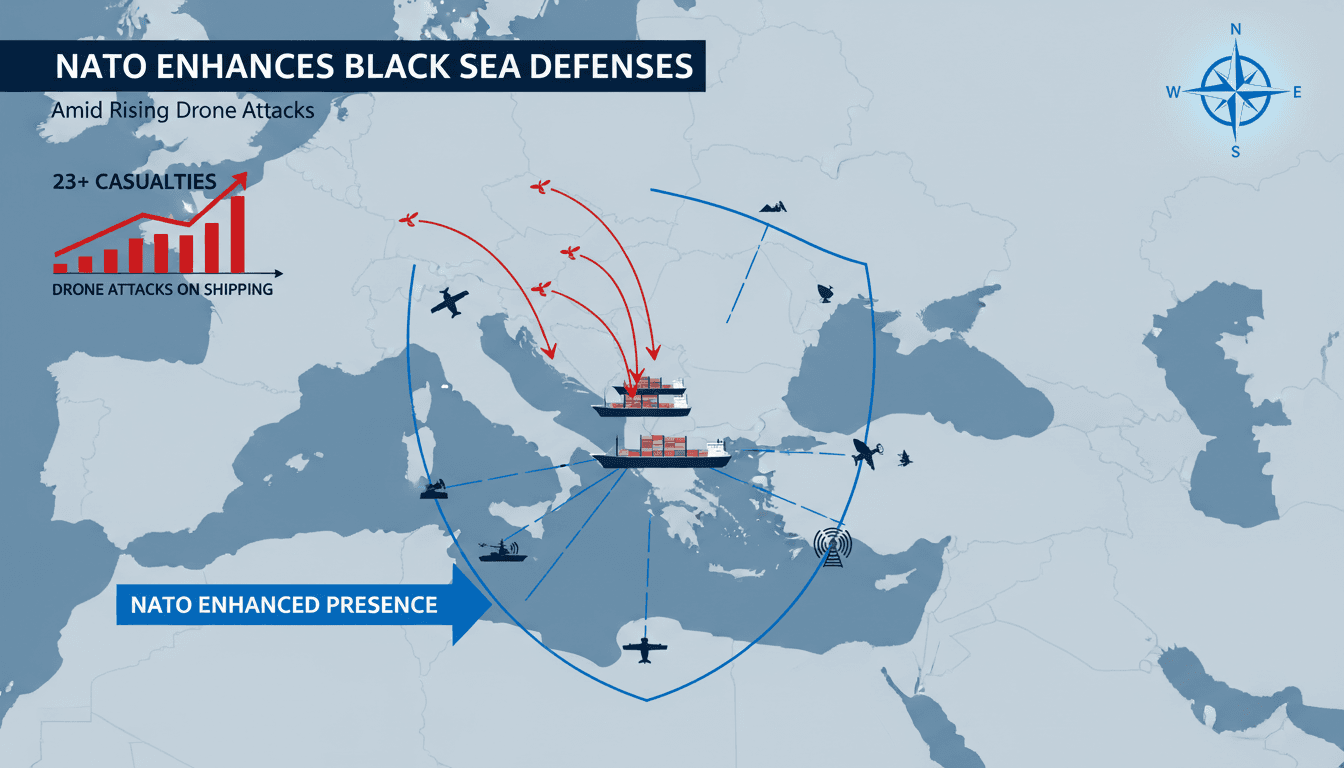
NATO Enhances Military Presence in Black Sea Amid Rising Drone Attacks on Shipping
Why it matters
The escalation of drone attacks in the Black Sea threatens international trade and food security, impacting global markets.
What happened (in 30 seconds)
- NATO announced the deployment of additional military assets to the Black Sea on October 21, 2026.
- Drone attacks on commercial vessels have resulted in at least 23 seafarers reported missing or dead.
- Bulgaria and Romania requested enhanced NATO support amid rising tensions and risks to navigation.
The context you actually need
- The Russia-Ukraine war has extended into the Black Sea, disrupting grain export routes critical for global food supplies.
- Recent drone strikes have targeted vessels in NATO member waters, raising alarms about maritime security.
- Insurance premiums for shipping in the Black Sea have surged, reflecting the heightened risk of operations in the region.
What's really happening
The recent surge in drone attacks on commercial shipping in the Black Sea is a strategic maneuver by Russia amid its ongoing conflict with Ukraine. These attacks, which have resulted in the loss of life and significant damage to vessels, are seen as part of a broader hybrid warfare strategy aimed at economically pressuring Ukraine while maintaining plausible deniability. By targeting grain export routes, Russia seeks to undermine Ukraine's economy and disrupt global food supplies, which are already under strain due to the war.
NATO's response, announced on October 21, 2026, involves deploying additional surveillance assets, including planes, drones, and radar systems, to enhance reconnaissance and counter-drone capabilities. This move is not just a reaction to the immediate threat but also a demonstration of NATO's commitment to its eastern flank and the security of its member states, particularly Romania and Bulgaria, which have been directly affected by these attacks.
The deployment of military assets is expected to bolster NATO's presence in the region, providing critical intelligence and operational support to deter further aggression. However, the situation remains fluid, with ongoing attacks reported even after NATO's announcement. The alliance's strategy aims to reassure member states while also sending a clear message to Moscow about the consequences of its actions.
As the conflict continues, the implications for global trade are significant. Elevated insurance premiums for shipping in the Black Sea reflect the increased risk, potentially leading to higher costs for goods and commodities. This situation could ripple through global markets, affecting everything from food prices to energy costs, particularly for countries reliant on imports.
In summary, NATO's deployment of additional assets to the Black Sea is a critical step in addressing the rising threat of drone attacks, but it also highlights the broader geopolitical tensions at play and their potential impact on global trade and security.
Who feels it first (and how)
- Shipping companies: Increased operational costs due to higher insurance premiums and potential delays.
- Seafarers: Heightened risks to safety and job security in affected regions.
- Consumers: Possible price increases on imported goods, particularly food and energy.
- NATO member states: Enhanced military readiness and potential economic impacts from disrupted trade routes.
What to watch next
- Insurance market trends: Monitor changes in shipping insurance premiums, which could indicate the level of risk perceived by insurers.
- NATO's military posture: Watch for further deployments or changes in strategy in response to ongoing threats in the Black Sea.
- Global commodity prices: Keep an eye on fluctuations in food and energy prices, which may be influenced by disruptions in Black Sea trade routes.
NATO has deployed additional surveillance assets to the Black Sea.
Continued drone attacks on commercial shipping as Russia seeks to exert pressure on Ukraine.
The long-term effectiveness of NATO's enhanced presence in deterring further aggression.
Frequently Asked Questions
- Why it matters?
- The escalation of drone attacks in the Black Sea threatens international trade and food security, impacting global markets.
- What happened (in 30 seconds)?
- NATO announced the deployment of additional military assets to the Black Sea on October 21, 2026. Drone attacks on commercial vessels have resulted in at least 23 seafarers reported missing or dead. Bulgaria and Romania requested enhanced NATO support amid rising tensions and risks to navigation.
- What's really happening?
- The recent surge in drone attacks on commercial shipping in the Black Sea is a strategic maneuver by Russia amid its ongoing conflict with Ukraine. These attacks, which have resulted in the loss of life and significant damage to vessels, are seen as part of a broader hybrid warfare strategy aimed at economically pressuring Ukraine while maintaining plausible deniability. By targeting grain export routes, Russia seeks to undermine Ukraine's economy and disrupt global food supplies, which are alre
- Who feels it first (and how)?
- Shipping companies: Increased operational costs due to higher insurance premiums and potential delays. Seafarers: Heightened risks to safety and job security in affected regions. Consumers: Possible price increases on imported goods, particularly food and energy. NATO member states: Enhanced military readiness and potential economic impacts from disrupted trade routes.
- What to watch next?
- Insurance market trends: Monitor changes in shipping insurance premiums, which could indicate the level of risk perceived by insurers. NATO's military posture: Watch for further deployments or changes in strategy in response to ongoing threats in the Black Sea. Global commodity prices: Keep an eye on fluctuations in food and energy prices, which may be influenced by disruptions in Black Sea trade routes.
Conservative-leaning political and national coverage.
"The Washington Times is a conservative-leaning newspaper known for its political coverage and advocacy of right-of-center viewpoints."
— A47 Editor
NATO sending more planes, drones to Black Sea amid surge in commercial ship attacks
NATO is deploying additional military assets, including planes and drones, to the Black Sea in response to a significant rise in attacks on commercial vessels navigating this crucial maritime route. This escalation follows recent drone strikes that t...
Global news coverage with extensive reporting on Middle Eastern conflicts and geopolitics.
"Al Jazeera is a Qatar-based broadcaster known for wide regional coverage and alternative perspectives."
— A47 Editor
NATO to send additional patrol planes to Black Sea after drone attacks
NATO has announced the deployment of additional patrol planes to the Black Sea following a series of drone attacks that have resulted in significant maritime incidents, including the disappearance of seven individuals off Romania's coast. This escala...
Comprehensive coverage of Middle Eastern and global issues.
"Al Jazeera is a prominent voice from the Global South, especially the Middle East, with an emphasis on underreported stories."
— A47 Editor
NATO to send additional patrol planes to Black Sea after drone attacks
NATO has announced the deployment of additional patrol planes to the Black Sea following a series of drone attacks that have resulted in significant maritime incidents, including the disappearance of seven individuals off Romania's coast. This escala...
International coverage from The Guardian's global desks.
"The Guardian is known for its progressive editorial stance and in-depth analysis."
— A47 Editor
Nato increases Black Sea deployment amid escalating deadly Russian attacks
NATO has increased its military presence in the Black Sea following a series of deadly Russian attacks on merchant vessels, including strikes on five ships on Tuesday. This escalation comes as Russia targets cargo vessels in Ukrainian ports, raising ...