
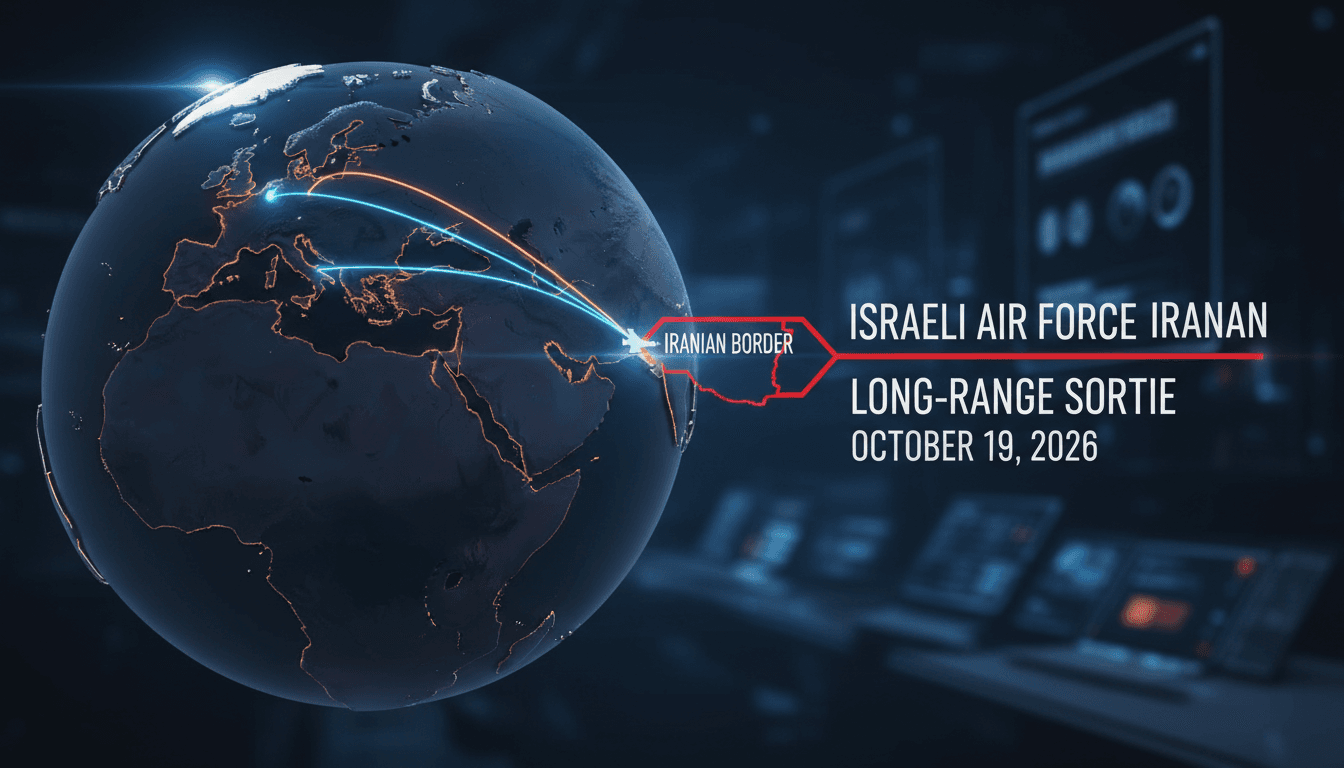
Israeli Air Force Conducts Long-Range Sortie Near Iranian Border
Why it matters
This military exercise underscores escalating tensions between Israel and Iran, which could have ripple effects on regional stability and global oil prices.
What happened (in 30 seconds)
- On October 19, 2026, dozens of Israeli Air Force fighter jets conducted a long-range training sortie through Syrian and Iraqi airspace, nearing the Iranian border.
- The operation was framed as a deterrence exercise ahead of Israel's parliamentary elections on October 27, with prior notification given to the United States.
- No strikes were conducted, and the sortie returned without entering Iranian airspace, but it raised concerns about potential miscalculations and escalations.
The context you actually need
- Heightened tensions: The sortie occurred amid ongoing confrontations between Israel and Iran, with Israeli Prime Minister Netanyahu publicly targeting Iranian capabilities.
- U.S. involvement: The U.S. was notified in advance, indicating a level of coordination, but also highlighting the delicate balance of power in the region.
- Election timing: The operation's timing, just before Israeli elections, suggests a strategic move to project strength domestically and deter Iranian aggression.
What's really happening
On the night of October 19, 2026, the Israeli Air Force (IAF) executed a significant military exercise involving dozens of fighter jets and aerial refueling tankers. The sortie followed a flight path that mirrored previous Israeli strikes on Iranian targets, advancing to within 800 miles (approximately 1,300 km) of the Iranian border before turning back. This operation was characterized by Israeli officials as a "power projection" exercise aimed at deterring Iranian attacks, particularly in light of the upcoming Knesset elections on October 27.
The decision to conduct this sortie was likely influenced by a combination of factors, including recent direct exchanges between Israel and Iran and Netanyahu's public directives aimed at countering Iranian capabilities. The U.S. was informed ahead of the mission, which indicates a level of strategic coordination, but also raises questions about the implications for U.S. foreign policy in the region. U.S. officials expressed concerns that the operation could provoke an Iranian response, potentially providing a pretext for further escalation.
The sortie's completion without engaging targets or entering Iranian airspace suggests a calculated approach by Israel, aiming to demonstrate military readiness while avoiding direct confrontation. However, the operation has been interpreted by Iranian state-linked media as a precursor to a U.S.-Israeli attack, reflecting the heightened state of alert within Iran. This perception could lead to increased military readiness on Iran's part, further complicating the regional security landscape.
The broader implications of this military exercise extend beyond immediate military concerns. The operation could influence global oil markets, particularly if tensions escalate and lead to disruptions in oil supply routes. Additionally, the geopolitical dynamics in the Middle East are increasingly interconnected, meaning that actions taken by Israel can have far-reaching consequences for U.S. interests and allies in the region.
Who feels it first (and how)
- Investors: Increased military tensions may lead to volatility in oil prices, impacting energy stocks and global markets.
- Travelers: Heightened security measures and potential military actions could affect travel plans to and from the Middle East.
- Regional governments: Neighboring countries may feel pressure to respond or adjust their military postures in light of Israeli actions.
What to watch next
- Iran's military response: Monitor for any retaliatory actions or escalations from Iran, which could further destabilize the region.
- U.S. foreign policy shifts: Watch for changes in U.S. support for Israel or adjustments in military aid, especially in the context of upcoming midterm elections.
- Market reactions: Keep an eye on oil prices and stock market fluctuations, particularly in sectors sensitive to geopolitical tensions.
The sortie was completed without strikes or immediate escalation.
Increased military readiness from Iran and potential market volatility in response to heightened tensions.
The long-term impact on U.S.-Israel relations and how it will affect regional alliances.
Frequently Asked Questions
- Why it matters?
- This military exercise underscores escalating tensions between Israel and Iran, which could have ripple effects on regional stability and global oil prices.
- What happened (in 30 seconds)?
- On October 19, 2026, dozens of Israeli Air Force fighter jets conducted a long-range training sortie through Syrian and Iraqi airspace, nearing the Iranian border. The operation was framed as a deterrence exercise ahead of Israel's parliamentary elections on October 27, with prior notification given to the United States. No strikes were conducted, and the sortie returned without entering Iranian airspace, but it raised concerns about potential miscalculations and escalations.
- What's really happening?
- On the night of October 19, 2026, the Israeli Air Force (IAF) executed a significant military exercise involving dozens of fighter jets and aerial refueling tankers. The sortie followed a flight path that mirrored previous Israeli strikes on Iranian targets, advancing to within 800 miles (approximately 1,300 km) of the Iranian border before turning back. This operation was characterized by Israeli officials as a "power projection" exercise aimed at deterring Iranian attacks, particularly in ligh
- Who feels it first (and how)?
- Investors: Increased military tensions may lead to volatility in oil prices, impacting energy stocks and global markets. Travelers: Heightened security measures and potential military actions could affect travel plans to and from the Middle East. Regional governments: Neighboring countries may feel pressure to respond or adjust their military postures in light of Israeli actions.
- What to watch next?
- Iran's military response: Monitor for any retaliatory actions or escalations from Iran, which could further destabilize the region. U.S. foreign policy shifts: Watch for changes in U.S. support for Israel or adjustments in military aid, especially in the context of upcoming midterm elections. Market reactions: Keep an eye on oil prices and stock market fluctuations, particularly in sectors sensitive to geopolitical tensions.
Arabic-language coverage of international news and geopolitics.
"RT Arabic is a Russian state-funded outlet often criticized for promoting Kremlin-aligned narratives."
— A47 Editor
Axios: مقاتلات إسرائيلية عبرت أجواء سوريا والعراق ونفذت "استعراضا للقوة" قرب حدود إيران
Axios reported that Israeli fighter jets flew over Syria and Iraq, conducting a show of force near the Iranian border, according to Israeli and American officials. This maneuver involved dozens of aircraft and highlights ongoing military activities i...
Jordanian news and regional updates.
"Roya News is a Jordanian outlet focused on breaking news and local affairs."
— A47 Editor
طائرات إسرائيلية تنفذ طلعات جوية قرب الحدود الإيرانية
Israeli fighter jets and refueling aircraft conducted multiple sorties near the Iranian border, indicating an escalation in military activity in the region. This operation reflects Israel's ongoing concerns regarding security threats from Iran and it...
Arabic-language political and world news coverage for UAE readers.
"Emarat Al Youm world coverage usually presents international developments through a UAE and Arab audience lens."
— A47 Editor
"إكسيوس": عشرات المقاتلات الإسرائيلية أجرت طلعة جوية الإثنين وصولاً لحدود إيران "إكسيوس": عشرات المقاتلات الإسرائيلية أجرت طلعة جوية الإثنين وصولاً لحدود إيران
Axios reported that dozens of Israeli fighter jets conducted an air sortie on Monday, flying through Syrian airspace and reaching the borders of Iran. This operation highlights the ongoing military activities and tensions in the region, particularly ...