
Tommy Robinson Testifies About Hiring Private Investigators to Intimidate Journalists
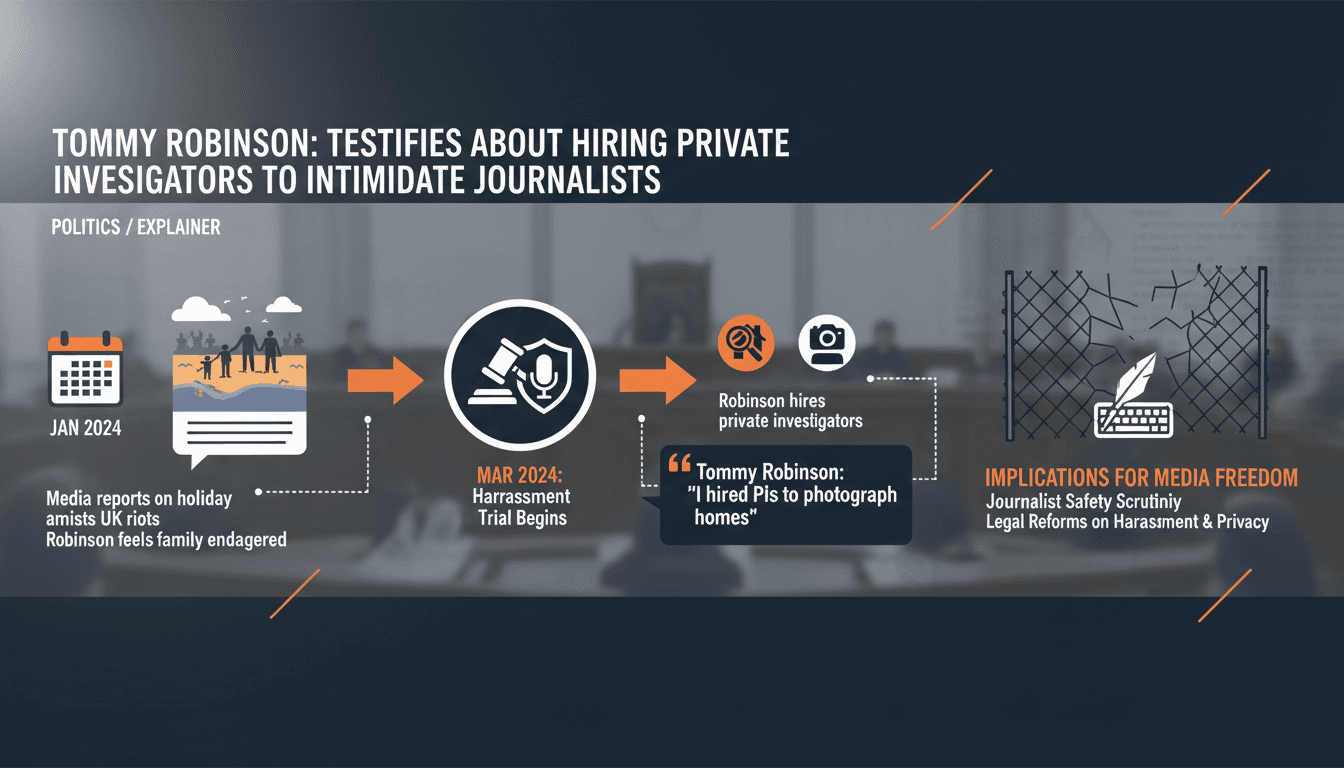
Why it matters
This case highlights the ongoing tensions between public figures and the press, raising critical questions about harassment and the protection of journalistic integrity.
What happened (in 30 seconds)
- Tommy Robinson testified that he hired private investigators to photograph the homes of two journalists during his harassment trial.
- Robinson faces two counts of harassment, which he claims were a response to perceived threats against his family.
- The trial is ongoing, with no verdict yet, as concerns grow over the implications for press freedom.
The context you actually need
- The trial stems from events in August 2024, following media coverage of Robinson's holiday during UK riots, which he viewed as endangering his family.
- Robinson's actions included sharing journalists' home details on social media, leading to fears of vigilante attacks among the reporters involved.
- The case reflects broader issues of harassment against journalists, particularly those covering controversial figures and events.
What's really happening
Tommy Robinson's trial is not just a legal battle; it represents a significant moment in the ongoing struggle between public figures and the media. The events leading up to this trial began in July 2024, when Robinson was on holiday in Cyprus while the UK faced severe riots following the Southport stabbings. The Daily Mail's coverage of his vacation, including headlines that accused him of "stoking race riots from his sunbed," provoked a strong reaction from Robinson, who felt that his family's safety was compromised.
In response, Robinson employed private investigators to gather information about the journalists covering him. This included obtaining their home addresses and contact details, which he then shared with his followers on social media. His testimony in court revealed that he intended to "put pressure" on the journalists to retract their stories, although he denied any intent to intimidate them directly. This tactic of using private investigators to surveil journalists raises serious ethical questions about the lengths to which public figures will go to protect their image and the potential consequences for press freedom.
The implications of this case extend beyond Robinson himself. It highlights a growing trend of harassment against journalists, particularly those who report on controversial figures. The fear of retaliation can lead to self-censorship among reporters, ultimately undermining the public's right to know. As journalists express concerns about their safety, some have even taken measures such as moving homes or seeking close protection, indicating a chilling effect on the media landscape.
Moreover, the trial is occurring in a broader context where media freedom is increasingly under threat in various parts of the world. The rise of social media has empowered individuals like Robinson to mobilize their followers against journalists, creating an environment where intimidation can flourish. This case serves as a critical reminder of the need for robust protections for journalists and the importance of upholding the principles of a free press.
Who feels it first (and how)
- Journalists: Facing increased risks and potential harassment, leading to self-censorship and safety concerns.
- Media organizations: May need to implement stronger security measures for their staff and reconsider how they cover controversial figures.
- Public figures: Could feel emboldened to retaliate against unfavorable coverage, potentially leading to a more hostile environment for the press.
What to watch next
- Trial verdict: The outcome will set a precedent for how harassment cases involving public figures are handled in the future.
- Media responses: Watch for changes in how media organizations protect their journalists and report on controversial subjects.
- Public discourse: Monitor discussions around press freedom and harassment, as this case may influence public opinion and policy.
Robinson is facing two counts of harassment causing fear of violence.
The trial will spark renewed debates about media freedom and the safety of journalists.
The long-term impact on public figures' interactions with the media remains to be seen.
Frequently Asked Questions
- Why it matters?
- This case highlights the ongoing tensions between public figures and the press, raising critical questions about harassment and the protection of journalistic integrity.
- What happened (in 30 seconds)?
- Tommy Robinson testified that he hired private investigators to photograph the homes of two journalists during his harassment trial. Robinson faces two counts of harassment, which he claims were a response to perceived threats against his family. The trial is ongoing, with no verdict yet, as concerns grow over the implications for press freedom.
- What's really happening?
- Tommy Robinson's trial is not just a legal battle; it represents a significant moment in the ongoing struggle between public figures and the media. The events leading up to this trial began in July 2024, when Robinson was on holiday in Cyprus while the UK faced severe riots following the Southport stabbings. The Daily Mail's coverage of his vacation, including headlines that accused him of "stoking race riots from his sunbed," provoked a strong reaction from Robinson, who felt that his family's
- Who feels it first (and how)?
- Journalists: Facing increased risks and potential harassment, leading to self-censorship and safety concerns. Media organizations: May need to implement stronger security measures for their staff and reconsider how they cover controversial figures. Public figures: Could feel emboldened to retaliate against unfavorable coverage, potentially leading to a more hostile environment for the press.
- What to watch next?
- Trial verdict: The outcome will set a precedent for how harassment cases involving public figures are handled in the future. Media responses: Watch for changes in how media organizations protect their journalists and report on controversial subjects. Public discourse: Monitor discussions around press freedom and harassment, as this case may influence public opinion and policy.
Top international stories selected by The Guardian editors.
"The Guardian is known for its progressive editorial stance and in-depth analysis."
— A47 Editor
Tommy Robinson tells court he had photos taken of journalists’ homes to pressure them
Tommy Robinson, a far-right activist, testified in court that he employed private investigators to locate journalists who reported on his involvement in the 2024 riots, claiming he took photographs of their homes to exert pressure on them. He denied ...
United Kingdom-focused news including local politics, business, and social issues.
"BBC News is widely regarded as a reputable international news organization, known for its impartial tone and public service mandate."
— A47 Editor
Tommy Robinson hired detectives to find journalists, court told
Tommy Robinson, a far-right activist, is currently on trial for allegedly harassing journalists from the Daily Mail, with claims that he hired detectives to locate them. The court has heard emotional testimonies, including accusations of intimidation...
International coverage from The Guardian's global desks.
"The Guardian is known for its progressive editorial stance and in-depth analysis."
— A47 Editor
‘I’ll make you famous’: court hears recording of Tommy Robinson threat to Daily Mail editor
Tommy Robinson, a far-right activist, is currently on trial for allegedly harassing journalists from the Daily Mail, including leaving a threatening voicemail for editor Ted Verity, in which he claimed he would make the journalists and their families...