
Iran's IRGC Threatens Subsea Internet Cables in Strait of Hormuz
Why it matters
The threats to undersea internet cables could destabilize regional connectivity and impact global financial systems.
What happened (in 30 seconds)
- On October 20-22, 2026, Iran's IRGC threatened to target undersea internet cables in the Strait of Hormuz.
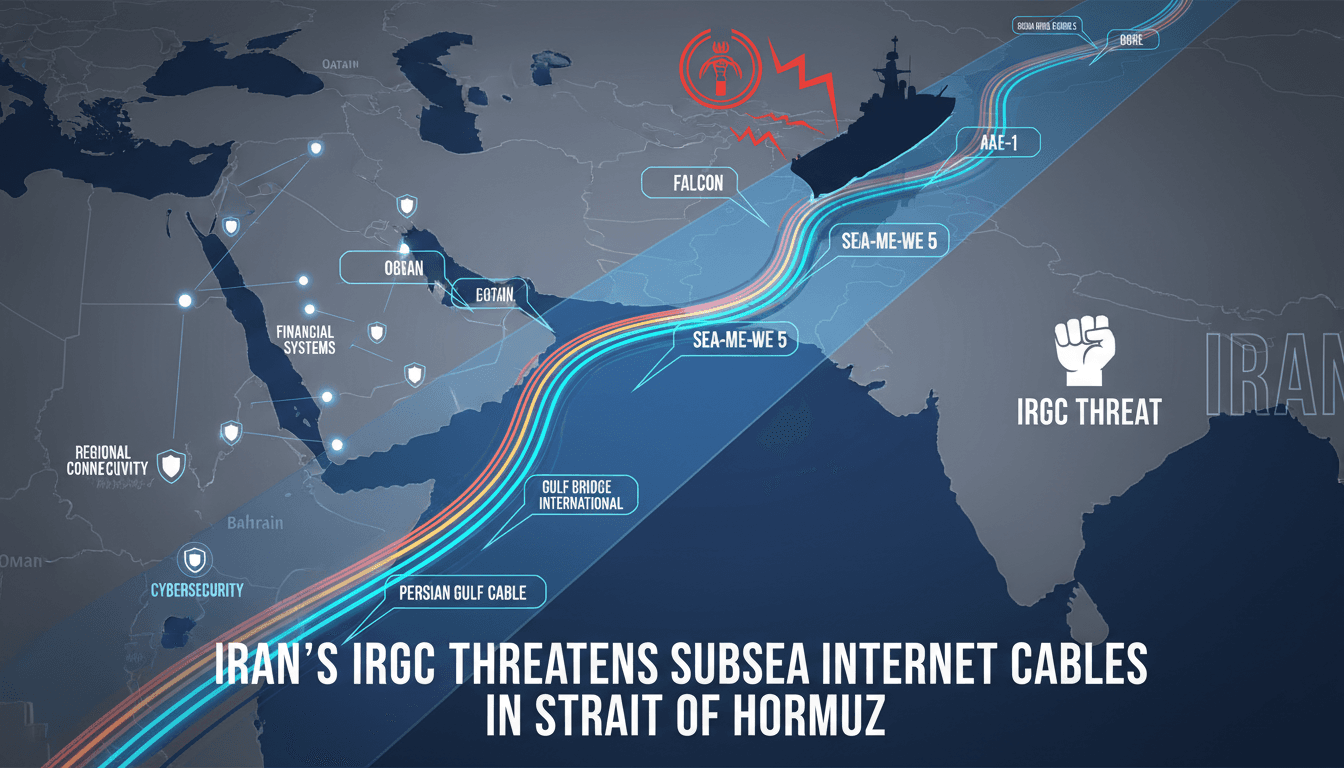
- Seven major cables were identified as potential targets, crucial for Gulf states' digital infrastructure.
- Iran's threats are a response to perceived aggression from the US and Israel, escalating regional tensions.
The context you actually need
- The Strait of Hormuz is a vital chokepoint for both oil exports and digital communications, with Gulf states heavily invested in technology.
- Prior conflicts in 2026 between the US, Israel, and Iran have already strained relations, leading to attacks on Gulf data centers and AI facilities.
- Iran's asymmetric deterrence strategy aims to leverage its geographical position to threaten critical infrastructure, impacting both energy and communications.
What's really happening
The recent threats from Iran's Islamic Revolutionary Guard Corps (IRGC) highlight a significant escalation in the ongoing geopolitical tensions in the Persian Gulf. The IRGC's spokespersons, including Hossein Mohebbi and Yadollah Javani, have publicly identified seven major undersea internet cables as potential targets, framing them as part of Iran's broader deterrence strategy against perceived threats from the US and Israel. This rhetoric is not merely bluster; it reflects a calculated approach to leverage Iran's strategic position in the Strait of Hormuz, a critical chokepoint for global oil and digital communications.
The threats come in the wake of a series of conflicts in 2026, where attacks on Gulf data centers and AI facilities have already raised alarms about the region's digital security. The IRGC's statements suggest a willingness to expand the scope of its targets beyond traditional military assets to include vital communications infrastructure, which could have far-reaching implications for regional stability. The cables in question are essential for the functioning of data centers and cloud services that many Gulf states rely on, particularly as they invest heavily in AI and digital technologies.
Moreover, the IRGC's threats are strategically timed, coinciding with potential escalations in US-Iran relations following the US midterm elections. By signaling a readiness to disrupt communications, Iran aims to deter any military action against its assets while simultaneously sending a message to Gulf states that their digital infrastructure is vulnerable. This tactic could lead to a chilling effect on investments in the region's tech sector, as businesses weigh the risks of operating in an increasingly hostile environment.
The implications of these threats extend beyond immediate military concerns. Gulf states, particularly those like Qatar and the UAE, are heavily integrated into global digital networks, and any disruption could have cascading effects on financial transactions, cloud services, and AI operations. While alternative land-based routes exist, they may not fully mitigate the latency or capacity losses critical for sectors reliant on high-speed internet. As a result, the IRGC's threats could lead to a reevaluation of infrastructure investments and security measures across the region.
Who feels it first (and how)
- Tech companies: Businesses relying on data centers and cloud services may face operational disruptions.
- Financial institutions: Banks and financial services could experience delays in transactions and data processing.
- Government agencies: National security and communication agencies may need to enhance cybersecurity measures.
- Consumers: Everyday internet users in the Gulf could see slower internet speeds and service interruptions.
What to watch next
- Infrastructure diversification: Monitor Gulf states' efforts to diversify their digital infrastructure to mitigate risks.
- Military responses: Watch for any military maneuvers or alliances formed in response to Iran's threats.
- Market reactions: Keep an eye on how tech and financial markets react to potential disruptions in the region.
Iran has issued threats against undersea internet cables.
Gulf states will increase discussions on infrastructure protection and cybersecurity.
The immediate impact on global internet connectivity and financial systems remains uncertain.
Frequently Asked Questions
- Why it matters?
- The threats to undersea internet cables could destabilize regional connectivity and impact global financial systems.
- What happened (in 30 seconds)?
- On October 20-22, 2026, Iran's IRGC threatened to target undersea internet cables in the Strait of Hormuz. Seven major cables were identified as potential targets, crucial for Gulf states' digital infrastructure. Iran's threats are a response to perceived aggression from the US and Israel, escalating regional tensions.
- What's really happening?
- The recent threats from Iran's Islamic Revolutionary Guard Corps (IRGC) highlight a significant escalation in the ongoing geopolitical tensions in the Persian Gulf. The IRGC's spokespersons, including Hossein Mohebbi and Yadollah Javani, have publicly identified seven major undersea internet cables as potential targets, framing them as part of Iran's broader deterrence strategy against perceived threats from the US and Israel. This rhetoric is not merely bluster; it reflects a calculated approac
- Who feels it first (and how)?
- Tech companies: Businesses relying on data centers and cloud services may face operational disruptions. Financial institutions: Banks and financial services could experience delays in transactions and data processing. Government agencies: National security and communication agencies may need to enhance cybersecurity measures. Consumers: Everyday internet users in the Gulf could see slower internet speeds and service interruptions.
- What to watch next?
- Infrastructure diversification: Monitor Gulf states' efforts to diversify their digital infrastructure to mitigate risks. Military responses: Watch for any military maneuvers or alliances formed in response to Iran's threats. Market reactions: Keep an eye on how tech and financial markets react to potential disruptions in the region.
Regional coverage and analysis focused on politics, diplomacy, and business across the Middle East.
"Al-Monitor is known for analytical reporting on Middle East politics and policy developments."
— A47 Editor
What Iran’s threats to Hormuz internet cables mean for Gulf
Iran's Islamic Revolutionary Guard Corps has issued threats to disrupt vital internet and communication cables in the Strait of Hormuz, warning that such actions may occur if U.S. aggression in the region escalates. This announcement highlights the o...
English-language reporting on Saudi politics, policy, and society.
"Saudi Gazette reflects mainstream Saudi institutional perspectives."
— A47 Editor
Iran's IRGC threatens US bases over Hormuz escorts, claims strikes on 7 ships
Iran's Islamic Revolutionary Guard Corps (IRGC) has issued a warning to the United States, threatening to target American military bases in the Middle East if the U.S. continues its naval escorts of ships through the strategically vital Strait of Hor...
English-language reporting on Saudi politics, policy, and society.
"Saudi Gazette reflects mainstream Saudi institutional perspectives."
— A47 Editor
Iran’s IRGC threatens to target subsea cables in Strait of Hormuz
Iran's Islamic Revolutionary Guard Corps (IRGC) has issued a threat to target undersea communication cables in the Strait of Hormuz, claiming that these cables are crucial for internet and commercial data traffic. IRGC spokesman Hossein Mohebbi state...