
Israeli Election Produces Deadlock as Netanyahu and Eisenkot Blocs Fall Short of 61-Seat Majority
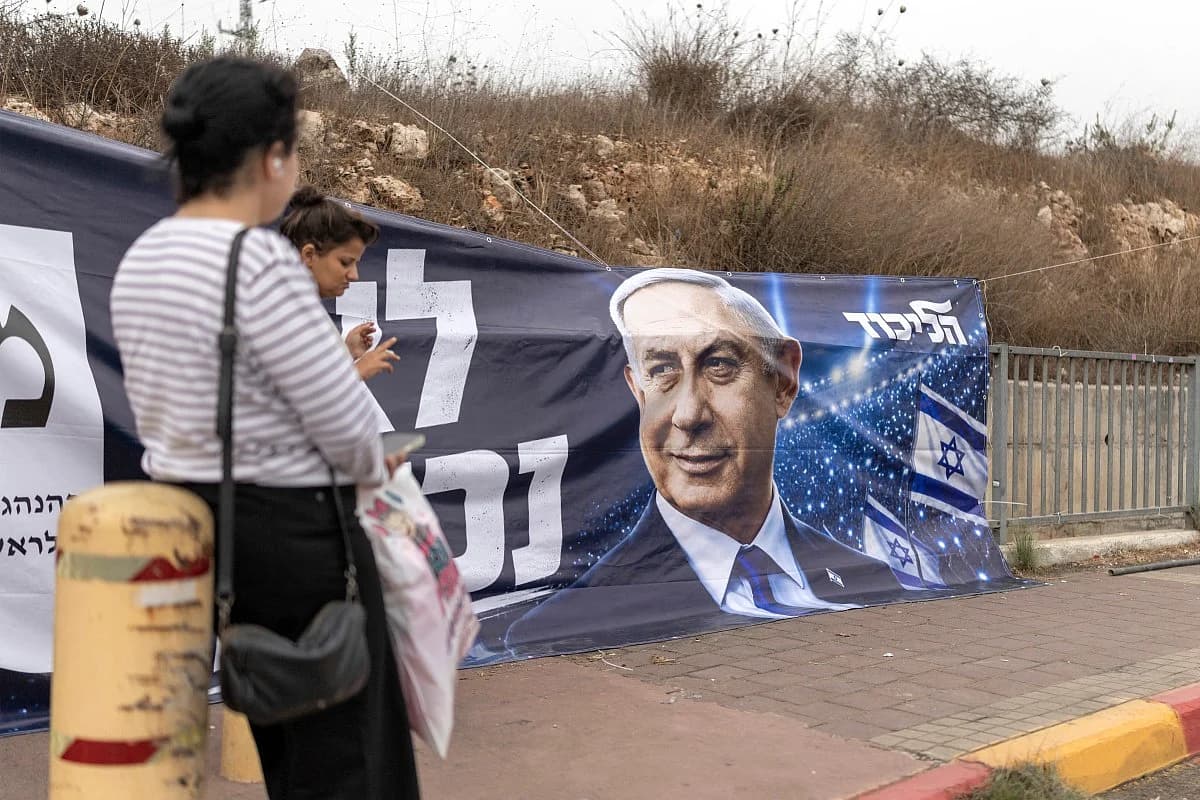
Extended political paralysis in Jerusalem keeps caretaker leadership in place, preserving baseline regional security friction while delaying decisive shifts in energy and trade corridors across the Middle East.
Why it matters
A fractured 120-seat Knesset leaves neither major bloc with a viable governing path, prolonging policy uncertainty across regional logistics hubs, energy markets, and diplomatic normalization channels.
What happened (in 30 seconds)
- Voters delivered a split verdict on October 27, 2026, leaving Prime Minister Benjamin Netanyahu’s right-wing bloc at roughly 53 seats and Gadi Eisenkot’s centrist opposition at 48 seats.
- Neither faction secured the threshold of 61 seats required to form a majority government in the 120-seat Knesset, despite record voter participation of 77.7% to 78%.
- Arab parties surged to 19 seats, creating an arithmetic barrier that prevents either primary alliance from easily building a traditional legislative coalition.
The context you actually need
- First election since October 2023: This vote represented the initial national electoral test following the multi-front regional conflicts involving Gaza, Lebanon, and direct strikes on Iran.
- Arithmetic constraints dictate outcomes: Most Jewish parliamentary factions maintain commitments against formally governing alongside Arab parties, narrowing coalition models down to either a national unity pact or repeated snap elections.
- Caretaker authorities remain functional: Under statutory protocol, Netanyahu retains prime ministerial executive authority throughout negotiation rounds that typically stretch across weeks or months.
What's really happening
The mechanics of Israel's parliamentary math have created structural stagnation. To reach the 61-seat threshold, every prospective premier must assemble disparate factions whose legislative incentives directly conflict. Netanyahu’s bloc holds 53 seats, leaving him eight votes short of a governing coalition. Eisenkot’s camp commands 48 seats, trailing the threshold by 13. While Arab parties accumulated 19 seats, existing commitments by Jewish factions rule out joint governance, neutralizing those seats as viable coalition building blocks for either candidate.
This arithmetic leaves Netanyahu in place as caretaker prime minister. In Israeli governance, a caretaker executive possesses legally restrained authority but retains operational control over security architecture and foreign policy execution. Because dissolving the Knesset without an agreed successor triggers fresh elections rather than an immediate transition of power, the incumbent administration operates without a clear deadline forcing a handover.
For regional markets, this unresolved status alters diplomatic and economic incentives. Normalization frameworks require stable counterparties capable of passing binding bilateral treaties and legislative concessions. A caretaker cabinet lacks the legislative capital to execute major regional treaties or implement long-term structural reforms. Instead, governing incentives tilt toward maintaining established deterrence baselines to ensure domestic security cohesion.
The immediate alternative pathways carry operational friction. A national unity arrangement between Likud and Eisenkot’s centrist party would demand compromises on judicial policy, military conscription, and post-conflict administrative frameworks that neither base readily supports. If negotiations stall completely, Israel faces automatic snap elections within months, repeating the cycle of interim governance that characterized Israeli politics between 2019 and 2022.
Consequently, regional policy remains frozen at its current baseline. Cross-border trade networks, civil aviation routings, and energy supply agreements must price in prolonged diplomatic drift rather than a clean pivot toward regional reconciliation or comprehensive defense realignment.
Who feels it first (and how)
- Aviation and maritime logistics operators in the Gulf: Route planning and regional airspace corridors face persistent exposure to sudden operational detours linked to unresolved military posturing.
- Energy trading desks: Global oil benchmarks retain a structural risk premium tied to potential security escalations between regional actors and a caretaker cabinet.
- Diplomatic and trade liaisons in Dubai: Normalization files and cross-border commercial frameworks remain on administrative hold until a formal governing coalition is seated.
- Defense and regional security analysts: Long-term ceasefire tracking shifts toward monitoring tactical containment, as caretaker administrations avoid high-risk diplomatic concessions.
What to watch next
- Knesset mandate assignments: Watch the formal assignment of the coalition-forming mandate by the state presidency, which establishes a strict 28-day countdown for initial negotiations.
- Likud-centrist unity negotiations: Track whether Eisenkot's faction shows openness to rotational leadership arrangements, which represents the only mathematical route to avoiding repeat elections without Arab party participation.
- Caretaker security posturing: Observe defense ministry directives regarding northern border security and strategic deterrence assets, where interim administrations retain executive discretion.
The general election yielded 53 seats for Netanyahu’s alliance, 48 for Eisenkot’s opposition, and 19 for Arab parties, leaving all coalitions below the 61-seat majority.
Government formation talks will extend for months, leaving Netanyahu presiding over an interim administration with operational security powers intact.
Whether major factions will agree to an emergency unity government or trigger a return to national ballots in mid-2027.
Frequently Asked Questions
- Why it matters?
- A fractured 120-seat Knesset leaves neither major bloc with a viable governing path, prolonging policy uncertainty across regional logistics hubs, energy markets, and diplomatic normalization channels.
- What happened (in 30 seconds)?
- Voters delivered a split verdict on October 27, 2026, leaving Prime Minister Benjamin Netanyahu’s right-wing bloc at roughly 53 seats and Gadi Eisenkot’s centrist opposition at 48 seats. Neither faction secured the threshold of 61 seats required to form a majority government in the 120-seat Knesset, despite record voter participation of 77.7% to 78%. Arab parties surged to 19 seats, creating an arithmetic barrier that prevents either primary alliance from easily building a traditional legislativ
- What's really happening?
- The mechanics of Israel's parliamentary math have created structural stagnation. To reach the 61-seat threshold, every prospective premier must assemble disparate factions whose legislative incentives directly conflict. Netanyahu’s bloc holds 53 seats, leaving him eight votes short of a governing coalition. Eisenkot’s camp commands 48 seats, trailing the threshold by 13. While Arab parties accumulated 19 seats, existing commitments by Jewish factions rule out joint governance, neutralizing those
- Who feels it first (and how)?
- Aviation and maritime logistics operators in the Gulf: Route planning and regional airspace corridors face persistent exposure to sudden operational detours linked to unresolved military posturing. Energy trading desks: Global oil benchmarks retain a structural risk premium tied to potential security escalations between regional actors and a caretaker cabinet. Diplomatic and trade liaisons in Dubai: Normalization files and cross-border commercial frameworks remain on administrative hold until a
- What to watch next?
- Knesset mandate assignments: Watch the formal assignment of the coalition-forming mandate by the state presidency, which establishes a strict 28-day countdown for initial negotiations. Likud-centrist unity negotiations: Track whether Eisenkot's faction shows openness to rotational leadership arrangements, which represents the only mathematical route to avoiding repeat elections without Arab party participation. Caretaker security posturing: Observe defense ministry directives regarding northern
Global political, business, and cultural coverage from WSJ international desks.
"The Wall Street Journal offers extensive international reporting with a reputation for financial insight and a center-right editorial stance."
— A47 Editor
Netanyahu Holds on as Election Results Show No Clear Winner
Israeli voters went to the polls in a parliamentary election widely seen as a referendum on Prime Minister Benjamin Netanyahu, the first national vote since the October 7, 2023 Hamas attacks. As votes were counted, Netanyahu's results improved, but h...
UAE-based English-language newspaper covering regional politics, economics, and global affairs.
"The National reflects Emirati policy perspectives while maintaining international editorial standards."
— A47 Editor
Israel election live: Opposition optimism as Netanyahu's party requests extended voting hours
Israelis went to the polls on October 27, 2026, in the first national general election since Hamas's October 7, 2023 attacks, a vote widely framed as a referendum on Prime Minister Benjamin Netanyahu, who has led the country almost continuously for n...
News and current affairs from across Europe.
"The Guardian is known for its progressive editorial stance and in-depth analysis."
— A47 Editor
These four elections could change the world in 10 days – Stateside with Kai and Carter
Israelis are voting on Tuesday, October 27, in their first national election since the Oct. 7, 2023 attacks, a contest widely seen as a referendum on Prime Minister Benjamin Netanyahu and his Likud party. The vote arrives as Netanyahu faces a battle ...
News from the United States including domestic politics, society, and culture.
"The Guardian is known for its progressive editorial stance and in-depth analysis, often advocating for social justice, environmental issues, and liberal values."
— A47 Editor
These four elections could change the world in 10 days – Stateside with Kai and Carter
Israelis are voting on Tuesday, October 27, in their first national election since the Oct. 7, 2023 attacks, a contest widely seen as a referendum on Prime Minister Benjamin Netanyahu and his Likud party. The vote arrives as Netanyahu faces a battle ...
English-language reporting on Saudi politics, policy, and society.
"Saudi Gazette reflects mainstream Saudi institutional perspectives."
— A47 Editor
High voter turnout in Israel as Netanyahu faces crucial test
Israelis surged to the polls in the first national election since the October 7, 2023 Hamas-led attacks, with turnout reaching 16.68% by 10 a.m. local time, the highest recorded at that hour in 45 years, according to the Central Elections Committee. ...
UAE-based newspaper covering Gulf politics, society, and international developments.
"Gulf News is one of the UAE’s most prominent English-language publications."
— A47 Editor
Netanyahu's future on the line as Israel votes today: What you need to know
Israelis went to the polls on October 27, 2026, in a general election widely viewed as a referendum on Prime Minister Benjamin Netanyahu, who has led the country almost continuously for nearly 17 years. It is the first national vote since the October...
A curated Gulf News feed featuring major stories across news, business, opinion, and lifestyle.
"Gulf News is a major UAE newspaper whose featured stories feed reflects a broad editorial mix shaped for a Gulf audience."
— A47 Editor
Netanyahu's future on the line as Israel votes today: What you need to know
Israelis went to the polls on October 27, 2026, in a general election widely viewed as a referendum on Prime Minister Benjamin Netanyahu, who has led the country almost continuously for nearly 17 years. It is the first national vote since the October...
Global coverage of politics, crises, and international affairs.
"HuffPost provides progressive-oriented reporting on international developments, often focusing on humanitarian and social justice issues."
— A47 Editor
Polls Open In Israel For Tense National Election
Israelis went to the polls on October 27, 2026, in the first national election since the October 7, 2023 Hamas attacks, a vote widely seen as a referendum on Prime Minister Benjamin Netanyahu's political survival. Early exit polls showed no clear win...
Arabic-language coverage of international news and geopolitics.
"RT Arabic is a Russian state-funded outlet often criticized for promoting Kremlin-aligned narratives."
— A47 Editor
افتتاح مراكز الاقتراع في جميع أنحاء إسرائيل
Polling stations across Israel opened to voters for the Knesset elections, a race that pits Prime Minister Benjamin Netanyahu and his ruling coalition against the opposition bloc, according to RT Arabic.
English-language digital publication covering business, politics, technology, and current affairs.
"The Arabian Post mixes original and syndicated-style coverage with a broad regional and global business-news orientation."
— A47 Editor
Israel votes as Netanyahu faces wartime leadership verdict
Israelis went to the polls on October 27, 2026, in the first national election since the Hamas attacks of October 7, 2023, a vote widely viewed as a referendum on Prime Minister Benjamin Netanyahu, who has led the country almost continuously for near...
Breaking news and analysis from the UAE and Gulf region.
"Khaleej Times is a long-running UAE publication with broad regional coverage."
— A47 Editor
Israel to give verdict on PM Benjamin Netanyahu in pivotal election
Israeli voters went to the polls on October 27, 2026, in a parliamentary election that will effectively deliver a verdict on Prime Minister Benjamin Netanyahu's leadership, with more than 7.3 million eligible voters choosing the 120-member Knesset ac...
Regional coverage and analysis focused on politics, diplomacy, and business across the Middle East.
"Al-Monitor is known for analytical reporting on Middle East politics and policy developments."
— A47 Editor
Israel to give verdict on Netanyahu in pivotal election
Israelis are heading to the polls on October 27, 2026, in a general election widely viewed as a referendum on Prime Minister Benjamin Netanyahu, who has led the country almost continuously for nearly 17 years. It is the first national vote since the ...
UAE-based English-language newspaper covering regional politics, economics, and global affairs.
"The National reflects Emirati policy perspectives while maintaining international editorial standards."
— A47 Editor
Israel heads to polls at pivotal moment for Middle East
Israel is heading to national elections on October 27, 2026, a vote taking place amid a charged atmosphere following the October 7, 2023 Hamas attacks and ongoing multiple conflicts, with the base report framing the poll as a pivotal moment for the M...
International coverage of politics, security, and social issues.
"Global News is a mainstream Canadian outlet with a centrist editorial stance, focusing on factual reporting."
— A47 Editor
Netanyahu’s legacy on the line as Israelis head to elections this week
Netanyahu's legacy is on the line as Israelis head to the polls on October 27, 2026, in an election widely viewed as a referendum on the prime minister, who has dominated Israeli politics for nearly two decades and whose Likud party faces its most si...
24/7 international news from a French perspective in multiple languages.
"France 24 is viewed as a globally focused outlet with balanced coverage and a European perspective."
— A47 Editor
Israel braces for national elections seen as a referendum on Netanyahu
Israelis are preparing to vote on October 27 in the first national elections since the October 7, 2023 Hamas attacks, a contest widely seen as a referendum on Prime Minister Benjamin Netanyahu's leadership. Expatriate citizens, who cannot vote from a...
European coverage of Middle East politics and security issues.
"France 24 offers international reporting with a European editorial perspective."
— A47 Editor
Israel braces for national elections seen as a referendum on Netanyahu
Israelis are preparing to vote on October 27 in the first national elections since the October 7, 2023 Hamas attacks, a contest widely seen as a referendum on Prime Minister Benjamin Netanyahu's leadership. Expatriate citizens, who cannot vote from a...