
Urda High-Speed Rail Collision Kills 69 and Triggers Political Crisis in Spain
Critical infrastructure failures in major European transit corridors introduce operational delays, supply chain re-routing costs, and regulatory scrutiny across cross-border transport networks.
Why it matters
The convergence of back-to-back transit network breakdowns and sudden administrative volatility directly challenges the operational reliability and risk models governing European transport corridors.
What happened (in 30 seconds)
* A lethal collision in Toledo province: On October 28, 2026, at 8:53 a.m., an operational Renfe AVE high-speed train collided with a stationary IRYO passenger train near Urda, traveling between 160 and 200 km/h. * Casualties and rescue mobilization: Official counts confirmed 69 fatalities and 57 hospitalizations, requiring the deployment of over 800 emergency response personnel to the site. * A fatal signaling breakdown: The disaster occurred after an initial computer malfunction halted rail traffic, followed by an operational command from central dispatch directing the Renfe train to proceed without standard speed restrictions.
The context you actually need
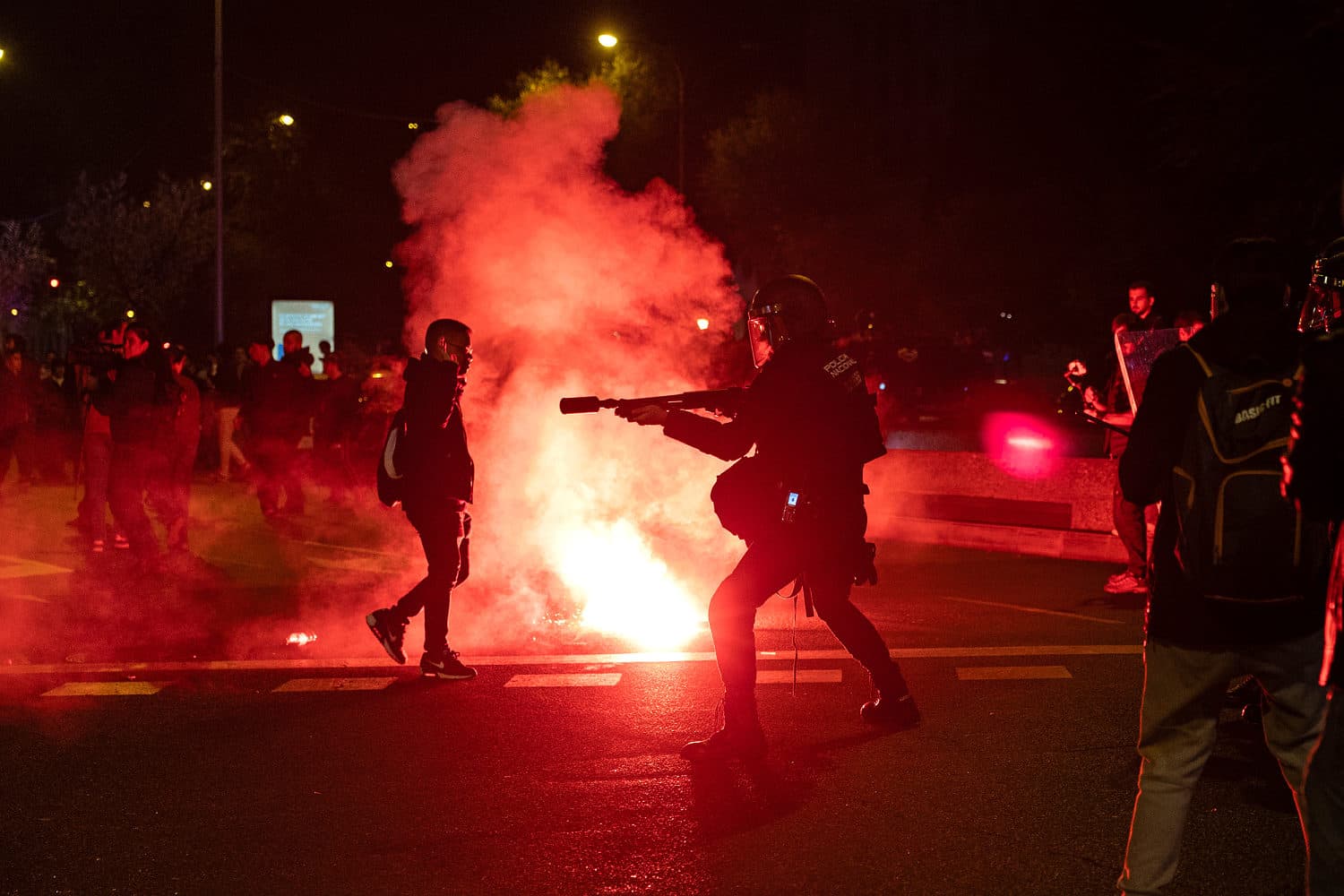
* A sudden disruption to a 30-year record: Spain's high-speed rail network operated for more than three decades without a fatal crash, but Urda represents the second deadly incident in 2026 following a January collision that claimed 46 lives. * Mounting friction on state infrastructure: The crash compounds broader operational strains, arriving alongside organized labor strikes, housing shortages, and prior public demonstrations across major urban centers. * Heightened electoral sensitivity: The failure occurred just weeks ahead of a snap national election scheduled for November 29, abruptly freezing formal campaign events and accelerating public demonstrations outside the Transportation Ministry in Madrid.
What's really happening
The disaster at Urda exposes structural vulnerabilities within the operational mechanics of liberalized rail corridors. When European passenger rail deregulation opened high-speed tracks to multi-operator models—such as state-owned Renfe operating alongside private consortiums like IRYO—the safety framework shifted from single-entity oversight to shared centralized signaling networks. Under normal operating conditions, digital rail management systems maintain automated safety buffers that override manual driver input.
In this instance, the technological fail-safe broke down in two phases. First, a computer network fault halted corridor movements. Second, manual command protocols overrode standard safety restrictions, directing a high-speed train onto an occupied segment at speeds up to 200 km/h. The incident highlights the systemic friction between centralized routing dispatch and multi-carrier track utilization.
From an infrastructure asset perspective, the collision introduces operational and balance-sheet adjustments for both Renfe and IRYO. With trade unions initiating industrial actions and rejecting individual-operator liability, the focus shifts toward network-wide maintenance allocations and the administrative bodies managing signaling infrastructure. When maintenance backlogs or technical dispatch errors trigger automated halts, the pressure to restore line throughput can create perverse operational incentives to bypass automatic speed caps.
The political timing sharpens these operational pressures. With a snap election scheduled for November 29, the transport network's failure removes the incumbent administration's ability to compartmentalize technical rail management from broader governance performance. The Ministry of Transportation's characterization of the dispatch clearance as an "inexplicable" directive reflects the breakdown between protocol and human execution.
For commercial operators dependent on European rail transport, the risk profile changes immediately. When rail safety integrity deteriorates across key regional nodes, the downstream impacts include mandatory operational speed caps, expanded safety review windows, and extended rolling stock inspections. These precautionary adjustments reduce line capacity, lengthen standard transit times, and increase operational overhead across passenger and freight logistics networks.
Who feels it first (and how)
* European supply chain and logistics managers: Slower line authorizations and union industrial actions lead to transit delays and route re-allocations across southern European freight corridors. * Corporate travelers between Madrid and Andalusia: Immediate service curtailments and systemic safety reassessments reduce daily high-speed seat capacity and extend travel times. * Rail network operators (Renfe and IRYO): Heightened regulatory audits, insurance re-pricing, and capital deployment shifted from network expansion toward emergency signaling modernizations. * Spanish public sector administrators: Transport Ministry decision-makers face immediate institutional reorganization and operational accountability reviews before the November 29 vote.
What to watch next
* Central rail dispatch audit findings: Official technical conclusions regarding why automated train-stop systems failed to prevent the Renfe train from entering an occupied track block. * Union strike duration and scope: The extent of rail union walkouts, which will signal whether service disruptions remain localized or expand across the entire national passenger and freight grid. * November 29 electoral polling adjustments: Public voting indicators shifting in response to infrastructure and governance debates ahead of the snap election.
Sixty-nine individuals died and 57 were hospitalized after a Renfe AVE train struck an IRYO train at 160–200 km/h near Urda on October 28, 2026, following a computer malfunction and dispatch error.
Transport authorities will impose precautionary speed limits across Spain's high-speed rail lines during the inquiry, degrading scheduled transit times for regional travelers.
Whether institutional liability will be legally confined to individual dispatch personnel or legally expanded to include systemic signaling software and infrastructure procurement failures.
Frequently Asked Questions
- Why it matters?
- The convergence of back-to-back transit network breakdowns and sudden administrative volatility directly challenges the operational reliability and risk models governing European transport corridors.
- What happened (in 30 seconds)?
- A lethal collision in Toledo province: On October 28, 2026, at 8:53 a.m., an operational Renfe AVE high-speed train collided with a stationary IRYO passenger train near Urda, traveling between 160 and 200 km/h. Casualties and rescue mobilization: Official counts confirmed 69 fatalities and 57 hospitalizations, requiring the deployment of over 800 emergency response personnel to the site. A fatal signaling breakdown: The disaster occurred after an initial computer malfunction halted rail traffic,
- What's really happening?
- The disaster at Urda exposes structural vulnerabilities within the operational mechanics of liberalized rail corridors. When European passenger rail deregulation opened high-speed tracks to multi-operator models—such as state-owned Renfe operating alongside private consortiums like IRYO—the safety framework shifted from single-entity oversight to shared centralized signaling networks. Under normal operating conditions, digital rail management systems maintain automated safety buffers that overri
- Who feels it first (and how)?
- European supply chain and logistics managers: Slower line authorizations and union industrial actions lead to transit delays and route re-allocations across southern European freight corridors. Corporate travelers between Madrid and Andalusia: Immediate service curtailments and systemic safety reassessments reduce daily high-speed seat capacity and extend travel times. Rail network operators (Renfe and IRYO): Heightened regulatory audits, insurance re-pricing, and capital deployment shifted from
- What to watch next?
- Central rail dispatch audit findings: Official technical conclusions regarding why automated train-stop systems failed to prevent the Renfe train from entering an occupied track block. Union strike duration and scope: The extent of rail union walkouts, which will signal whether service disruptions remain localized or expand across the entire national passenger and freight grid. November 29 electoral polling adjustments: Public voting indicators shifting in response to infrastructure and governan
European current affairs, EU politics, and regional developments.
"France 24 is viewed as a globally focused outlet with balanced coverage and a European perspective."
— A47 Editor
Spain working to identify train crash dead as relatives' anguish grows
Spain entered three days of mourning after a high-speed train operated by Renfe collided with the rear of a stopped Iryo train on the Madrid-Seville line near Urda in Toledo province, killing at least 68 to 69 people and injuring more than 100, with ...
24/7 international news from a French perspective in multiple languages.
"France 24 is viewed as a globally focused outlet with balanced coverage and a European perspective."
— A47 Editor
Spain demands answers as train disaster toll rises
Spain began three days of mourning on Thursday after a high-speed train operated by state carrier Renfe slammed into the rear of a stationary Iryo train on the Madrid-Seville line near Urda in Toledo province on Wednesday, derailing carriages and kil...
Comprehensive coverage of Middle Eastern and global issues.
"Al Jazeera is a prominent voice from the Global South, especially the Middle East, with an emphasis on underreported stories."
— A47 Editor
Survivors of Spain’s worst train crashes urge action after latest disaster
Spain entered three days of mourning after a high-speed Renfe train collided with the rear of a stopped Iryo train on the Madrid-Seville line near Urda in Toledo province on Wednesday, October 28, 2026, derailing carriages. Reported death tolls range...
Global news coverage with extensive reporting on Middle Eastern conflicts and geopolitics.
"Al Jazeera is a Qatar-based broadcaster known for wide regional coverage and alternative perspectives."
— A47 Editor
Survivors of Spain’s worst train crashes urge action after latest disaster
Spain entered three days of mourning after a high-speed Renfe train collided with the rear of a stopped Iryo train on the Madrid-Seville line near Urda in Toledo province on Wednesday, October 28, 2026, derailing carriages. Reported death tolls range...
International coverage of politics, culture, and current affairs.
"BBC News is widely regarded as a reputable international news organization, known for its impartial tone and public service mandate."
— A47 Editor
Young athlete and former minister among victims of Spain train crash
A high-speed Renfe train struck the rear of a stopped Iryo train on the Madrid-Seville line near Urda in Toledo province on Wednesday, derailing carriages and killing dozens, with reported death tolls between 64 and 69 and more than 100 injured. Amon...
Top international stories selected by The Guardian editors.
"The Guardian is known for its progressive editorial stance and in-depth analysis."
— A47 Editor
Spain begins mourning period as search continues for train crash victims
Spain began three days of mourning after a high-speed rail collision on the Madrid-Seville line near Urda in Toledo province killed at least 68 to 69 people and injured more than 100, with the death toll expected to rise. A Renfe train struck the rea...
Breaking news, politics, business, and entertainment from the U.S. and around the world.
"The New York Post is a tabloid-format newspaper known for its sensationalist headlines and conservative-leaning editorial tone."
— A47 Editor
Spanish rescuers search for victims as train crash death toll rises to 69
Rescuers picked through mangled carriages on Thursday in a grim search for victims of Spain's second fatal high-speed train crash this year, with the death toll reported to have risen to 69. The collision occurred when a high-speed RENFE train struck...
24/7 international news from a French perspective in multiple languages.
"France 24 is viewed as a globally focused outlet with balanced coverage and a European perspective."
— A47 Editor
Spain reckons with second deadly train crash of the year ahead of national election
Spain is in mourning after a high-speed train struck the rear of a stopped train on the Madrid-Seville line near Urda in Toledo province on Wednesday, October 28, 2026, killing at least 68 to 69 people and injuring more than 100, with the toll expect...
24/7 international news from a French perspective in multiple languages.
"France 24 is viewed as a globally focused outlet with balanced coverage and a European perspective."
— A47 Editor
Spain begins three days of mourning after train crash kills 69
Spain began three days of mourning after a high-speed train collided with the rear of a stopped train on the Madrid-Seville line near Urda in Toledo province, killing at least 68 to 69 people and injuring more than 100, with the death toll expected t...
24/7 international news from a French perspective in multiple languages.
"France 24 is viewed as a globally focused outlet with balanced coverage and a European perspective."
— A47 Editor
Spain's train crash kills 69 people: What exactly happened?
On Wednesday, October 28, 2026, a high-speed train collided with the rear of another train that had stopped on the Madrid-Seville line in Toledo province, central Spain, derailing carriages and killing at least 68 people, with more than 100 injured, ...
National headlines across the United States including breaking stories and societal issues.
"NBC News is a mainstream media outlet known for comprehensive national and international news coverage with a centrist to slightly left-leaning editorial tone."
— A47 Editor
Death Toll Rises in High-Speed Train Crash in Spain
A high-speed RENFE train struck the rear of a stopped IRYO train on the Madrid-Seville line in Toledo province, central Spain, on Wednesday, October 28, 2026, derailing several carriages. Initial reports of at least 10 dead rose to at least 30 and la...
Comprehensive coverage of global events, politics, and international issues.
"NBC News is a mainstream outlet known for comprehensive national and international coverage with a centrist to slightly left-leaning editorial tone."
— A47 Editor
Protests erupt in Spain after train crash kills dozens
Protests erupted in Spain after a high-speed train collision on the Madrid-Seville line in Toledo province killed dozens and injured more than 100. Far-right demonstrators clashed with police outside the Transportation Ministry, calling for Prime Min...
National headlines across the United States including breaking stories and societal issues.
"NBC News is a mainstream media outlet known for comprehensive national and international news coverage with a centrist to slightly left-leaning editorial tone."
— A47 Editor
Protests erupt in Spain after train crash kills dozens
Protests erupted in Madrid as Spain began mourning the 68 people killed and dozens injured when a high-speed train collided with the rear of a stopped train on the Madrid-Seville line in Toledo province, derailing several carriages in the country's d...
24/7 international news from a French perspective in multiple languages.
"France 24 is viewed as a globally focused outlet with balanced coverage and a European perspective."
— A47 Editor
Spain train crash death toll rises to 69, emergency crews continue operations
A high-speed train collided with the rear of another train that had stopped on the Madrid-Seville line in Toledo province, central Spain, on Wednesday, October 28, 2026, derailing carriages. Reported death tolls rose to at least 68 to 69, with around...
Global news coverage with extensive reporting on Middle Eastern conflicts and geopolitics.
"Al Jazeera is a Qatar-based broadcaster known for wide regional coverage and alternative perspectives."
— A47 Editor
Rescue teams search wreckage for survivors after train crash in Spain
Two high-speed trains collided on the Madrid-Seville line in Toledo province, central Spain, on Wednesday, October 28, 2026, when a Renfe train struck the rear of a stopped Iryo train, derailing carriages. Rescue teams, including a canine unit and cr...
Comprehensive coverage of Middle Eastern and global issues.
"Al Jazeera is a prominent voice from the Global South, especially the Middle East, with an emphasis on underreported stories."
— A47 Editor
Rescue teams search wreckage for survivors after train crash in Spain
Two high-speed trains collided on the Madrid-Seville line in Toledo province, central Spain, on Wednesday, October 28, 2026, when a Renfe train struck the rear of a stopped Iryo train, derailing carriages. Rescue teams, including a canine unit and cr...
UAE-based English-language newspaper covering regional politics, economics, and global affairs.
"The National reflects Emirati policy perspectives while maintaining international editorial standards."
— A47 Editor
Spanish rescuers search train crash wreckage for survivors as deaths rise to 69
Two high-speed trains collided on the Madrid-Seville line near Urda in Toledo province, central Spain, on Wednesday, October 28, 2026, when a Renfe train struck the rear of a stopped Iryo train and derailed carriages. Reported death tolls rose from a...
Comprehensive coverage of Middle Eastern and global issues.
"Al Jazeera is a prominent voice from the Global South, especially the Middle East, with an emphasis on underreported stories."
— A47 Editor
‘I held this woman in my arms. She died’: Spain mourns train crash victims
Spain began three days of mourning after a Renfe high-speed train struck the rear of a stopped Iryo train on the Madrid-Seville line near Urda in Toledo province, killing dozens and injuring more than 100, with death tolls reported between 64 and 69 ...
Global news coverage with extensive reporting on Middle Eastern conflicts and geopolitics.
"Al Jazeera is a Qatar-based broadcaster known for wide regional coverage and alternative perspectives."
— A47 Editor
‘I held this woman in my arms. She died’: Spain mourns train crash victims
Two high-speed trains collided on the Madrid-Seville line near Urda in Toledo province, central Spain, on Wednesday, derailing carriages. Reported death tolls rose from at least 30 to at least 68 in later coverage, with more than 100 people injured, ...
European current affairs, EU politics, and regional developments.
"France 24 is viewed as a globally focused outlet with balanced coverage and a European perspective."
— A47 Editor
'Desolation, despair': Spain begins three days of mourning after deadly train crash
Spain entered three days of mourning on Thursday after a high-speed train collided with the rear of a stopped train on the Madrid-Seville line near Urda in Toledo province, central Spain, on Wednesday, October 28, 2026. The crash, which derailed carr...
English-language reporting on Saudi politics, policy, and society.
"Saudi Gazette reflects mainstream Saudi institutional perspectives."
— A47 Editor
Spain begins three days of mourning after train crash leaves dozens dead
Spain began three days of mourning after a high-speed train collision near Urda, in Toledo province, killed at least 68 people and injured more than 100 on the Madrid-to-Seville line, one of the country's deadliest rail disasters. Emergency crews wor...