
Pentagon Asks Baltic NATO Allies to Moderate Anti-Russia Rhetoric Amid Ukraine Settlement Push
Why it matters
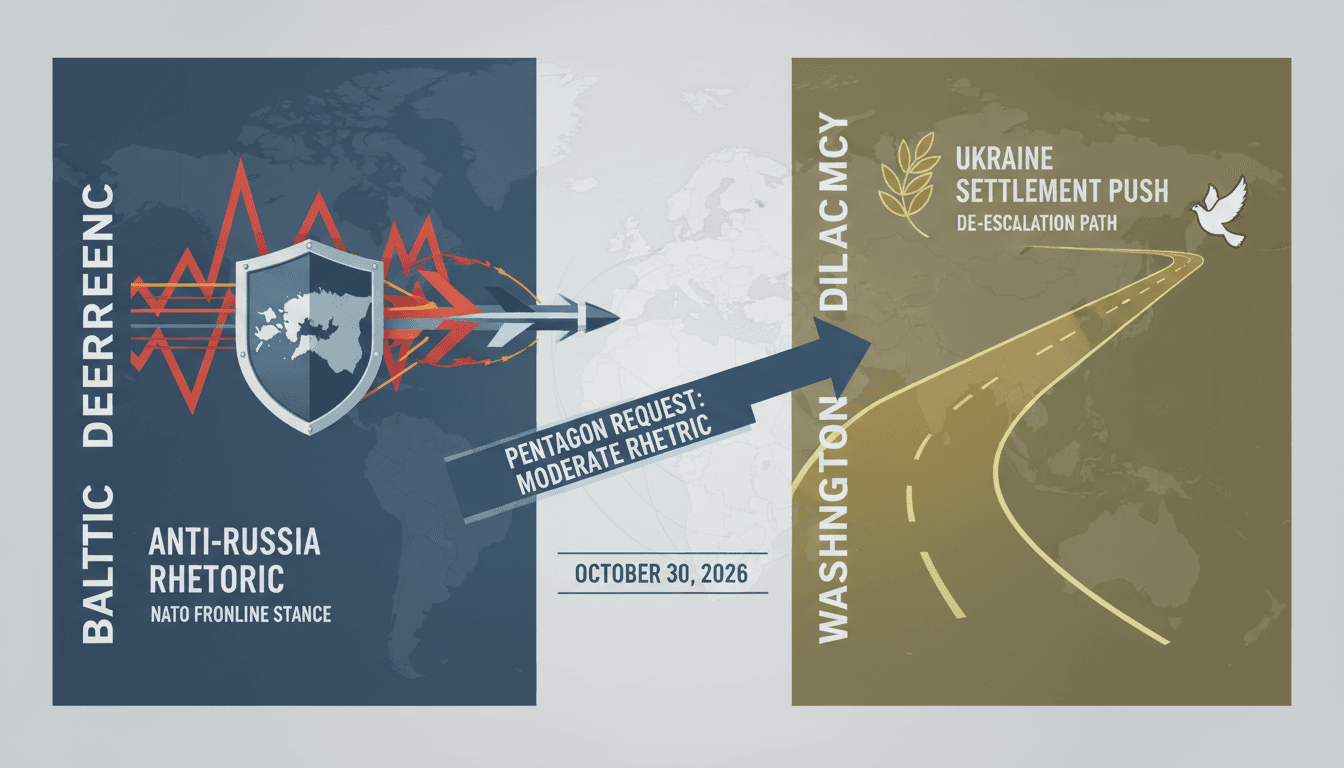
The move exposes a widening strategic divergence within NATO between frontline states prioritizing vocal deterrence and Washington calibrating terms for potential bilateral diplomacy.
What happened (in 30 seconds)
- Washington requested rhetorical moderation: Pentagon officials held private bilateral meetings with NATO Baltic allies—Estonia, Latvia, and Lithuania—urging them to scale back combative public statements regarding Moscow.
- Specific phrasing was flagged: U.S. representatives singled out escalatory characterizations, such as describing Russia as "cornered like a rat," including rhetoric used in late September 2026 by Estonian Prime Minister Kristen Michal.
- Delivery was kept advisory: Delivered by officials including Pentagon policy chief Elbridge Colby, the messaging was framed as guidance to avoid unintended escalation while Washington pursues negotiated diplomatic tracks.
The context you actually need
- The Ukraine conflict entered year five: The communications coincide with the Trump administration's efforts to restart formal settlement negotiations to end the full-scale conflict initiated in 2022.
- Incentive packages are on the table: The diplomatic track involves structural levers including potential sanctions relief for Moscow paired alongside negotiation pressure directed at Kyiv.
- Frontline threat assessments remain elevated: Baltic capitals have maintained aggressive deterrence posturing due to persistent operational warnings regarding alleged Russian sabotage risks across continental Europe.
What's really happening
The private requests delivered by the Pentagon illustrate an operational conflict between two core security doctrines inside the NATO alliance: forward frontline deterrence versus diplomatic maneuvering space.
For the Baltic states—Estonia, Latvia, and Lithuania—public rhetoric is not merely political messaging; it serves as a calculated national defense instrument. Lacking the geographic depth and conventional force size of Western European powers, Baltic defense models rely on clear, aggressive verbal signaling to eliminate strategic ambiguity. In this framework, public statements characterizing Moscow as volatile, pressured, or "cornered like a rat" serve to lock Western allies into an unyielding collective defense commitment. From Tallinn, Riga, and Vilnius, dialing back rhetorical pressure risks signaling an eroding security umbrella, particularly while intelligence communities continue to flag active hybrid threats and sabotage operations across Europe.
Conversely, Washington's calculus is anchored in clearing diplomatic runway. When an administration initiates frameworks for a negotiated settlement to end a five-year war, the incentives shift from vocal containment to rhetorical containment. The operational logic delivered by figures such as Pentagon policy chief Elbridge Colby focuses on controlling escalation pathways. High-volume statements from frontline allies, while intended for local and regional deterrence, are viewed by U.S. strategists as variables that narrow diplomatic flexibility. If Washington is considering trade-offs—such as structured sanctions relief in exchange for territorial or security concessions—inflammatory statements from treaty allies can harden domestic positions in Moscow, reducing the likelihood of initial bilateral engagements.
The tension also reflects structural burden-sharing economics. Washington continues to signal that European security architecture must gradually recalibrate toward regional ownership, while the U.S. focuses strategic focus on global priorities. Advising allies against "poking" the adversary is an effort to manage liability: the United States remains the treaty guarantor under Article 5, meaning any escalatory loop triggered by rhetorical friction ultimately requires American conventional backing. By seeking to manage the tone of Baltic communications through bilateral channels rather than public directives, the Pentagon is attempting to preserve coalition unity while methodically lowering the operational temperature required to bring negotiating parties to the table.
Who feels it first (and how)
- Baltic national security planners: Must navigate the balance between sustaining domestic deterrence postures and aligning with U.S. requests for measured communication.
- European defense policy teams: Experience administrative friction trying to align collective NATO communiqués with distinct U.S. diplomatic initiatives toward Moscow.
- Cross-border logistics and infrastructure operators: Experience heightened uncertainty in the Baltic corridor as public signaling and intelligence-based sabotage warnings point in diverging directions.
- Sanctions and compliance professionals: Must prepare for potential structural pivots in European trade controls if diplomatic tracks involving sanctions adjustments progress.
What to watch next
- Tone adjustments from frontline leaders: Monitor forthcoming official statements from Baltic heads of state to see if public rhetoric downshifts following October's bilateral meetings.
- Formal diplomatic overtures from Washington: Track whether bilateral rhetoric requests lead directly to public negotiation frameworks or proposed sanctions adjustments with Moscow.
- NATO ministerial positioning: Look for how alliance communiqués navigate the balance between regional deterrence language and centralized negotiation goals.
Pentagon officials, including Elbridge Colby, privately asked Baltic allies to moderate public anti-Russia language to avoid escalatory risks during renewed negotiation efforts.
Baltic governments will continue to raise concerns internally about Russian sabotage capabilities, even if public phrasing is calibrated to preserve U.S. alignment.
Whether public moderation from European allies will generate substantive concessions from Moscow or facilitate actual progress toward a durable settlement.
Frequently Asked Questions
- Why it matters?
- The move exposes a widening strategic divergence within NATO between frontline states prioritizing vocal deterrence and Washington calibrating terms for potential bilateral diplomacy.
- What happened (in 30 seconds)?
- Washington requested rhetorical moderation: Pentagon officials held private bilateral meetings with NATO Baltic allies—Estonia, Latvia, and Lithuania—urging them to scale back combative public statements regarding Moscow. Specific phrasing was flagged: U.S. representatives singled out escalatory characterizations, such as describing Russia as "cornered like a rat," including rhetoric used in late September 2026 by Estonian Prime Minister Kristen Michal. Delivery was kept advisory: Delivered by o
- What's really happening?
- The private requests delivered by the Pentagon illustrate an operational conflict between two core security doctrines inside the NATO alliance: forward frontline deterrence versus diplomatic maneuvering space. For the Baltic states—Estonia, Latvia, and Lithuania—public rhetoric is not merely political messaging; it serves as a calculated national defense instrument. Lacking the geographic depth and conventional force size of Western European powers, Baltic defense models rely on clear, aggressi
- Who feels it first (and how)?
- Baltic national security planners: Must navigate the balance between sustaining domestic deterrence postures and aligning with U.S. requests for measured communication. European defense policy teams: Experience administrative friction trying to align collective NATO communiqués with distinct U.S. diplomatic initiatives toward Moscow. Cross-border logistics and infrastructure operators: Experience heightened uncertainty in the Baltic corridor as public signaling and intelligence-based sabotage wa
- What to watch next?
- Tone adjustments from frontline leaders: Monitor forthcoming official statements from Baltic heads of state to see if public rhetoric downshifts following October's bilateral meetings. Formal diplomatic overtures from Washington: Track whether bilateral rhetoric requests lead directly to public negotiation frameworks or proposed sanctions adjustments with Moscow. NATO ministerial positioning: Look for how alliance communiqués navigate the balance between regional deterrence language and centrali
Conservative-leaning political and national coverage.
"The Washington Times is a conservative-leaning newspaper known for its political coverage and advocacy of right-of-center viewpoints."
— A47 Editor
Report: Pentagon asks Europe to tone down the anti-Russia insults
Pentagon officials are reportedly asking European leaders, especially those from front-line countries such as Estonia, Latvia, and Lithuania, to lower the volume of their rhetoric against Russia, according to a report published by The Washington Time...
RT is a Russian state-funded network covering global events from a Russian perspective.
"RT is widely criticized for promoting pro-Kremlin narratives and is considered by many to be a state propaganda outlet."
— A47 Editor
Pentagon tells Baltic hawks to stop ‘poking’ Russia – Reuters
The Pentagon has urged Baltic NATO hawks to curb their anti-Russia rhetoric as U.S. President Donald Trump renews his push for a Ukraine peace settlement, according to a Reuters report carried by RT (Russia Today).
Global business headlines with AI angles.
"General business outlet that frequently covers AI."
— A47 Editor
Rhetoric Between European Countries and Russia is Escalating. Washington Reportedly Asked NATO Allies to Tone it Down.
The U.S. has reportedly urged Lithuania, Latvia and Estonia to moderate their rhetoric toward Russia, even as European allies strengthen deterrence measures and Moscow issues escalating nuclear threats. The report, published by International Business...
Oil, metals, and agriculture: supply/demand headlines, OPEC chatter, inventories, and price action.
"Solid tape for energy and metals traders tracking macro and micro catalysts."
— A47 Editor
Exclusive-Pentagon tells Europeans to cool their rhetoric on Russia, sources say
Pentagon officials have reportedly urged European governments to tone down their rhetoric toward Russia, according to sources cited by Investing.com, signaling Washington's preference for a calmer public posture as diplomatic efforts over the war in ...