
US Strikes on Qeshm Island and Carrier Deployment Test Post-Midterm Options Against Iran
Why it matters
Brent crude surpassing $105 per barrel and active naval deployments adjacent to critical maritime corridors introduce direct supply chain and cost adjustments across global trade networks.
What happened (in 30 seconds)
- The electoral shift: The conclusion of the November 3, 2026, US midterm elections resulted in Democratic control of both congressional chambers, shifting the domestic political constraints operating on President Donald Trump.
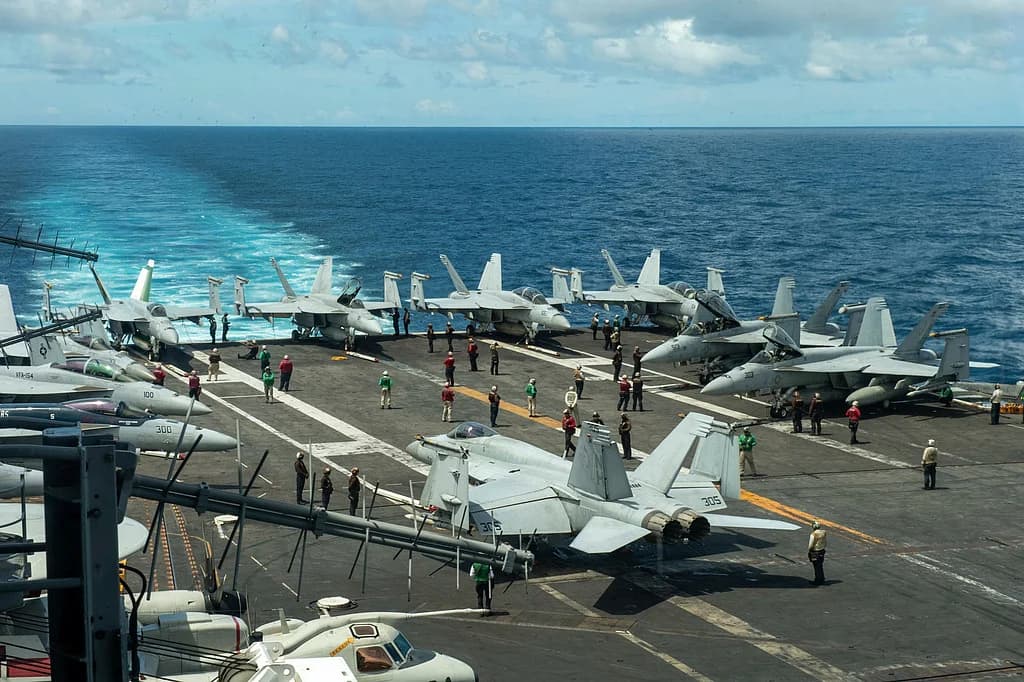
- Targeted military actions: US forces carried out strikes on surface-to-air missile positions on Qeshm Island on November 2, 2026, while the USS Theodore Roosevelt carrier group advanced into regional waters.
- Active mediation tracks: Qatari negotiators are facilitating discussions over the reopening of the Strait of Hormuz in exchange for sanctions adjustments, though Iranian officials note terms remain unaddressed.
The context you actually need
- A multi-month conflict baseline: Active maritime friction and cross-border exchanges have developed continuously since February 2026, creating systematic volatility across transit routes inside the Persian Gulf.
- Calculated pre-election containment: Prior to the November 2026 midterms, decision-makers maintained targeted boundaries on operational escalations to curb domestic exposure to elevated retail fuel prices.
- Regional diplomatic balance: Gulf states, led by the UAE, have maintained continuous contingency readiness while using multilateral venues such as the Manama Dialogue to advocate for de-escalation.
What's really happening
The post-midterm environment alters the tactical calculation between Washington and Tehran from short-term electoral risk aversion to strategic leverage management. Prior to November 3, 2026, the potential for consumer backlash against high energy prices incentivized limited engagement. With legislative elections concluded, external operational guardrails have adjusted, shifting focus directly to maritime deterrence and formal negotiation parameters.
The deployment of the USS Theodore Roosevelt carrier group serves as an explicit counterweight to Iranian operational positions along the Strait of Hormuz, notably around Qeshm Island where targeted actions against surface-to-air missile installations occurred on November 2. These military posturings operate parallel to diplomatic negotiations. Through Qatari mediation channels, the diplomatic objective focuses on trading maritime freedom of navigation for specific economic relief.
However, structural incentives diverge sharply. For Iranian decision-makers, including figures like Mohsen Rezaei, tactical leverage relies on demonstrating the capacity to disrupt commercial maritime transit. Conceding access without verified sanctions easing risks forfeiting leverage. Conversely, US administration priorities require halting maritime transit interruptions while avoiding broader prolonged ground commitments that face friction from a newly split government in Washington.
For corporate and trade operators in Dubai and the wider Gulf, this translates to structural volatility rather than a definitive resolution. While open offensive operations have not been authorized, commercial freight lines face elevated war-risk insurance premiums and route adjustments. The crude pricing baseline crossing $105 per barrel reflects global energy markets pricing in supply disruptions at Hormuz rather than baseline extraction capacity. Regional leaders, including UAE authorities, are managing this vulnerability through dual-track strategies: funding advanced defensive readiness while pressing international diplomatic forums for stable navigational pacts. The immediate period will determine whether naval posturing yields concessions in Qatari talks or solidifies an enduring, cost-heavy standoff along vital shipping arteries.
Who feels it first (and how)
- Maritime logistics and supply chain directors: Shipping lines routing through the Strait of Hormuz must absorb or reallocate steep maritime insurance premiums and plan alternative bunkering timelines.
- Dubai-based trading houses and retail operators: Extended maritime clearance times and higher maritime transport costs pressure commercial margins on imported consumer goods and raw industrial inputs.
- Energy-intensive manufacturing and aviation: Sustained benchmark energy pricing over $105 per barrel impacts operational fuel expenses across Gulf transport hubs.
- Corporate risk and treasury desks: Regional operations must hedge against increased capital volatility and variable liquidity buffers as security contingencies develop.
What to watch next
- Terms in the Qatari diplomatic channel: Monitoring whether negotiations yield specific framework terms trading verifiable sanctions modifications for guaranteed commercial passage through Hormuz.
- Operational movements of the USS Theodore Roosevelt: Tracking whether the carrier group conducts expanded deterrence patrols or maintains existing offshore standoff distances.
- Iranian naval presence around Qeshm Island: Observing whether local deployments signal renewed maritime interdictions or temporary operational pauses following targeted air strikes.
The US midterms concluded with Democratic majorities in both legislative chambers, the USS Theodore Roosevelt carrier strike group is deployed, and Brent crude is trading above $105 per barrel.
Targeted security engagements and elevated energy price volatility will persist until formal verification mechanisms are introduced in Qatar-mediated talks.
Whether the newly seated US Congress will utilize legislative leverage to restrict foreign operational funding, and whether Iranian negotiators will accept staged sanctions relief.
Frequently Asked Questions
- Why it matters?
- Brent crude surpassing $105 per barrel and active naval deployments adjacent to critical maritime corridors introduce direct supply chain and cost adjustments across global trade networks.
- What happened (in 30 seconds)?
- The electoral shift: The conclusion of the November 3, 2026, US midterm elections resulted in Democratic control of both congressional chambers, shifting the domestic political constraints operating on President Donald Trump. Targeted military actions: US forces carried out strikes on surface-to-air missile positions on Qeshm Island on November 2, 2026, while the USS Theodore Roosevelt carrier group advanced into regional waters. Active mediation tracks: Qatari negotiators are facilitating discu
- What's really happening?
- The post-midterm environment alters the tactical calculation between Washington and Tehran from short-term electoral risk aversion to strategic leverage management. Prior to November 3, 2026, the potential for consumer backlash against high energy prices incentivized limited engagement. With legislative elections concluded, external operational guardrails have adjusted, shifting focus directly to maritime deterrence and formal negotiation parameters. The deployment of the USS Theodore Roosevelt
- Who feels it first (and how)?
- Maritime logistics and supply chain directors: Shipping lines routing through the Strait of Hormuz must absorb or reallocate steep maritime insurance premiums and plan alternative bunkering timelines. Dubai-based trading houses and retail operators: Extended maritime clearance times and higher maritime transport costs pressure commercial margins on imported consumer goods and raw industrial inputs. Energy-intensive manufacturing and aviation: Sustained benchmark energy pricing over $105 per barr
- What to watch next?
- Terms in the Qatari diplomatic channel: Monitoring whether negotiations yield specific framework terms trading verifiable sanctions modifications for guaranteed commercial passage through Hormuz. Operational movements of the USS Theodore Roosevelt: Tracking whether the carrier group conducts expanded deterrence patrols or maintains existing offshore standoff distances. Iranian naval presence around Qeshm Island: Observing whether local deployments signal renewed maritime interdictions or tempora
UAE-based newspaper covering Gulf politics, society, and international developments.
"Gulf News is one of the UAE’s most prominent English-language publications."
— A47 Editor
Midterms over, restraint gone? Will Trump unleash fresh strikes on Iran?
The base report from Gulf News asks whether President Donald Trump will unleash fresh strikes on Iran now that the US midterm elections are over, following limited US strikes on Iran's Qeshm area and Trump's warnings of a 'heavy hit'. Iran has said A...
A curated Gulf News feed featuring major stories across news, business, opinion, and lifestyle.
"Gulf News is a major UAE newspaper whose featured stories feed reflects a broad editorial mix shaped for a Gulf audience."
— A47 Editor
Midterms over, restraint gone? Will Trump unleash fresh strikes on Iran?
The base report from Gulf News asks whether President Donald Trump will unleash fresh strikes on Iran now that the US midterm elections are over, following limited US strikes on Iran's Qeshm area and Trump's warnings of a 'heavy hit'. Iran has said A...
Global business headlines with AI angles.
"General business outlet that frequently covers AI."
— A47 Editor
Gulf Allies Brace for U.S. Strikes on Iran as Fears of Retaliation Mount
Gulf allies are bracing for possible U.S. strikes on Iran as fears of retaliation mount, after reports that President Donald Trump has been considering attacks on Iranian infrastructure and nuclear sites following the U.S. midterm elections.
Capitol Hill news, legislation, and policy insight.
"The Hill specializes in U.S. politics and policy, with a focus on Capitol Hill developments and a reputation for insider reporting."
— A47 Editor
Trump mulls Iran strikes after midterms, as mediators push for peace deal
The Hill reports that Trump is weighing military strikes against Iran as early as this week, even as mediators push Washington and Tehran toward a peace deal to end the eight-month-old war in the Middle East. Trump has predicted the conflict will qui...
Breaking news, politics, business, and entertainment from the U.S. and around the world.
"The New York Post is a tabloid-format newspaper known for its sensationalist headlines and conservative-leaning editorial tone."
— A47 Editor
Trump calls Iran conflict a ‘soft war,’ insists US holds the cards ahead of midterm elections
Donald Trump described the conflict with Iran as a "soft war" and insisted the United States holds the advantage ahead of the November 3 midterm elections, as gas prices and the reported $47 billion cost weigh on Republicans. The remarks came hours a...
News from the United States including domestic politics, society, and culture.
"The Guardian is known for its progressive editorial stance and in-depth analysis, often advocating for social justice, environmental issues, and liberal values."
— A47 Editor
Will Trump relaunch his war on Iran after the midterm elections? | Mohamad Bazzi
A Guardian opinion piece by Mohamad Bazzi examines reports that President Donald Trump could relaunch a large-scale war against Iran after the US midterm elections, with officials having leaked plans for new joint US-Israeli strikes on Iran's undergr...
Top international stories selected by The Guardian editors.
"The Guardian is known for its progressive editorial stance and in-depth analysis."
— A47 Editor
Will Trump relaunch his war on Iran after the midterm elections? | Mohamad Bazzi
A Guardian opinion piece by Mohamad Bazzi examines reports that President Donald Trump could relaunch a large-scale war against Iran after the US midterm elections, with officials having leaked plans for new joint US-Israeli strikes on Iran's undergr...
Regional coverage and analysis focused on politics, diplomacy, and business across the Middle East.
"Al-Monitor is known for analytical reporting on Middle East politics and policy developments."
— A47 Editor
Trump raises doubts about renewed attacks on Iran
US President Donald Trump raised doubts on Monday, November 2, about whether he would follow through on a threatened resumption of military strikes against Iran after the US midterm elections, telling reporters "no" when asked if he was considering s...
UAE-based English-language newspaper covering regional politics, economics, and global affairs.
"The National reflects Emirati policy perspectives while maintaining international editorial standards."
— A47 Editor
Trump makes final midterm pitch with ‘Golden Age’ message as voters fret over prices
Trump has made a final midterm pitch built around a "Golden Age" message as American voters express concern over prices, according to The National, ahead of the 3 November 2026 midterm elections that will determine control of Congress.
Global business headlines with AI angles.
"General business outlet that frequently covers AI."
— A47 Editor
Netanyahu Reportedly Wants to Strike Iran Right After U.S. Midterms, But Trump Wants to Give Negotiations a Chance
Israeli Prime Minister Benjamin Netanyahu reportedly wants to carry out a joint strike on Iran with the United States immediately after the U.S. midterm elections, while President Donald Trump prefers to give diplomatic negotiations more time to play...
24/7 international news from a French perspective in multiple languages.
"France 24 is viewed as a globally focused outlet with balanced coverage and a European perspective."
— A47 Editor
'Give them the hammer': Trump threatens Iran ahead of midterms
President Donald Trump, speaking at a campaign rally on Sunday, reiterated his threat to resume strikes against Iran, saying he may have to give Tehran "the hammer" at an unspecified time, despite having previously said he would not strike Iran again...
English-language reporting on Saudi politics, policy, and society.
"Saudi Gazette reflects mainstream Saudi institutional perspectives."
— A47 Editor
Middle East on edge as fears mount that Iran war could restart after US midterms
US President Donald Trump has reportedly told Israeli Prime Minister Benjamin Netanyahu that he wants to give diplomacy with Tehran more time before considering renewed military strikes, with the decision expected to follow Tuesday's US midterm elect...