
Iran Reports Three Additional Tanker Hits in Strait of Hormuz as Gulf Conflict Persists After US Midterms
Why it matters
Persistent military friction along the world's most critical maritime energy chokepoint drives sustained shipping risk premiums and reshapes cross-border trade economics regardless of domestic electoral shifts.
What happened (in 30 seconds)
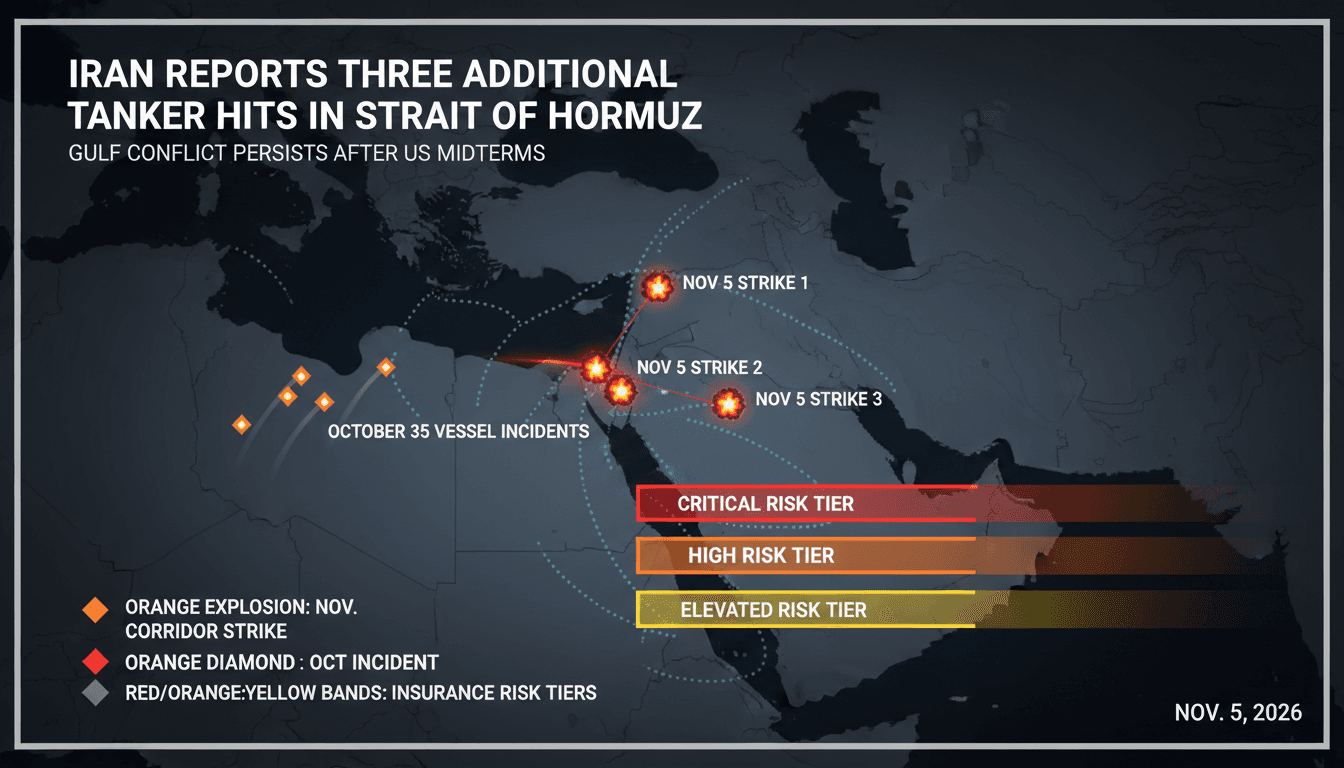
- Fresh tanker casualties reported: On November 5, 2026, Iranian military sources reported three commercial tankers damaged in the Strait of Hormuz via naval mines and fire, while the Iranian army confirmed additional vessels were hit and set ablaze.
- Sustained operational pressure: The UK Maritime Trade Operations (UKMTO) verified at least five incidents since November 1, including a projectile strike on November 4, sustaining an attack rate comparable to October’s conflict peak of 35 damaged vessels.
- Unresolved diplomatic tracks: Qatari mediation efforts over the naval blockade, sanctions, and nuclear negotiations remain active but stalled, while oil markets experienced a slight price recovery after a prior drop exceeding $20 per barrel.
The context you actually need
- The campaign origins: The maritime stand-off stems from Operation Epic Fury, a joint military operation initiated by the United States and Israel on February 28, 2026, against Iranian command, missile infrastructure, and naval facilities.
- The blockade dynamic: Despite an April 2026 ceasefire, maritime friction persisted under an ongoing US blockade of Iranian ports and reciprocal assertions of operational control over transit lanes by Iranian forces.
- The political catalyst: The November 2026 US midterm elections resulted in the Republican party losing congressional majorities—an outcome attributed by US leadership to conflict expenditure—leading Iranian planners to maintain transit pressure rather than de-escalate.
What's really happening
The recurring strikes on commercial tonnage in the Strait of Hormuz represent a deliberate alignment of operational incentives rather than random maritime skirmishes. Following the November 2026 US midterm elections, both combatants face structural realignments that dictate their leverage along critical transit routes.
From the perspective of Iranian strategic planning, the loss of congressional control by the incumbent party in Washington serves as an operational signal. Iranian leadership under Supreme Leader Ayatollah Mojtaba Khamenei and Parliament Speaker Mohammad Baqer Qalibaf identified electoral fatigue surrounding military costs as an exploitable leverage point. Rather than softening transit posture, Iranian forces escalated pressure using asymmetric naval mines and targeted strikes. The operational goal is clear: increase the commercial and political costs of maintaining the US blockade on Iranian ports without triggering a decisive direct naval engagement. By inflicting damage on commercial tankers, Tehran seeks to demonstrate that the Strait cannot operate normally while sanctions and blockades remain active.
Conversely, the executive branch in Washington under President Donald Trump retains constitutional command over foreign operations despite electoral headwinds. Reports indicate administrative inclinations to continue targeted military responses. This creates an asymmetric standoff: the White House seeks to enforce containment and counter-proliferation through naval interdiction, while the loss of legislative backing creates domestic pressure regarding prolonged overseas spending.
Meanwhile, diplomatic mechanics mediated by Qatar remain deadlocked because neither side will concede sequencing. Washington requires maritime freedom of navigation and verified nuclear concessions; Tehran requires immediate relief from shipping blockades and comprehensive sanctions rollback.
The structural impact falls entirely on global logistics systems. A maritime route handling a primary share of global petroleum transit cannot absorb 35 strikes in October and another five in the first five days of November without severe economic friction. Vessel owners must factor in rising war-risk insurance, prolonged routing delays, and operational crew hazards. Even as crude prices fell by more than $20 per barrel prior to November 5, systemic vulnerability remains elevated. The shipping lanes are functioning not under peacetime open-seas conventions, but as an active, contested economic theater.
Who feels it first (and how)
- Regional logistics and freight forwarders: Shipping operators in Dubai and across the Gulf face sudden schedule diversions, soaring war-risk insurance underwriters' surcharges, and container processing bottlenecks at regional hubs.
- Commercial energy procurement teams: Corporate buyers managing heavy fuel oil, jet fuel, and crude delivery contracts must manage sudden volatility spikes and counterparty transit clauses.
- Gulf-based multinational executives: Corporate operations in regional hubs face heightened risk assessments, elevated supply chain costs for imported manufactured inventory, and higher corporate operational risk profiles.
- Marine insurance underwriters: Underwriting syndicates face mounting claims ratios following 35 vessel incidents in October 2026 and sustained vessel mine strikes in November.
What to watch next
- Qatari mediation draft responses: Formal diplomatic exchanges handled by Qatari intermediaries will signal whether either capital is willing to decouple commercial navigation rights from broader nuclear and sanctions frameworks.
- US naval posture decisions: Executive directives regarding maritime escort missions or counter-battery operations in the Gulf will reveal whether US forces will resume kinetic strikes post-midterms.
- UKMTO monthly incident tallies: Tracking whether November matches or exceeds October's record 35 incidents will indicate whether commercial shipping corridors face a sustained, systemic closure.
Three tankers were reported damaged on November 5, 2026; UKMTO has recorded five maritime incidents since November 1 following 35 vessel strikes in October; Republicans lost congressional control in the US midterm elections.
Shipping insurance syndicates will elevate Hull and Machinery war-risk premiums for all vessels declaring transit through the Strait of Hormuz through the final quarter of 2026.
Whether the newly elected US congressional majority will constrain White House military operational authorities, and whether Qatari mediation can decouple port blockade rules from wider nuclear negotiations.
Frequently Asked Questions
- Why it matters?
- Persistent military friction along the world's most critical maritime energy chokepoint drives sustained shipping risk premiums and reshapes cross-border trade economics regardless of domestic electoral shifts.
- What happened (in 30 seconds)?
- Fresh tanker casualties reported: On November 5, 2026, Iranian military sources reported three commercial tankers damaged in the Strait of Hormuz via naval mines and fire, while the Iranian army confirmed additional vessels were hit and set ablaze. Sustained operational pressure: The UK Maritime Trade Operations (UKMTO) verified at least five incidents since November 1, including a projectile strike on November 4, sustaining an attack rate comparable to October’s conflict peak of 35 damaged vess
- What's really happening?
- The recurring strikes on commercial tonnage in the Strait of Hormuz represent a deliberate alignment of operational incentives rather than random maritime skirmishes. Following the November 2026 US midterm elections, both combatants face structural realignments that dictate their leverage along critical transit routes. From the perspective of Iranian strategic planning, the loss of congressional control by the incumbent party in Washington serves as an operational signal. Iranian leadership und
- Who feels it first (and how)?
- Regional logistics and freight forwarders: Shipping operators in Dubai and across the Gulf face sudden schedule diversions, soaring war-risk insurance underwriters' surcharges, and container processing bottlenecks at regional hubs. Commercial energy procurement teams: Corporate buyers managing heavy fuel oil, jet fuel, and crude delivery contracts must manage sudden volatility spikes and counterparty transit clauses. Gulf-based multinational executives: Corporate operations in regional hubs face
- What to watch next?
- Qatari mediation draft responses: Formal diplomatic exchanges handled by Qatari intermediaries will signal whether either capital is willing to decouple commercial navigation rights from broader nuclear and sanctions frameworks. US naval posture decisions: Executive directives regarding maritime escort missions or counter-battery operations in the Gulf will reveal whether US forces will resume kinetic strikes post-midterms. UKMTO monthly incident tallies: Tracking whether November matches or exc
Oil, metals, and agriculture: supply/demand headlines, OPEC chatter, inventories, and price action.
"Solid tape for energy and metals traders tracking macro and micro catalysts."
— A47 Editor
Tankers hit in Hormuz as Iran keeps up pressure after US vote
Tankers were struck in the Strait of Hormuz as Iran maintained pressure on shipping following a US vote, with reporting describing attacks that damaged vessels and raised fresh risk to Gulf oil flows. The base report, published by Investing.com, fram...
Regional coverage and analysis focused on politics, diplomacy, and business across the Middle East.
"Al-Monitor is known for analytical reporting on Middle East politics and policy developments."
— A47 Editor
Tankers hit in Hormuz as Iran keeps up pressure after US vote
Reuters reported on November 5 that Iran said three more tankers were damaged in the Strait of Hormuz, indicating shipping will stay at risk while the Gulf war remains unresolved. The incidents came after US voters handed Republicans a sweeping defea...
Editor-curated FT homepage stories spanning markets, business, world, and opinion.
"The Financial Times is a globally respected business publication with a centrist/center-left tone and strong markets focus."
— A47 Editor
US strikes Iran’s Qeshm Island on eve of election
The United States struck Iran's Qeshm Island on the eve of a US election, with Washington describing the attacks as a defensive measure against Tehran's potential use of surface-to-air missiles, while oil prices remained steady, according to the Fina...