
US Midterms Deliver Democratic Congress and Trigger Ending of Annual US Military Aid to Israel
Why it matters
The planned termination of $3.8 billion in annual security transfers dissolves a decades-old baseline of bilateral defense planning, forcing structural reassessments across Middle Eastern security architectures and global strategic alliances.
What happened (in 30 seconds)
* Electoral realignment in Washington: The November 4, 2026 US midterm elections secured Democratic majorities in Congress following public fatigue with the Gaza and Iran conflicts and voter pushback against White House policies. * Termination of security assistance: On election day, Donald Trump announced an agreement with Israeli Prime Minister Benjamin Netanyahu to end the $3.8 billion annual US military aid program by the close of the year. * Domestic political fallout in Tel Aviv: Following an inconclusive parliamentary election that left Netanyahu without a governing majority, Israeli opposition figures publicly pushed to overhaul diplomatic strategies and rebuild bipartisan relations.
The context you actually need
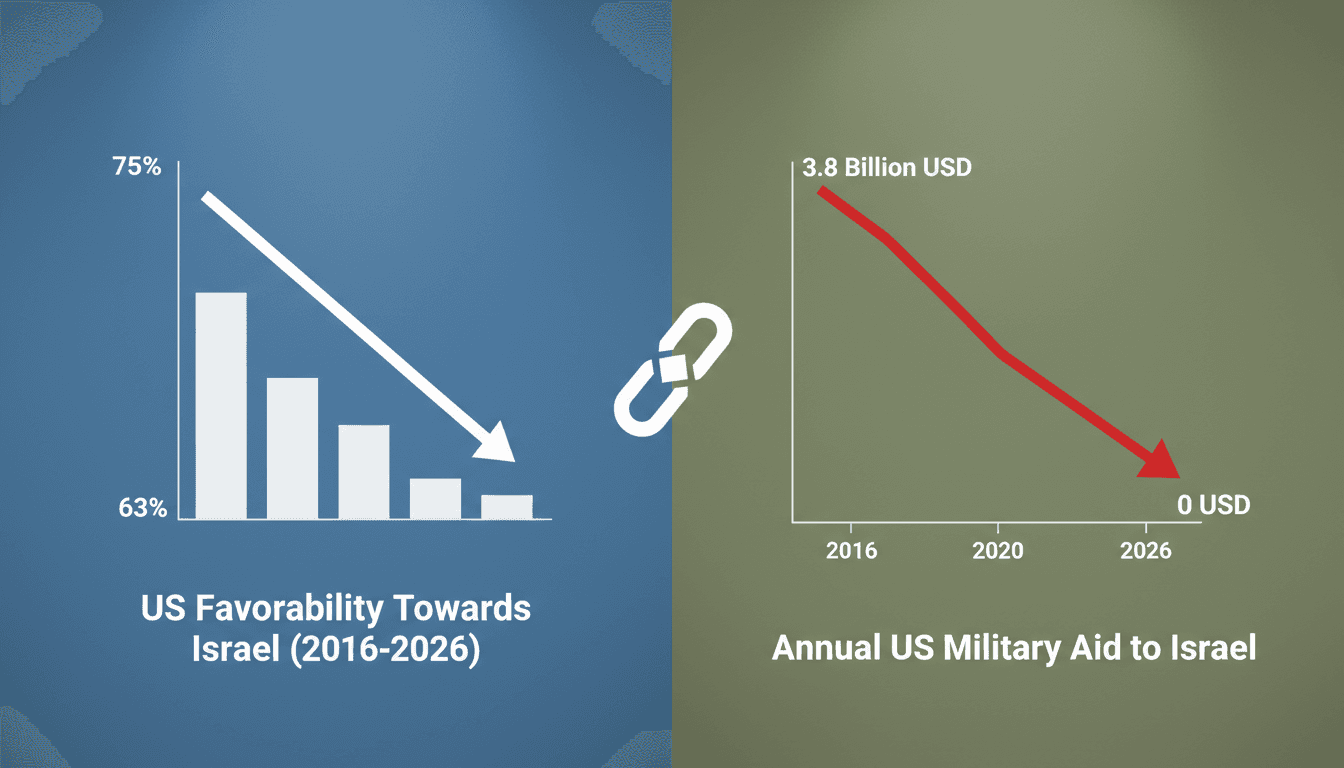
* Public sentiment eroded across cycles: Favorability toward the Israeli people among American adults dropped from 64% in 2019 to 52% in 2026, creating structural political incentives for US leaders to scale back long-term defense expenditures. * A convergence of political deadlines: Israel’s national vote left its parliament fragmented a week before American voters rejected the incumbent Republican approach, narrowing the maneuvering room for bilateral leaders facing immediate scrutiny. * Executive reassessments under electoral pressure: Vice President JD Vance tied Republican legislative losses directly to regional military operations and foreign assistance packages, signaling an institutional retreat from open-ended overseas financial commitments.
What's really happening
The formal move to conclude $3.8 billion in baseline bilateral funding reflects a structural transformation in how foreign policy commitments are managed against domestic electoral risk. For decades, direct military subsidies functioned as a stable, predictable institution relatively insulated from shifts in congressional majorities. That operational insulation broke down as the regional conflict expanded into prolonged engagements involving Gaza and Iran, elevating the domestic political cost of sustaining high-level resource transfers.
The mechanics of this realignment stem from distinct incentive structures in Washington and Tel Aviv. In the United States, midterm voters delivered an explicit mandate by establishing Democratic majorities in Congress, with high-ranking executive figures attributing campaign losses to ongoing overseas conflicts and direct foreign aid outlays. Facing a split executive-legislative dynamic and a broader public mood where favorable sentiment fell 12 percentage points since 2019, the administration opted to preempt legislative deadlocks by negotiating an early exit from the annual $3.8 billion transfer agreement before year-end.
In Israel, this fiscal change intersects with severe legislative fragmentation. Because the recent national election failed to deliver a distinct governing majority, coalition negotiators are forced to bargain under the immediate pressure of fiscal rebalancing. With baseline American funding terminating by the close of 2026, Israel’s defense planners must recalibrate their long-term procurement models. The structural shortfall will inevitably necessitate higher domestic fiscal allocations or a search for non-traditional, alternative sovereign financing mechanisms.
Opposition figures such as Gadi Eisenkot and Yair Golan have framed this shift as an institutional failure of alignment, arguing that excessive focus on personal executive relationships came at the direct expense of institutionalized, bipartisan American support. Israeli President Isaac Herzog expressed formal shock at the announcement, underscoring that institutional defense planners had not prepared for an immediate cessation of long-term transfers.
For the broader Middle East, this shift recalculates diplomatic leverage. Gulf economies and signatories of regional frameworks such as the Abraham Accords observe an environment where the security umbrella provided by Washington is increasingly contingent on domestic electoral cycles. As personal rapport yields to cold political accounting, regional defense postures will increasingly rely on local fiscal capacity and multi-polar balance-of-power strategies rather than guaranteed external fiscal subsidies.
Who feels it first (and how)
* Israeli defense planners and procurement officers: Sourcing strategies must adjust to absorb an immediate $3.8 billion annual deficit, requiring budget reallocation or new sovereign debt issuance. * Congressional appropriators and US federal budget teams: Lawmakers gain immediate balance-sheet room to redirect external security funds toward domestic priorities or alternative geopolitical theaters. * Regional diplomatic and security ministries across the Gulf: Sovereign policy offices must balance future coordination through regional mechanisms without treating predictable, open-ended American security transfers as an immutable constant. * Israeli political coalition negotiators: Competing factions must construct a governing agenda around fiscal austerity or redirected spending rather than relying on dependable US subsidies.
What to watch next
* Israeli coalition negotiations: The composition of the next cabinet will determine whether Tel Aviv seeks to re-engage Democratic lawmakers with policy shifts toward regional stability or leans into autonomous defense financing. * US congressional spending debates: Incoming Democratic majorities will establish whether the expiration of the $3.8 billion aid package is codified into permanent legislative limitations or redirected into targeted diplomatic mechanisms. * Sovereign bond issuances and defense procurement tenders: Watch how Israeli fiscal authorities price sovereign debt and restructure major multi-year defense procurement contracts ahead of the year-end aid termination.
The $3.8 billion annual US military subsidy to Israel will end by the conclusion of 2026 following an agreement between Trump and Netanyahu; US midterms produced Democratic majorities in Congress; Israeli polling shows favorable US sentiment fell from 64% in 2019 to 52% in 2026.
Israeli defense ministries will be forced to increase domestic spending allocations or tap sovereign credit markets to offset the reduction in procurement funding.
Whether a new Israeli governing coalition can structurally repair relations with congressional Democrats, or how this transition will fundamentally alter normalization frameworks such as the Abraham Accords over the medium term.
Frequently Asked Questions
- Why it matters?
- The planned termination of $3.8 billion in annual security transfers dissolves a decades-old baseline of bilateral defense planning, forcing structural reassessments across Middle Eastern security architectures and global strategic alliances.
- What happened (in 30 seconds)?
- Electoral realignment in Washington: The November 4, 2026 US midterm elections secured Democratic majorities in Congress following public fatigue with the Gaza and Iran conflicts and voter pushback against White House policies. Termination of security assistance: On election day, Donald Trump announced an agreement with Israeli Prime Minister Benjamin Netanyahu to end the $3.8 billion annual US military aid program by the close of the year. Domestic political fallout in Tel Aviv: Following an in
- What's really happening?
- The formal move to conclude $3.8 billion in baseline bilateral funding reflects a structural transformation in how foreign policy commitments are managed against domestic electoral risk. For decades, direct military subsidies functioned as a stable, predictable institution relatively insulated from shifts in congressional majorities. That operational insulation broke down as the regional conflict expanded into prolonged engagements involving Gaza and Iran, elevating the domestic political cost o
- Who feels it first (and how)?
- Israeli defense planners and procurement officers: Sourcing strategies must adjust to absorb an immediate $3.8 billion annual deficit, requiring budget reallocation or new sovereign debt issuance. Congressional appropriators and US federal budget teams: Lawmakers gain immediate balance-sheet room to redirect external security funds toward domestic priorities or alternative geopolitical theaters. Regional diplomatic and security ministries across the Gulf: Sovereign policy offices must balance fu
- What to watch next?
- Israeli coalition negotiations: The composition of the next cabinet will determine whether Tel Aviv seeks to re-engage Democratic lawmakers with policy shifts toward regional stability or leans into autonomous defense financing. US congressional spending debates: Incoming Democratic majorities will establish whether the expiration of the $3.8 billion aid package is codified into permanent legislative limitations or redirected into targeted diplomatic mechanisms. Sovereign bond issuances and defe
Regional coverage and analysis focused on politics, diplomacy, and business across the Middle East.
"Al-Monitor is known for analytical reporting on Middle East politics and policy developments."
— A47 Editor
Israel faces new era of sinking US support after election
Following the November 3 midterm elections, in which Democrats won control of both the US Senate and House of Representatives, Israel faces a new era of uncertainty over US support as Prime Minister Benjamin Netanyahu's close alignment with President...
Comprehensive coverage of Middle Eastern and global issues.
"Al Jazeera is a prominent voice from the Global South, especially the Middle East, with an emphasis on underreported stories."
— A47 Editor
The blame game: How the US midterm shock is shaping Israel’s race for PM
Israel's prime ministerial race is being reshaped by the Democratic sweep of both the US House and Senate in the November 3 midterm elections, a result that Al Jazeera describes as a major setback for Donald Trump and his Republican Party. Israeli op...
Global news coverage with extensive reporting on Middle Eastern conflicts and geopolitics.
"Al Jazeera is a Qatar-based broadcaster known for wide regional coverage and alternative perspectives."
— A47 Editor
The blame game: How the US midterm shock is shaping Israel’s race for PM
The Republican midterm defeat on November 3, 2026, in which Democrats won control of both the House and Senate, is shaping Israel's race for prime minister, as Prime Minister Benjamin Netanyahu's ties with Washington come under strain following his c...
Regional coverage and analysis focused on politics, diplomacy, and business across the Middle East.
"Al-Monitor is known for analytical reporting on Middle East politics and policy developments."
— A47 Editor
Analysis-Midterms upended Congress but Trump still commands foreign policy
Democrats won control of both the US House and Senate in the November 3 midterm elections, a result that left President Donald Trump diminished in Washington and facing tougher congressional oversight, according to Reuters analysis published via Al-M...
Comprehensive coverage of Middle Eastern and global issues.
"Al Jazeera is a prominent voice from the Global South, especially the Middle East, with an emphasis on underreported stories."
— A47 Editor
Could the US midterms further isolate Israel in Washington?
The base Al Jazeera report asks whether the US midterm elections could further isolate Israel in Washington, noting that Democrats won control of both the House and Senate on November 3, 2026, and that challenging support for Israel proved to be a wi...
Global news coverage with extensive reporting on Middle Eastern conflicts and geopolitics.
"Al Jazeera is a Qatar-based broadcaster known for wide regional coverage and alternative perspectives."
— A47 Editor
Could the US midterms further isolate Israel in Washington?
The base Al Jazeera report asks whether the US midterm elections could further isolate Israel in Washington, noting that Democrats won control of both the House and Senate on November 3, 2026, and that challenging support for Israel proved to be a wi...
UAE-based English-language newspaper covering regional politics, economics, and global affairs.
"The National reflects Emirati policy perspectives while maintaining international editorial standards."
— A47 Editor
Israelis fear for future of US support after midterm backlash against Trump
Israelis are expressing concern about the future of US support for Israel following the Democratic Party's sweep of both the House and Senate in the November 3, 2026 midterm elections, a result described as a rebuke to President Donald Trump. The bas...
24/7 international news from a French perspective in multiple languages.
"France 24 is viewed as a globally focused outlet with balanced coverage and a European perspective."
— A47 Editor
After midterm stinging defeat, Trump is left to weigh his next move in Iran war
After the November 3 US midterm elections, in which Democrats won control of both the House and the Senate, President Donald Trump faces the difficult question of how to respond to his unpopular war against Iran. Trump acknowledged the war affected h...
Comprehensive coverage of Middle Eastern and global issues.
"Al Jazeera is a prominent voice from the Global South, especially the Middle East, with an emphasis on underreported stories."
— A47 Editor
Trump blames Iran war for midterms losses
President Donald Trump said the US-Israeli war on Iran likely contributed to Republican setbacks in the November 3 midterm elections, in which Democrats won control of both the House and the Senate, according to Al Jazeera reporting on the outcome.
Global news coverage with extensive reporting on Middle Eastern conflicts and geopolitics.
"Al Jazeera is a Qatar-based broadcaster known for wide regional coverage and alternative perspectives."
— A47 Editor
Trump blames Iran war for midterms losses
President Donald Trump said the US-Israeli war on Iran likely contributed to Republican setbacks in the November 3 midterm elections, in which Democrats won control of both the House and the Senate, according to Al Jazeera reporting on the outcome.
Comprehensive coverage of Middle Eastern and global issues.
"Al Jazeera is a prominent voice from the Global South, especially the Middle East, with an emphasis on underreported stories."
— A47 Editor
US midterm election results live: Trump blames Iran war after losses
Democrats won control of both the Senate and the House in the November 3, 2026 US midterm elections, a sweeping result that Al Jazeera describes as a major setback for President Donald Trump and his Republican Party. Trump congratulated Democrats on ...
Global news coverage with extensive reporting on Middle Eastern conflicts and geopolitics.
"Al Jazeera is a Qatar-based broadcaster known for wide regional coverage and alternative perspectives."
— A47 Editor
US midterm election results live: Trump blames Iran war after losses
Democrats won control of both the Senate and the House in the November 3, 2026 US midterm elections, a sweeping result that Al Jazeera describes as a major setback for President Donald Trump and his Republican Party. Trump congratulated Democrats on ...
Regional coverage and analysis focused on politics, diplomacy, and business across the Middle East.
"Al-Monitor is known for analytical reporting on Middle East politics and policy developments."
— A47 Editor
Democratic Congress could test decades of US support for Israel
Democrats won control of both the US Senate and House of Representatives in the November 3 midterm elections, and Reuters reports that growing Republican unease over Israel and anger over the Iran war could prompt the biggest reassessment of US suppo...
RT is a Russian state-funded network covering global events from a Russian perspective.
"RT is widely criticized for promoting pro-Kremlin narratives and is considered by many to be a state propaganda outlet."
— A47 Editor
Did Israel lose the US midterms?
The base RT report asks whether Israel lost the US midterms, noting that the Iran war has cost Donald Trump's Republican Party control of Congress. Related coverage confirms that Democrats won both the House and Senate in the November 3, 2026 electio...
Regional coverage and analysis focused on politics, diplomacy, and business across the Middle East.
"Al-Monitor is known for analytical reporting on Middle East politics and policy developments."
— A47 Editor
Trump under pressure on Iran war after Republicans' midterms defeat
US President Donald Trump has conceded that his war on Iran was partly to blame for sweeping Republican losses in the November 3 midterm elections, in which Democrats took control of both the Senate and the House of Representatives, leaving him polit...
International coverage from The Guardian's global desks.
"The Guardian is known for its progressive editorial stance and in-depth analysis."
— A47 Editor
The midterms were a thumping rebuke of the US-Israel relationship
The Guardian reports that the US midterm elections on November 3, 2026 delivered a sharp rebuke to Donald Trump, with Democrats winning control of the Senate and the House. Even Trump reportedly signalled on election morning that he might cut militar...
News from the United States including domestic politics, society, and culture.
"The Guardian is known for its progressive editorial stance and in-depth analysis, often advocating for social justice, environmental issues, and liberal values."
— A47 Editor
The midterms were a thumping rebuke of the US-Israel relationship
The Guardian reports that Democrats won control of both the U.S. Senate and House in the November 3 midterm elections, a result widely described as a 'blue wave' that delivered a sharp rebuke to President Donald Trump. On election day, Trump said the...
Regional coverage and analysis focused on politics, diplomacy, and business across the Middle East.
"Al-Monitor is known for analytical reporting on Middle East politics and policy developments."
— A47 Editor
Trump says Republicans harmed by Iran war, inability to 'transfer the love' for him
On November 4, President Donald Trump said the Iran war has been worth it despite acknowledging that the conflict contributed to Republican losses in the November 3 US midterm elections, in which Democrats gained control of Congress. He said the war ...
UAE-based English-language newspaper covering regional politics, economics, and global affairs.
"The National reflects Emirati policy perspectives while maintaining international editorial standards."
— A47 Editor
Iran war cost Republicans the midterms, Trump admits, as Democrats consider Middle East policy
Trump acknowledged that the US-Israeli war on Iran contributed to Republican losses in the November 3, 2026 midterm elections, in which Democrats won control of both the House and the Senate, while he maintained the conflict was necessary.
Comprehensive coverage of Middle Eastern and global issues.
"Al Jazeera is a prominent voice from the Global South, especially the Middle East, with an emphasis on underreported stories."
— A47 Editor
Netanyahu bet on Trump – but both lost
The political establishment in Israel is grappling with the rejection of US voters of Donald Trump, a White House ally of Prime Minister Benjamin Netanyahu, in the November 3 midterm elections, in which Democrats won control of both the House of Repr...
Global news coverage with extensive reporting on Middle Eastern conflicts and geopolitics.
"Al Jazeera is a Qatar-based broadcaster known for wide regional coverage and alternative perspectives."
— A47 Editor
Netanyahu bet on Trump – but both lost
The political establishment in Israel is grappling with the rejection of US voters of Donald Trump, a White House ally of Prime Minister Benjamin Netanyahu, in the November 3 midterm elections, in which Democrats won control of both the House of Repr...
Regional coverage and analysis focused on politics, diplomacy, and business across the Middle East.
"Al-Monitor is known for analytical reporting on Middle East politics and policy developments."
— A47 Editor
Netanyahu rivals seize on Democrats' sweep of US Congress, seeking his ouster
Netanyahu's political rivals in Israel are seizing on the Democrats' capture of both chambers of the US Congress in the November 3 midterm elections, arguing that the result shows he has squandered decades of bipartisan American support for Israel as...
News across North, Central, and South America including politics and economics.
"France 24 is viewed as a globally focused outlet with balanced coverage and a European perspective."
— A47 Editor
What consequences for Israel as Democrats win the US midterm elections?
Democrats seized control of both the US Senate and House of Representatives in the November 3 midterm elections, a result described as a stunning upset, and Donald Trump announced the US would halt $3.8 billion in aid to Israel, raising questions abo...
European coverage of Middle East politics and security issues.
"France 24 offers international reporting with a European editorial perspective."
— A47 Editor
What consequences for Israel as Democrats win the US midterm elections?
Democrats seized control of both the US Senate and House of Representatives in the November 3 midterm elections, a result described as a stunning upset, and Donald Trump announced the US would halt $3.8 billion in aid to Israel, raising questions abo...
24/7 international news from a French perspective in multiple languages.
"France 24 is viewed as a globally focused outlet with balanced coverage and a European perspective."
— A47 Editor
Midterms: Trump acknowledges role of Iran war, congratulates Dems
President Donald Trump acknowledged on Wednesday that the US-Israeli war on Iran played a role in his party's sweeping defeat in the November 3 midterm elections, in which Democrats won control of both the House of Representatives and the Senate. Tru...
English-language news from Qatar covering domestic and regional affairs.
"Gulf Times reflects Qatari perspectives on regional developments."
— A47 Editor
Trump acknowledges role of Iran war in Democratic sweep in midterm elections
President Donald Trump acknowledged on Wednesday that the US-Israeli war on Iran played a role in his Republican Party's sweeping defeat in the 2026 midterm elections, as Democrats won control of the House and Senate, according to Gulf Times reportin...
News across North, Central, and South America including politics and economics.
"France 24 is viewed as a globally focused outlet with balanced coverage and a European perspective."
— A47 Editor
Why the Democrats routed the Republicans in the US midterm elections
Democrats won control of both the Senate and House in the November 3 US midterm elections, a sharp rebuke to President Donald Trump and the MAGA movement, with polls suggesting rising anger over the cost-of-living crisis, partly linked to the US-Isra...
News across North, Central, and South America including politics and economics.
"France 24 is viewed as a globally focused outlet with balanced coverage and a European perspective."
— A47 Editor
Trump congratulates Democrats on midterms win, says Iran war played role
Donald Trump congratulated Democrats on their midterm election win on Tuesday, calling their performance "a good job," after Democrats gained control of Congress. Trump acknowledged the Iran war may have played a role in the Republican defeat but did...
Right-of-center views on political news.
"The Washington Times is a conservative-leaning newspaper known for its political coverage and advocacy of right-of-center viewpoints."
— A47 Editor
Trump says Iran was factor in Democratic midterm landslide
President Donald Trump said Tuesday that the Iran war played a role in the midterm election results, in which Republicans lost control of the House and Senate, according to The Washington Times. The remarks followed Democratic gains on November 3 tha...