
Democrats Plan Congressional Investigations of Trump Administration After 2026 Midterm Gains
Why it matters
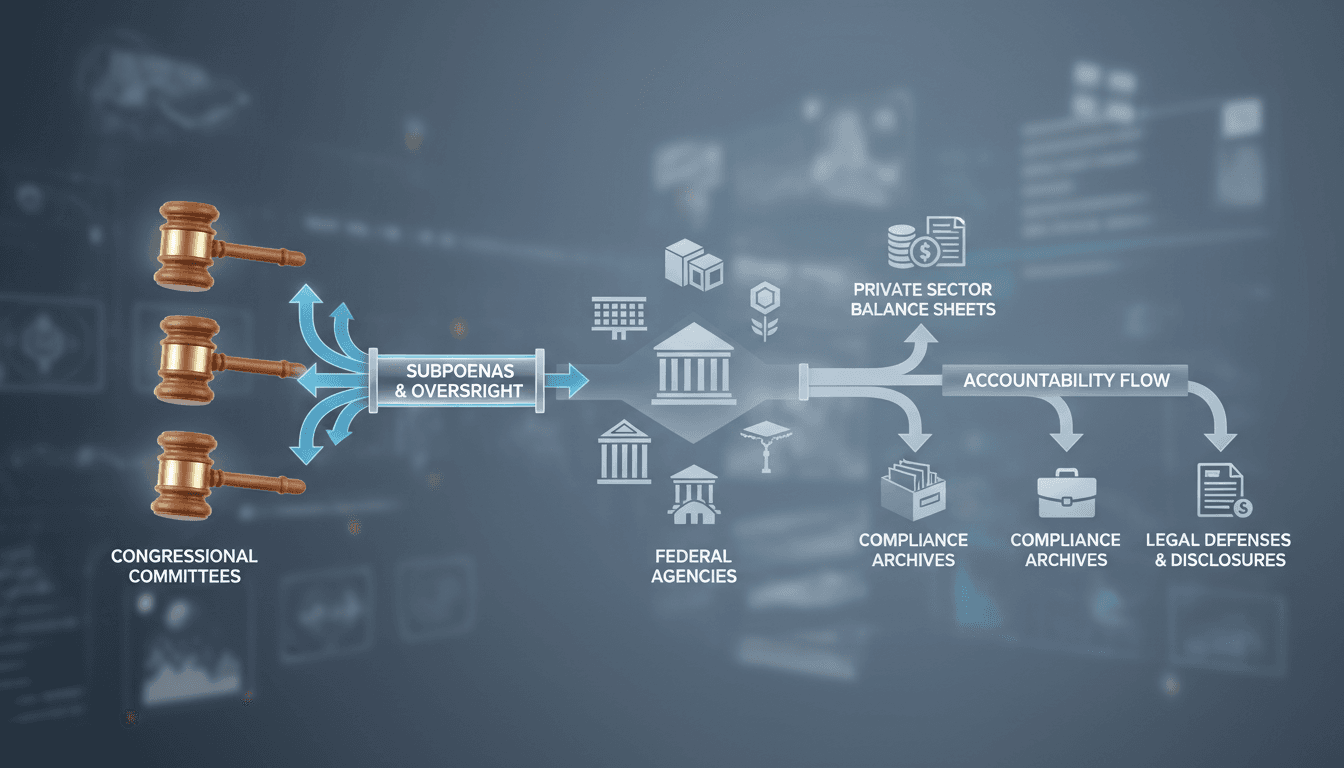
The transfer of committee gavels in Washington establishes a dual-track dynamic where executive rulemaking faces immediate legal confrontation, altering corporate risk calculations across regulated sectors.
What happened (in 30 seconds)
- Midterm results shifted congressional control: Following the November 5, 2026 elections, Democrats secured majorities in both the House of Representatives and the Senate, positioning leadership to take over committee gavels ahead of the January 2027 session.
- Subpoena powers are being deployed as the primary tool: Without a veto-proof legislative pathway to alter signed statutes, congressional leaders including Hakeem Jeffries, Jamie Raskin, and incoming House Oversight Committee Chair Robert Garcia are preparing formal inquiries instead of omnibus bills.
- Oversight plans target specific operational files: Priority dockets include executive-branch foreign policy maneuvers such as the Iran conflict, domestic Department of Homeland Security immigration actions, tech sector interactions, and family-linked business operations spanning real estate, energy, and cryptocurrency.
The context you actually need
- The institutional baseline: When one party controls the executive branch while the opposing party holds legislative majorities, committee chairs gain direct access to unilateral subpoena power, discovery mechanisms, and public hearing schedules.
- The specific enforcement focus: House Oversight Democrats have already logged over 1,000 credible, verifiable instances of reported abuses by federal immigration personnel, providing an existing paper trail for public hearings.
- The timeline for execution: The formal execution of these inquiries will not begin until the 120th Congress officially convenes in January 2027, giving targeted departments and private-sector counterparts an eight-week window to structure compliance protocols.
What's really happening
The post-midterm environment changes the incentives of Washington governance. Without the legislative margins required to overcome presidential vetoes, the new majorities cannot pass substantive policy changes into federal law. Instead, institutional power shifts entirely to the Oversight, Judiciary, and Foreign Affairs committees. This pivot alters corporate exposure: policy risk declines, while discovery risk rises sharply.
The mechanism rests on committee authority to compel testimony, request internal correspondence, and unseal previously guarded records under threat of contempt. For executive agencies, this creates significant administrative overhead. The Department of Defense faces inquiries regarding overseas deployments—including operations in Iran, the Pacific, and the Caribbean—while the Department of Homeland Security must answer for enforcement operations. When congressional committees initiate document production requests, career staff are redirected from core operational priorities to legal document production and compliance reviews.
For enterprise operators, the structural shift centers on the nexus between private commercial interests and federal procurement. The incoming leadership has flagged specific reviews into cryptocurrency ties, Big Tech market conduct, family business expansions, and energy contracts negotiated under executive discretion. When oversight bodies investigate conflicts of interest, their targets are rarely limited to public officials; private partners, vendors, and institutional investors frequently receive formal requests for communications, capitalization tables, and transaction ledgers.
The institutional friction also alters the pace of ongoing regulatory enforcement. As agency heads—including leadership across Justice and Defense—spend operating hours preparing for depositions and public hearings, new administrative actions face internal friction. Regulatory compliance becomes a matter of anticipating which corporate actions will draw a congressional inquiry rather than tracking new legislative bills.
The outcome is an operating environment governed by exposure rather than regulation. While markets registered zero immediate pricing shifts following the November 5 vote, long-term exposure increases for sectors reliant on federal partnerships, defense contracting, or regulatory waivers. Companies operating in these sectors face reputational and operational costs driven by investigative document requests, public hearings, and targeted inquiries.
Who feels it first (and how)
- Defense and federal procurement contractors: Entities involved in recent Caribbean, Pacific, or Middle Eastern logistics face scrutiny regarding contract distribution, execution parameters, and procurement approvals.
- Immigration logistics and services providers: Corporate entities contracting private detention, transport, and border monitoring services will face direct inquiries tied to the 1,000+ documented agency actions compiled by House investigators.
- Digital asset and financial platforms: Firms that structured tokenization projects, cross-border payments, or transactions touching designated executive-branch figures will receive document production requests.
- Corporate compliance officers: General counsels across regulated sectors must dedicate capital to audit past communications with federal departments before public hearings begin in January 2027.
What to watch next
- Committee organizational meetings in January 2027: The formal vote on internal committee rules will reveal whether Democratic chairs adopt fast-track subpoena authority without requiring minority sign-off, setting the pace of document demands.
- Executive privilege assertions: The early willingness of the administration to invoke executive privilege over Pentagon and Justice Department documents will signal whether inquiries proceed to federal courts or produce rapid public disclosures.
- Corporate witness lists: Preliminary hearing schedules published by the House Oversight Committee will show whether investigators prioritize federal agency personnel or private enterprise partners in initial public sessions.
Democrats will control the committee gavels and subpoena mechanisms across both chambers of the United States Congress beginning in January 2027.
The volume of corporate records requested by congressional investigators will increase across the defense, energy, digital assets, and enterprise tech sectors.
The extent to which targeted private entities can shield internal communications from disclosure through legal challenges to congressional committee authority.
Frequently Asked Questions
- Why it matters?
- The transfer of committee gavels in Washington establishes a dual-track dynamic where executive rulemaking faces immediate legal confrontation, altering corporate risk calculations across regulated sectors.
- What happened (in 30 seconds)?
- Midterm results shifted congressional control: Following the November 5, 2026 elections, Democrats secured majorities in both the House of Representatives and the Senate, positioning leadership to take over committee gavels ahead of the January 2027 session. Subpoena powers are being deployed as the primary tool: Without a veto-proof legislative pathway to alter signed statutes, congressional leaders including Hakeem Jeffries, Jamie Raskin, and incoming House Oversight Committee Chair Robert Gar
- What's really happening?
- The post-midterm environment changes the incentives of Washington governance. Without the legislative margins required to overcome presidential vetoes, the new majorities cannot pass substantive policy changes into federal law. Instead, institutional power shifts entirely to the Oversight, Judiciary, and Foreign Affairs committees. This pivot alters corporate exposure: policy risk declines, while discovery risk rises sharply. The mechanism rests on committee authority to compel testimony, reque
- Who feels it first (and how)?
- Defense and federal procurement contractors: Entities involved in recent Caribbean, Pacific, or Middle Eastern logistics face scrutiny regarding contract distribution, execution parameters, and procurement approvals. Immigration logistics and services providers: Corporate entities contracting private detention, transport, and border monitoring services will face direct inquiries tied to the 1,000+ documented agency actions compiled by House investigators. Digital asset and financial platforms: F
- What to watch next?
- Committee organizational meetings in January 2027: The formal vote on internal committee rules will reveal whether Democratic chairs adopt fast-track subpoena authority without requiring minority sign-off, setting the pace of document demands. Executive privilege assertions: The early willingness of the administration to invoke executive privilege over Pentagon and Justice Department documents will signal whether inquiries proceed to federal courts or produce rapid public disclosures. Corporate
Policy, elections, and government reporting.
"NPR is an American public media organization known for thoughtful reporting and a slightly left-leaning editorial tone."
— A47 Editor
How Democrats plan to investigate the Trump administration after their midterm wins
Following the November 3 midterm elections, Democrats won control of the Senate and were projected to take the House, giving them the full investigatory powers of Congress, including the ability to subpoena records and compel testimony, which they pl...
Business, investment, entrepreneurship, leadership, and innovation.
"Forbes is known for its coverage of business leaders, market trends, and entrepreneurial ventures with a pro-business editorial stance."
— A47 Editor
Democrats’ Investigative Targets After Winning Midterms: Epstein, Trump ‘Crime Family’, ICE, Corporations
Democrats have regained subpoena power after winning control of Congress in the November 3, 2026 midterm elections, allowing them to compel testimony and records. Forbes reports their expected investigative targets include the Epstein files, Presiden...
News across North, Central, and South America including politics and economics.
"France 24 is viewed as a globally focused outlet with balanced coverage and a European perspective."
— A47 Editor
US Midterms: Democrats say ready to negotiate and promise big changes
US Democrats say they are ready to negotiate with President Donald Trump and promise major changes after winning control of both chambers of Congress in the November 3 midterm elections, with a Democratic-led Congress set to take power in January. Th...
Capitol Hill news, legislation, and policy insight.
"The Hill specializes in U.S. politics and policy, with a focus on Capitol Hill developments and a reputation for insider reporting."
— A47 Editor
How Democrats plan to use their majorities to constrain Trump
Democrats won control of the Senate and were projected to take the House in the November 3 midterm elections, and Senate and House Democrats are preparing to use their new majorities to rein in President Trump's agenda over his final two years in off...
Capitol Hill news, legislation, and policy insight.
"The Hill specializes in U.S. politics and policy, with a focus on Capitol Hill developments and a reputation for insider reporting."
— A47 Editor
Democrats signal oversight blitz as Trump officials lawyer up
Democrats, after winning control of the Senate and being projected to take the House in the November 3 midterm elections, have signaled an oversight push against the Trump administration, with incoming House Oversight Committee Chair Robert Garcia te...
National coverage of politics and current events across Canada.
"Global News is a mainstream Canadian outlet with a centrist editorial stance, focusing on factual reporting."
— A47 Editor
What can Trump do—and not do—with Congress in the hands of Democrats?
Democrats have won control of Congress in the November 3, 2026 U.S. midterm elections, taking the Senate and projected to take the House, leaving President Donald Trump with a reshaped Washington and an uphill battle to advance his agenda.
News from the United States including domestic politics, society, and culture.
"Global News is a mainstream Canadian media outlet generally considered to have a centrist editorial stance, covering news with a focus on factual reporting and national interest."
— A47 Editor
What can Trump do—and not do—with Congress in the hands of Democrats?
Democrats have won control of Congress in the November 3, 2026 U.S. midterm elections, taking the Senate and projected to take the House, leaving President Donald Trump with a reshaped Washington and an uphill battle to advance his agenda.
International news with cultural insight.
"The Los Angeles Times is a major West Coast newspaper offering in-depth reporting with a liberal editorial tone and strong regional focus."
— A47 Editor
'Lawyer up': Democrats seize Congress, plot ways to rein in Trump
Democrats seized control of Congress after the November 3, 2026 midterm elections, winning the Senate and projected to take the House, and have vowed to use subpoenas and hearings to put the Trump administration on the defensive while saying their pr...
U.S. national news with a West Coast perspective.
"The Los Angeles Times is a major West Coast newspaper offering in-depth reporting with a liberal editorial tone and strong regional focus."
— A47 Editor
'Lawyer up': Democrats seize Congress, plot ways to rein in Trump
Democrats seized control of Congress after the November 3, 2026 midterm elections, winning the Senate and projected to take the House, and have vowed to use subpoenas and hearings to put the Trump administration on the defensive while saying their pr...
24/7 international news from a French perspective in multiple languages.
"France 24 is viewed as a globally focused outlet with balanced coverage and a European perspective."
— A47 Editor
Iran war, Epstein, impeachment? What will Democrats do with control of Congress?
Democrats have won control of both the House of Representatives and the Senate in the US midterm elections held on November 3, a result that the base article says gives the party new powers to block partisan legislation, influence presidential picks ...
Global news coverage with extensive reporting on Middle Eastern conflicts and geopolitics.
"Al Jazeera is a Qatar-based broadcaster known for wide regional coverage and alternative perspectives."
— A47 Editor
Democrats win Congress: How they did it, and what it means
Democrats won control of Congress in the November 3, 2026 midterm elections, with Democratic gains in the Senate and House, according to Al Jazeera's reporting. Voters widely framed the contests as a referendum on President Donald Trump's second term...
Comprehensive coverage of Middle Eastern and global issues.
"Al Jazeera is a prominent voice from the Global South, especially the Middle East, with an emphasis on underreported stories."
— A47 Editor
Democrats win Congress: How they did it, and what it means
Democrats won control of Congress in the November 3, 2026 midterm elections, with Democratic gains in the Senate and House, according to Al Jazeera's reporting. Voters widely framed the contests as a referendum on President Donald Trump's second term...
Top international stories selected by The Guardian editors.
"The Guardian is known for its progressive editorial stance and in-depth analysis."
— A47 Editor
What can Democrats actually do now they have won Congress?
Democrats have taken control of both the US Senate and House of Representatives in the November 3, 2026 midterm elections, routing Republicans in races widely framed as a referendum on President Donald Trump's second term, according to The Guardian's...
Business, investment, entrepreneurship, leadership, and innovation.
"Forbes is known for its coverage of business leaders, market trends, and entrepreneurial ventures with a pro-business editorial stance."
— A47 Editor
‘Lawyer Up’: Democrats Gear Up For Onslaught Of Trump Investigations After Winning Senate
Democrats have regained subpoena power after winning control of the Senate, a development that will allow them to compel congressional testimony and records and that is widely expected to bring a wave of investigations targeting the Trump administrat...
Capitol Hill news, legislation, and policy insight.
"The Hill specializes in U.S. politics and policy, with a focus on Capitol Hill developments and a reputation for insider reporting."
— A47 Editor
Election night could give Dems the power to probe
The Hill reports that if Democrats win control of one or both chambers of Congress in the November 3 midterm elections, they would gain sweeping investigative powers that could be used to scrutinize President Donald Trump's Washington, D.C. projects,...
24/7 international news from a French perspective in multiple languages.
"France 24 is viewed as a globally focused outlet with balanced coverage and a European perspective."
— A47 Editor
Family wealth, Epstein, ‘vanity projects’: How Democrats plan to investigate Trump after midterms
Democrats are preparing a wave of investigations into President Donald Trump's administration and business dealings, including family wealth, Epstein-related matters and so-called 'vanity projects', should they win control of one or both chambers of ...
News from the United States including domestic politics, society, and culture.
"The Guardian is known for its progressive editorial stance and in-depth analysis, often advocating for social justice, environmental issues, and liberal values."
— A47 Editor
What can Democrats actually do if they win Congress?
The Guardian reports on what Democrats could realistically accomplish if they win control of the US House or Senate in the November 3 midterm elections, after Donald Trump's remaining two years in office, with the base article examining the practical...