
Voters Reject Data Center Expansion Across 40 Ballot Measures in 2026 US Midterms
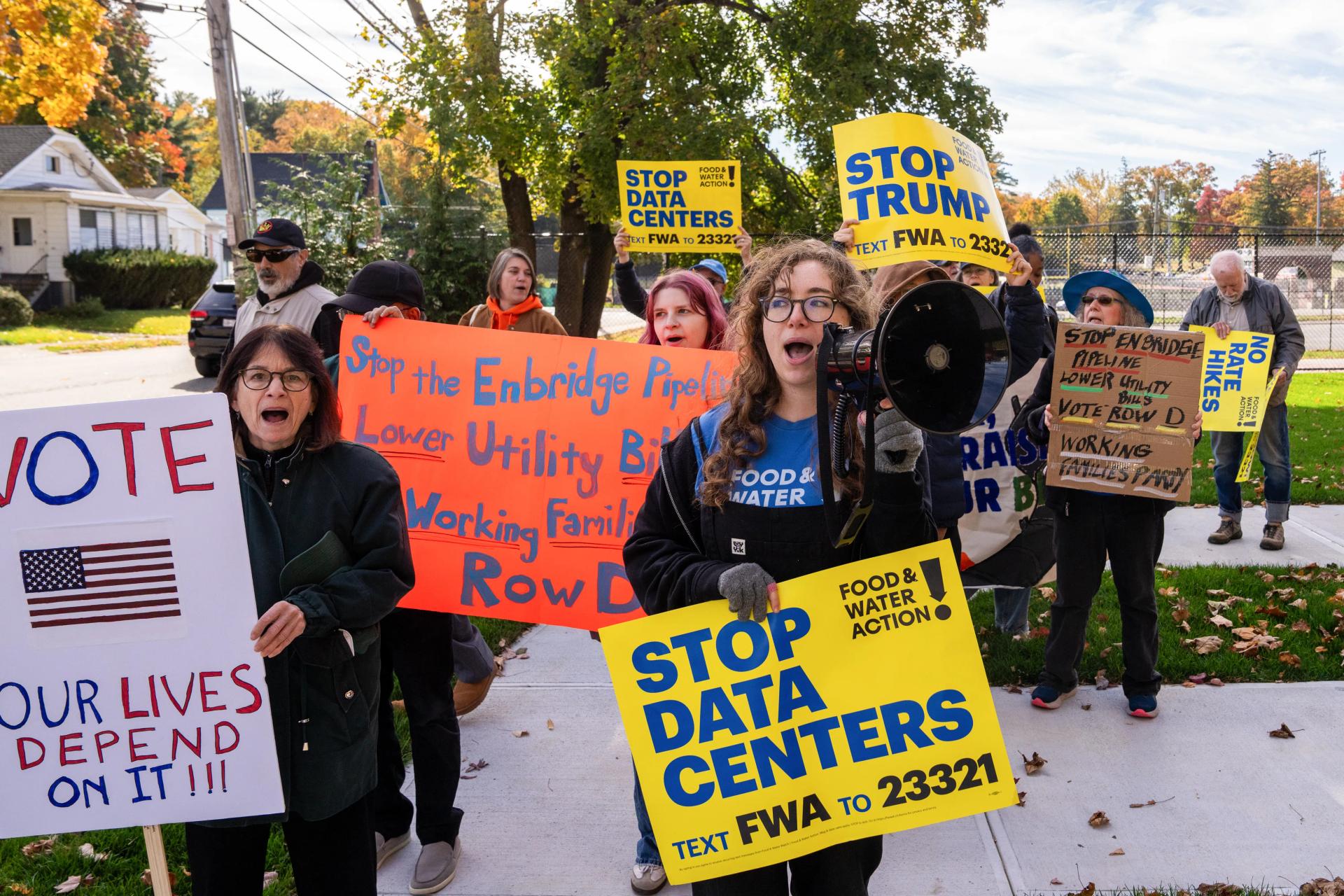
Why it matters
Physical compute expansion has collided with local resource constraints, converting utility grid allocations and municipal zoning approvals into hard sovereign choke points for global digital infrastructure.
What happened (in 30 seconds)
- Local ballot measures rejected computing facilities: Voters passed restrictions or outright bans in 38 to 40 of 41 targeted municipal and county measures on November 4, 2026, across Ohio, Maine, Illinois, Kansas, New Jersey, California, Florida, Nevada, North Dakota, and Wisconsin.
- Voter sentiment aligned against digital builds: Exit polling conducted by NBC News documented that 76% of participating voters opposed the construction of new data centers within their immediate communities, with 56% identifying artificial intelligence and facility expansion as a primary voting factor.
- Leadership changed in primary compute hubs: Candidates endorsing digital expansion faced systematic losses, including gubernatorial leadership changes in Texas, while incoming majorities in Congress signaled incoming regulatory interventions and expanded local leverage.
The context you actually need
- Pre-election opposition had already stalled development: More than 145 digital facility projects had recorded formal delays, pushback, or site cancellations before the November vote due to community resistance throughout 2025 and 2026.
- Resource strain altered local economic calculations: Documented increases in retail utility bills, acute industrial water drawdowns for cooling systems, and expansive rural land consumption degraded the traditional municipal incentives used to attract server farms.
- Early 2026 votes established the pattern: Smaller local municipal contests earlier in the year across California, Michigan, New Hampshire, and Wisconsin had previously recorded consistent voter blocks against unmetered capital builds, previewing the broader November outcome.
What's really happening
The November 4, 2026 midterm election results formalized an economic realignment: local jurisdictions no longer view centralized computing facilities as net economic assets. Over the past decade, municipal leaders attracted hyperscale operators with tax abatements, anticipating that digital infrastructure would signal regional modernization without generating significant municipal burdens. However, the economic reality of modern computing density fundamentally altered that bargain.
Unlike traditional commercial real estate or manufacturing facilities, advanced digital infrastructure clusters consume vast volumes of shared baseline resources while creating minimal long-term employment. Voters faced observable, documented trade-offs: rising residential electricity bills driven by local utility grid overhauls, millions of gallons of daily water consumption diverted to cooling infrastructure, and broad land consumption that yielded only a handful of on-site maintenance roles. When public awareness linked these localized resource strains to automated workplace displacement, the political incentive structure permanently inverted. In Ohio alone, 21 separate municipal measures appeared on local ballots; all 21 enacted restrictions, megawatt caps, or mandatory voter referendums. Across the country, only a single measure in Harwood, North Dakota, preserved an open regulatory pathway for developers.
This structural resistance dismantles the expansion strategy deployed by technology developers. Over the previous two years, consortiums invested capital into regional political campaigns, working alongside state-level officials to streamline site approvals and shield developers from local intervention. That strategy failed to hold against direct ballot initiatives. With candidate losses across established hubs like Texas and Ohio, developers lose their executive shielding.
For enterprise planners, the structural implication is immediate capital redirection. Because public utility commissions and municipal boards now hold clear electoral mandates to deny grid interconnections, developers can no longer assume that regional utility operators will supply baseline power. Developers must pivot toward self-funded power generation, closed-loop water treatment, and microgrid infrastructure to secure operational licenses. Consequently, computing capacity can no longer be modeled as an infinitely scalable cloud layer; it has become a localized, capital-intensive utility subject to municipal resource rationing.
Who feels it first (and how)
- Infrastructure and real estate developers: Teams holding land options across targeted states face immediate impairment charges, extended permitting timelines, and zoning reclassifications that restrict megawatt capacity.
- Cloud and artificial intelligence infrastructure operators: Procurement executives must manage delayed server rollouts, driving up the cost of securing reserved compute capacity across surviving legacy clusters.
- Municipal taxpayers and utility rate-payers: Residents in suburban and rural districts adjacent to electrical transmission lines gain direct relief from utility rate hikes previously projected to fund industrial substations.
- Regional energy utility executives: Power companies must revise long-term capital expenditure plans and negotiate specialized tariff structures that require commercial developers to build their own generation assets.
What to watch next
- Municipal infrastructure self-funding mandates: Watch whether newly empowered local city councils introduce statutory requirements that force prospective developers to finance 100% of their dedicated substation and water-treatment infrastructure prior to groundbreaking.
- Secondary market leasing premiums: Track price movements and capacity spreads for colocation space within grandfathered facilities across Northern Virginia, Texas, and Ohio, which will appreciate as new supply pipelines stall.
- Federal regulatory inquiries: Monitor early legislative dockets in the newly configured Congress for bipartisan hearings aimed at evaluating the systemic grid reliability risks tied to hyperscale computing facilities.
Ballot measures enacted restrictions in roughly 38 to 40 of 41 local jurisdictions; 76% of polled voters opposed local data center builds; and over 145 facility projects were stalled or canceled leading into the vote.
Developers will reallocate near-term capital expenditure toward jurisdictions willing to negotiate high local tax revenues or require operators to supply dedicated, off-grid power generation.
The extent to which federal energy regulators or state legislative bodies can override local municipal zoning caps through interstate commerce authorities remains legally untested.
Frequently Asked Questions
- Why it matters?
- Physical compute expansion has collided with local resource constraints, converting utility grid allocations and municipal zoning approvals into hard sovereign choke points for global digital infrastructure.
- What happened (in 30 seconds)?
- Local ballot measures rejected computing facilities: Voters passed restrictions or outright bans in 38 to 40 of 41 targeted municipal and county measures on November 4, 2026, across Ohio, Maine, Illinois, Kansas, New Jersey, California, Florida, Nevada, North Dakota, and Wisconsin. Voter sentiment aligned against digital builds: Exit polling conducted by NBC News documented that 76% of participating voters opposed the construction of new data centers within their immediate communities, with 56%
- What's really happening?
- The November 4, 2026 midterm election results formalized an economic realignment: local jurisdictions no longer view centralized computing facilities as net economic assets. Over the past decade, municipal leaders attracted hyperscale operators with tax abatements, anticipating that digital infrastructure would signal regional modernization without generating significant municipal burdens. However, the economic reality of modern computing density fundamentally altered that bargain. Unlike trad
- Who feels it first (and how)?
- Infrastructure and real estate developers: Teams holding land options across targeted states face immediate impairment charges, extended permitting timelines, and zoning reclassifications that restrict megawatt capacity. Cloud and artificial intelligence infrastructure operators: Procurement executives must manage delayed server rollouts, driving up the cost of securing reserved compute capacity across surviving legacy clusters. Municipal taxpayers and utility rate-payers: Residents in suburban
- What to watch next?
- Municipal infrastructure self-funding mandates: Watch whether newly empowered local city councils introduce statutory requirements that force prospective developers to finance 100% of their dedicated substation and water-treatment infrastructure prior to groundbreaking. Secondary market leasing premiums: Track price movements and capacity spreads for colocation space within grandfathered facilities across Northern Virginia, Texas, and Ohio, which will appreciate as new supply pipelines stall. Fe
Capitol Hill news, legislation, and policy insight.
"The Hill specializes in U.S. politics and policy, with a focus on Capitol Hill developments and a reputation for insider reporting."
— A47 Editor
Voters fiercely reject data centers
Voters in the November 3 midterm elections pushed back hard against data centers, with local opposition helping carry Democrats to victory in key races, and where data centers were explicitly on the ballot, they lost overwhelmingly, according to The ...
News from the United States including domestic politics, society, and culture.
"The Guardian is known for its progressive editorial stance and in-depth analysis, often advocating for social justice, environmental issues, and liberal values."
— A47 Editor
Datacenters were on the ballot. US voters rejected them
Voters in at least 40 jurisdictions across 10 US states approved nearly every datacenter moratorium on the ballot in Tuesday's midterm elections, delivering a strong rebuke to the giant facilities that power artificial intelligence and online service...
Latest tech news, product reviews, and analysis for consumers and professionals.
"CNET delivers accessible and detailed technology reporting, including trusted product reviews and how-to guides."
— A47 Editor
Data Center Backers Suffer Near-Total Midterm Defeats Across the Country
CNET reports that more than 40 voting initiatives in the 2026 U.S. midterm elections produced almost no support for data-center projects, with results across the country largely resisting such developments. The outcomes represent near-total defeats f...
Market-moving headlines impacting equities, bonds, and related risk assets.
"Real-time catalysts and volatility drivers across indices and sectors."
— A47 Editor
Analysis-Trump’s midterm drubbing demonstrates the power of data center opponents
Investing.com reports that Trump's midterm setback, with Democrats winning control of Congress, has been linked to the growing power of data centre opponents, as local and state-level opposition to data centre construction gained traction in the 2026...
Business, investment, entrepreneurship, leadership, and innovation.
"Forbes is known for its coverage of business leaders, market trends, and entrepreneurial ventures with a pro-business editorial stance."
— A47 Editor
Here’s Where Voters Are Rejecting Data Centers At The Ballot (Full List)
Voters in dozens of municipalities across at least seven states are casting ballots on Tuesday on bans or moratoriums targeting data centers, according to Forbes. The votes reflect public backlash to the facilities that has grown rapidly over the pas...
Emerging technologies, digital transformation, IT, and cultural impact of tech.
"WIRED covers the intersection of technology, culture, and politics with a progressive, forward-looking editorial stance."
— A47 Editor
The Results Are In: Voters Hate Data Centers
Voters delivered poor results for data centers and their backers in the 2026 midterm elections, with the trend visible in high-profile Senate contests and local rezoning initiatives, according to WIRED's reporting on the ballot outcomes.
Latest WIRED coverage of AI.
"WIRED covers AI at the intersection of tech, culture, and policy."
— A47 Editor
The Results Are In: Voters Hate Data Centers
Voters delivered poor results for data centers and their backers in the 2026 midterm elections, with the trend visible in high-profile Senate contests and local rezoning initiatives, according to WIRED's reporting on the ballot outcomes.
Covers consumer technology, electronics, gadgets, and product reviews.
"Engadget is a trusted source for gadget reviews and consumer tech news, known for its hands-on analysis and industry coverage."
— A47 Editor
Americans overwhelmingly voted against data centers in the midterms
Engadget reports that Americans voted strongly against data centers in the midterm elections, with the rebuke most pronounced in Ohio, which has shifted to Democratic control. The story centers on voter sentiment tied to the growth of data center inf...
Consumer technology news with AI coverage.
"Gadget and tech site reporting on AI in products."
— A47 Editor
Americans overwhelmingly voted against data centers in the midterms
Engadget reports that Americans voted strongly against data centers in the midterm elections, with the rebuke most pronounced in Ohio, which has shifted to Democratic control. The story centers on voter sentiment tied to the growth of data center inf...
Business and tech news excluding paywalled content.
"High-volume business/tech outlet with frequent AI coverage."
— A47 Editor
Data centers got a slap in the face at the ballot box. These key votes show how.
Voters in dozens of referendums restricted data center construction, while Democrats flipped Texas and saw large swings in Virginia's "Data Center Alley," according to Business Insider's reporting on the midterm results.