
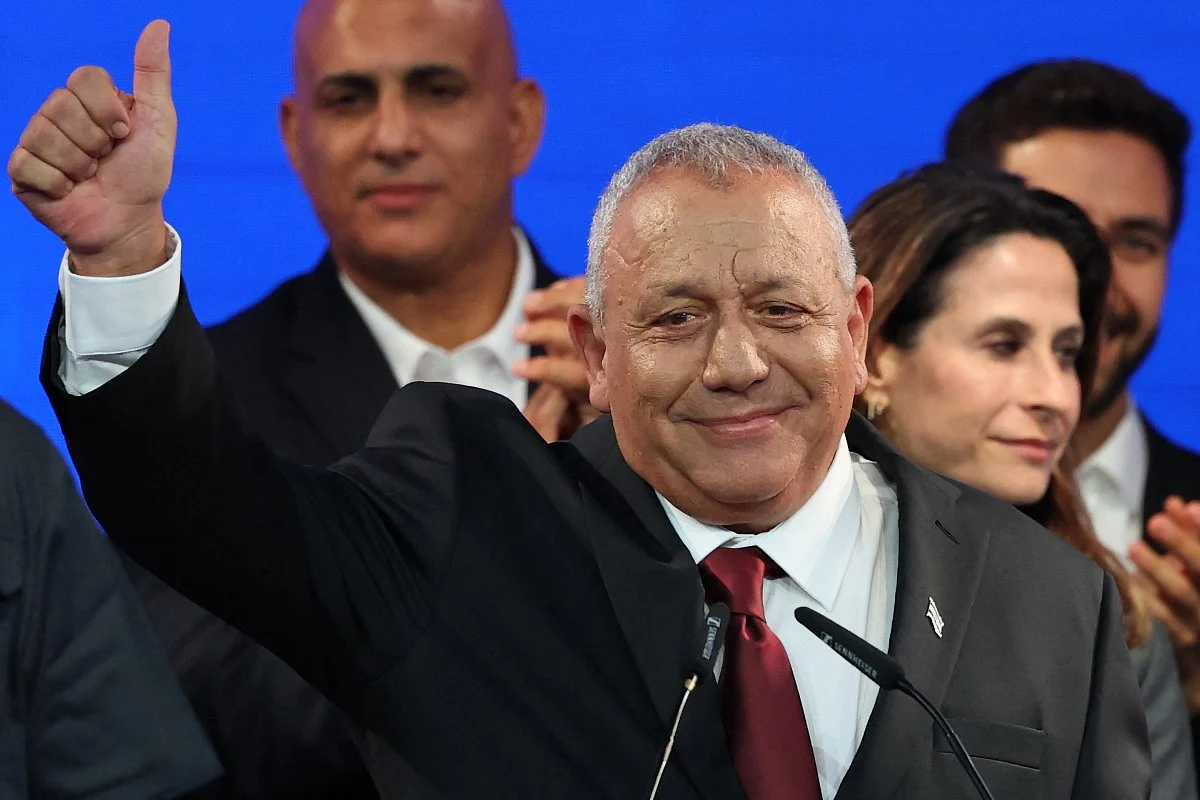
Herzog Mandates Eisenkot to Form Israeli Government After Netanyahu Coalition Loses Knesset Majority
Why it matters
The formal shift of the government-formation mandate alters the regulatory and security leadership navigating regional economic integration, shaping the speed and scope of multilateral investments across the Middle East.
What happened (in 30 seconds)
- Mandate reassigned: On November 7, 2026, President Isaac Herzog formally selected Yashar party leader Gadi Eisenkot to attempt the formation of a government, following the October 27 election in which Benjamin Netanyahu’s bloc secured 53 seats and lost its majority in the 120-seat Knesset.
- The endorsement split: Herzog awarded the mandate after Eisenkot secured 67 recommendations from lawmakers across opposition factions and Arab parties, compared to 46 for Netanyahu, whose Likud party remains the largest single party with 27 seats.
- The negotiation window opens: Eisenkot has a statutory 28-day period—with a potential 14-day extension—to assemble an operational coalition of at least 61 seats, facing pathways that include external Arab party backing, ultra-Orthodox alignment, or a national unity framework.
The context you actually need
- The mathematical impasse: Eisenkot’s core centre-left to right-wing bloc holds 48 seats, leaving him 13 votes short of the required 61-seat threshold without relying on Arab parties (which won 19 seats) or peeling factions away from Netanyahu's 53-seat bloc.
- The security backdrop: The October 2026 election followed the collapse of Netanyahu's coalition majority amid sustained security pressure stemming from the October 2023 events and subsequent military operations in Gaza, driving voters toward alternative defense-credentialed leadership.
- The procedural timeline: Under Israeli law, if Eisenkot fails to present a viable 61-seat coalition within his initial 28 days (plus any 14-day extension), the mandate transfers to another candidate or returns to the Knesset, which could trigger a snap election within approximately 100 days.
What's really happening
The handover of the mandate from Benjamin Netanyahu to Gadi Eisenkot reflects a structural fracturing of the legislative arithmetic in the 120-seat Knesset. Netanyahu’s religious-nationalist alignment reached 53 seats, falling eight seats short of the governing threshold. Eisenkot’s Yashar party capitalized on an electorate prioritizing conventional military leadership over far-right alliances, yet his own core bloc captured only 48 seats. The resulting balance gives external actors—specifically the Arab parties, who expanded their footprint to a record 19 seats—unprecedented mathematical leverage in determining the prime ministership.
Eisenkot’s primary structural hurdle is converting 67 procedural recommendations into 61 durable governing votes. Recommending a leader to the president is a low-cost mechanism used by opposition parties to block a rival; converting those recommendations into binding policy platforms requires formal concessions. Eisenkot previously ruled out a direct coalition with Arab parties. That stance limits his realistic options to three distinct models, each accompanied by distinct institutional frictions.
First, Eisenkot can negotiate a minority government supported from the outside by Arab factions such as Ra'am and the Joint List. While this delivers legislative confirmation on day one, it leaves day-to-day governance vulnerable to persistent dissolution threats whenever defense or budgetary votes are tabled. Second, he can attempt to detach ultra-Orthodox factions from Netanyahu’s traditional 53-seat orbit. This route requires major concessions on military conscription exemptions and domestic social welfare budgets, which would alienate fiscal conservatives within his own 48-seat grouping. Third, he can pursue an emergency national unity structure with Likud, though sharing executive power with Netanyahu runs counter to Yashar's core platform of moving past the incumbent's leadership.
For operators looking at regional trade, this fluid coalition dynamic places cross-border initiatives on pause. Israeli administrative departments routinely operate in maintenance-only modes during mandate negotiations. Bilateral policy enhancements under the Abraham Accords—including regulatory harmonization, energy sharing, and dual-jurisdiction tech licensing between Israel and the UAE—require active cabinet sign-offs. If Eisenkot cannot finalize a pact within his 28-day window (plus any 14-day extension), the mandate defaults, raising the probability of another snap ballot within 100 days. Until executive authority settles, the bilateral corridor operates under existing baseline protocols without room for policy expansion.
Who feels it first (and how)
- Gulf-Israel cross-border investors: Private equity and venture capital desks deferring joint tech, agritech, and infrastructure transactions until Israeli ministry leadership and tax policies are clarified.
- Regional logistics and aviation operators: Carriers and air-transit coordinators managing passenger and cargo volumes across Dubai, Tel Aviv, and regional hubs under prevailing bilateral agreements, pending clarity on cabinet-level transport policies.
- Israeli civil service and defense administrators: Ministerial directors operating under interim spending rules, unable to commit long-term capital or launch cross-border public projects until a formal cabinet is sworn in.
- UAE-based export-import desks: Trade houses monitoring bilateral customs coordination and supply-chain permits, which face processing delays while Israeli ministries await permanent political leadership.
What to watch next
- The 28-day countdown: The formal negotiation period running from November 7, 2026, which tests whether Eisenkot can sign initial coalition agreements before requesting a 14-day extension from President Herzog.
- Ultra-Orthodox party movements: Public statements and closed-door talks from religious factions indicating whether they remain anchored to Netanyahu’s 53-seat bloc or are willing to negotiate concessions with Eisenkot's team.
- Arab party voting pacts: The terms of external support agreements drafted by Ra'am and the Joint List, revealing whether they will back a minority administration during confirmation or force concessions on civil budgets.
President Herzog officially tasked Gadi Eisenkot with forming Israel's next government after Eisenkot secured 67 recommendations versus 46 for Netanyahu; the 120-seat Knesset remains divided among Netanyahu’s 53-seat bloc, Eisenkot’s 48-seat bloc, and 19 Arab party lawmakers.
The negotiation process will run through the entire 28-day statutory window and require a 14-day extension, as all three coalition alternatives demand contentious policy compromises across security and domestic spending.
Whether Eisenkot can overcome his prior commitments against direct Arab party alignment, or if negotiations will stall entirely, triggering the return of the mandate to the Knesset and snap elections within roughly 100 days.
Frequently Asked Questions
- Why it matters?
- The formal shift of the government-formation mandate alters the regulatory and security leadership navigating regional economic integration, shaping the speed and scope of multilateral investments across the Middle East.
- What happened (in 30 seconds)?
- Mandate reassigned: On November 7, 2026, President Isaac Herzog formally selected Yashar party leader Gadi Eisenkot to attempt the formation of a government, following the October 27 election in which Benjamin Netanyahu’s bloc secured 53 seats and lost its majority in the 120-seat Knesset. The endorsement split: Herzog awarded the mandate after Eisenkot secured 67 recommendations from lawmakers across opposition factions and Arab parties, compared to 46 for Netanyahu, whose Likud party remains t
- What's really happening?
- The handover of the mandate from Benjamin Netanyahu to Gadi Eisenkot reflects a structural fracturing of the legislative arithmetic in the 120-seat Knesset. Netanyahu’s religious-nationalist alignment reached 53 seats, falling eight seats short of the governing threshold. Eisenkot’s Yashar party capitalized on an electorate prioritizing conventional military leadership over far-right alliances, yet his own core bloc captured only 48 seats. The resulting balance gives external actors—specifically
- Who feels it first (and how)?
- Gulf-Israel cross-border investors: Private equity and venture capital desks deferring joint tech, agritech, and infrastructure transactions until Israeli ministry leadership and tax policies are clarified. Regional logistics and aviation operators: Carriers and air-transit coordinators managing passenger and cargo volumes across Dubai, Tel Aviv, and regional hubs under prevailing bilateral agreements, pending clarity on cabinet-level transport policies. Israeli civil service and defense adminis
- What to watch next?
- The 28-day countdown: The formal negotiation period running from November 7, 2026, which tests whether Eisenkot can sign initial coalition agreements before requesting a 14-day extension from President Herzog. Ultra-Orthodox party movements: Public statements and closed-door talks from religious factions indicating whether they remain anchored to Netanyahu’s 53-seat bloc or are willing to negotiate concessions with Eisenkot's team. Arab party voting pacts: The terms of external support agreement
Pan-Arab political news and analysis.
"Al-Quds Al-Arabi is a London-based Arabic newspaper known for political coverage."
— A47 Editor
هرتسوغ يكلّف آيزنكوت بتشكيل الحكومة الإسرائيلية… ومظاهرات تطالب بشراكة عربية
Israeli President Isaac Herzog has announced his intention to task Yesh Atid leader Gadi Eisenkot with forming the new Israeli government, as hundreds of Israelis protested on Saturday in Tel Aviv and the Jezreel Valley, demanding a new government th...
Arabic-language reporting on global and regional news.
"BBC Arabic is part of the BBC, generally regarded for editorial standards and broad international coverage."
— A47 Editor
غادي آيزنكوت: من هو المكلف بتشكيل الحكومة الإسرائيلية؟
Former Israeli army chief Gadi Eisenkot is profiled by BBC Arabic as the figure posing the largest political challenge to Prime Minister Benjamin Netanyahu ahead of the upcoming general election, with the report examining his background and his path ...
Macro commentary, policy analysis, growth/inflation themes, and global outlooks.
"Contextual macro coverage that complements day-to-day market headlines."
— A47 Editor
Israel’s Eisenkot gets first mandate to form government, aiming to oust Netanyahu
Israel's President has given Benny Eisenkot the first mandate to attempt to form a new government, with the stated aim of ousting Prime Minister Benjamin Netanyahu, according to reporting by Investing.com.
UAE-based newspaper covering Gulf politics, society, and international developments.
"Gulf News is one of the UAE’s most prominent English-language publications."
— A47 Editor
Gadi Eisenkot gets first shot at forming Israel's next government
Israeli President Isaac Herzog is set to name opposition leader Gadi Eisenkot as the candidate tasked with trying to form the next government, after Eisenkot secured recommendations from 67 of the 120 Knesset members following the inconclusive Octobe...
A curated Gulf News feed featuring major stories across news, business, opinion, and lifestyle.
"Gulf News is a major UAE newspaper whose featured stories feed reflects a broad editorial mix shaped for a Gulf audience."
— A47 Editor
Gadi Eisenkot gets first shot at forming Israel's next government
Israeli President Isaac Herzog is set to name opposition leader Gadi Eisenkot as the candidate tasked with trying to form the next government, after Eisenkot secured recommendations from 67 of the 120 Knesset members following the inconclusive Octobe...
Arabic-language political and world news coverage for UAE readers.
"Emarat Al Youm world coverage usually presents international developments through a UAE and Arab audience lens."
— A47 Editor
الرئيس الإسرائيلي يكلف غادي آيزنكوت بتشكيل الحكومة الرئيس الإسرائيلي يكلف غادي آيزنكوت بتشكيل الحكومة
Israeli President Isaac Herzog announced on Saturday that Gadi Eisenkot, head of the opposition bloc, has been tasked with forming a new government, according to a statement from the president's office reported by Emarat Al Youm.
Jordanian news and regional updates.
"Roya News is a Jordanian outlet focused on breaking news and local affairs."
— A47 Editor
إعلام عبري: هرتسوغ يكلّف آيزنكوت بتشكيل الحكومة الإسرائيلية
Israeli media reported that President Isaac Herzog has tasked Benny Gantz (referred to as Eisenkot in the source name transliteration) with forming the Israeli government, inviting him to the presidential headquarters for the formal mandate ceremony.
Coverage of current events and conflicts in the Middle East.
"France 24 is viewed as a globally focused outlet with balanced coverage and a European perspective."
— A47 Editor
Israeli president picks Netanyahu's rival Eisenkot to try to form government
Israeli President Isaac Herzog is set to name on Sunday, November 8, the candidate he will task with forming a new government after the inconclusive October 27 national election, with opposition leader Gadi Eisenkot having secured recommendations fro...
European coverage of Middle East politics and security issues.
"France 24 offers international reporting with a European editorial perspective."
— A47 Editor
Israeli president picks Netanyahu's rival Eisenkot to try to form government
Israeli President Isaac Herzog is set to name on Sunday, November 8, the candidate he will task with forming a new government after the inconclusive October 27 national election, with opposition leader Gadi Eisenkot having secured recommendations fro...
Breaking news and analysis from the UAE and Gulf region.
"Khaleej Times is a long-running UAE publication with broad regional coverage."
— A47 Editor
Israeli president picks Gadi Eisenkot, Netanyahu's rival, to form government
Israeli President Isaac Herzog has tasked opposition leader Gadi Eisenkot, Benjamin Netanyahu's main rival, with attempting to form the next government after Eisenkot secured recommendations from 67 of the 120 Knesset members following the inconclusi...
Arabic-language reporting on global and regional news.
"BBC Arabic is part of the BBC, generally regarded for editorial standards and broad international coverage."
— A47 Editor
عاجل: الرئيس الإسرائيلي يكلف غادي آيزنكوت بتشكيل الحكومة
Israeli President Isaac Herzog has tasked Gantz's rival, Gadi Eisenkot, head of the opposition bloc that secured an advantage in the legislative elections, with forming a new government, according to the BBC Arabic report.
Arabic-language coverage of international news and geopolitics.
"RT Arabic is a Russian state-funded outlet often criticized for promoting Kremlin-aligned narratives."
— A47 Editor
الرئيس الإسرائيلي يكلف آيزنكوت بتشكيل الحكومة
Israeli President Isaac Herzog has tasked Gadi Eisenkot, leader of the Yashar party, with forming the new government, amid deep political divisions and after Eisenkot secured the backing of 67 lawmakers, according to RT Arabic.
Arabic-language coverage of international news and geopolitics.
"RT Arabic is a Russian state-funded outlet often criticized for promoting Kremlin-aligned narratives."
— A47 Editor
آيزنكوت يرد على عرض نتنياهو تشكيل حكومة وحدة: فك التحالف مع المتطرفين واقبل مبادئي الـ4
Israeli opposition leader Gadi Eisenkot, head of the Yesh Atid party, has escalated his political confrontation with Prime Minister Benjamin Netanyahu by rejecting Netanyahu's proposal to form a national unity government. Eisenkot's response, as repo...