
Supreme Court Lifts Injunction Allowing Resumed Border Wall Construction in Big Bend Texas
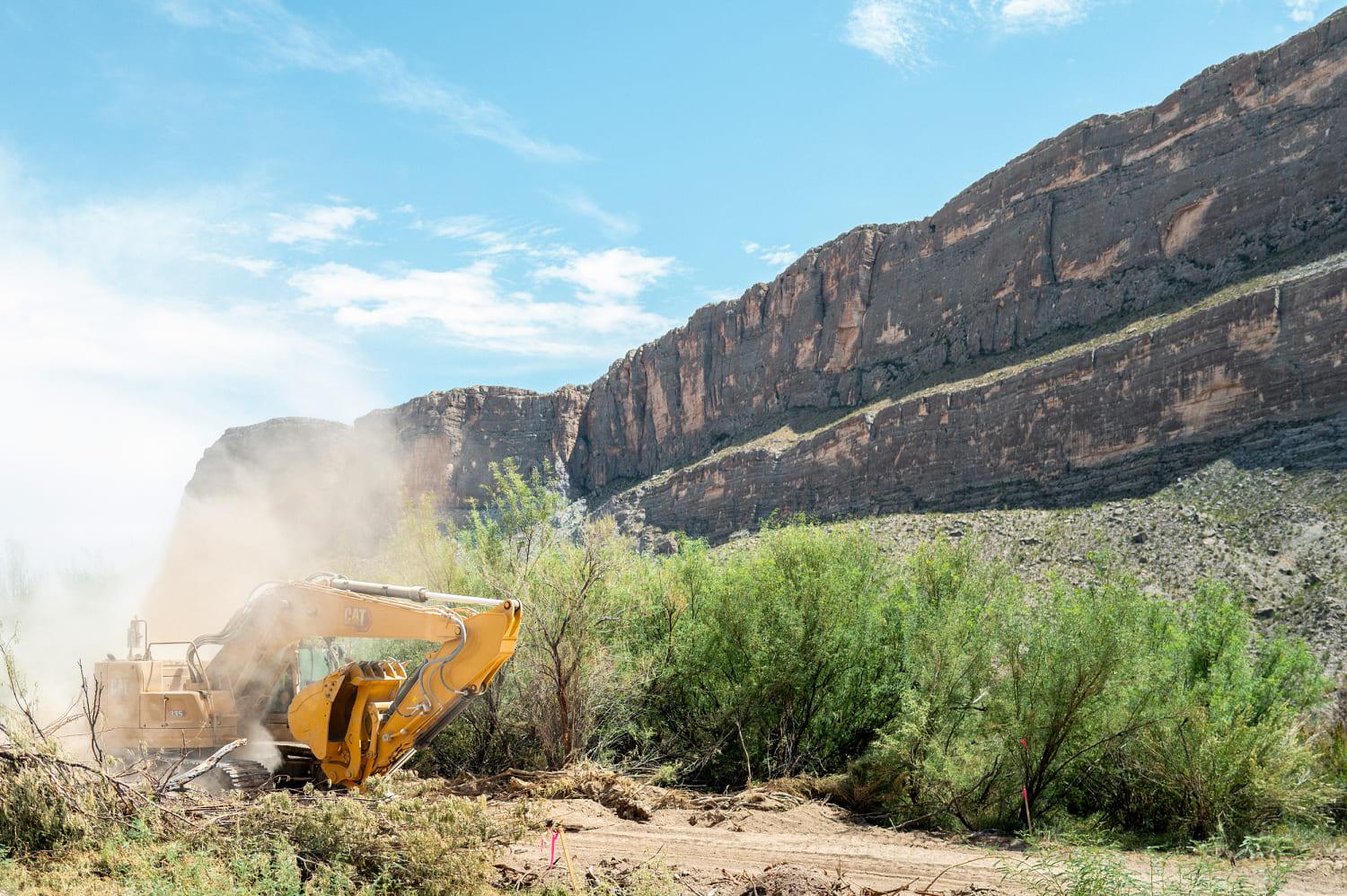
Why it matters
The high court's intervention confirms that federal border security mandates override local conservation statutes, establishing an uninterrupted operational path for hundreds of miles of public works.
What happened (in 30 seconds)
* The Supreme Court lifted a lower court injunction: On November 9, 2026, the court permitted the Trump administration to resume border infrastructure construction across the Big Bend region of southwest Texas via an unsigned five-page order. * District-level environmental blocks were dismantled: The decision stayed an October 2 preliminary injunction issued by U.S. District Judge Kathleen Cardone, which had declared the administration's environmental waivers invalid. * Dissent remained isolated: Only Justice Ketanji Brown Jackson formally dissented from the decision, which concluded that the federal government is likely to prevail on jurisdictional arguments.
The context you actually need
* Statutory waivers bypass standard reviews: Under a 1996 federal statute, the Department of Homeland Security possesses legal authority to waive conservation and environmental statutes to expedite barrier construction in designated sectors. * The project spans over 300 linear miles: In 2026, DHS leadership issued three waivers covering more than 300 miles of border barriers, surveillance corridors, and access roads along the Rio Grande and adjacent to Big Bend National Park. * Detention volume drove the policy intervention: Department filings justified the urgency of the buildout by citing approximately 89,000 individuals detained while attempting to enter the United States across the Big Bend sector in recent years.
What's really happening
The Supreme Court’s decision illustrates the institutional mechanics governing executive emergency powers, statutory jurisdiction, and capital deployment in high-priority federal sectors.
At the center of this legal contest is a 1996 legislative provision designed to insulate federal barrier development from standard procedural hurdles, such as lengthy environmental impact statements or prolonged preservation reviews. When the Department of Homeland Security—directed by leadership including Kristi Noem and Markwayne Mullin—issued three sweeping waivers covering over 300 miles in the Big Bend sector, it operationalized an administrative shortcut intended to guarantee rapid infrastructure delivery.
The pushback from local groups, including the Center for Biological Diversity, Friends of the Ruidosa Church, and private resident Danny Miller, turned on both geographic and statutory arguments. Opponents pointed out that the Big Bend area has historically recorded lower crossing volumes compared to urbanized sectors, arguing that the statutory criteria for invoking waivers—specifically areas of high illegal entry—were misapplied to sensitive desert terrain and historic architecture. U.S. District Judge Kathleen Cardone accepted these arguments in early October 2026, halting active heavy machinery on the grounds that DHS had exceeded its delegated authority.
The Supreme Court's stay reverses that operational freeze by shifting the framework from environmental vulnerability back to statutory jurisdiction and sovereign operational authority. By determining that the district court likely lacked jurisdiction to stall work authorized under the 1996 statute, the justices reinforced a legal structure where national security infrastructure overrides regional land-use concerns during pending litigation.
For federal contractors, program managers, and regulatory analysts, the structural incentive is clear: statutory waivers granted under national security statutes create high procedural shields against civil-society litigation. Even when local federal judges find procedural flaws, the higher court’s tendency to weigh federal enforcement authority above regional conservation concerns enables continuous physical asset creation on the ground.
Who feels it first (and how)
* Federal infrastructure contractors and logistics teams: Crews gain immediate clearance to resume construction of physical barriers, secondary security networks, and access routes across southwest Texas. * Environmental litigation groups and historical trusts: Organizations like the Center for Biological Diversity and Friends of the Ruidosa Church face ongoing physical changes to project sites before legal challenges can be fully tried. * Southwest Texas borderland communities: Residents and regional property owners in Brewster and Presidio counties will see immediate reactivation of heavy transport, staging yards, and equipment deployments.
What to watch next
* Merits briefing in the Fifth Circuit Court of Appeals: Monitor whether appellate judges review the district court's underlying jurisdictional authority or address the statutory scope of the 1996 waiver provision. * Construction mobilization along the Rio Grande: Track how rapidly project managers deploy equipment into remote, topographically complex zones adjacent to Big Bend National Park. * Future waiver applications across adjacent border sectors: Watch whether DHS uses this Supreme Court stay to expand similar statutory exemptions into remaining unbuilt sectors along the southern border.
The Supreme Court authorized construction across the Big Bend sector to continue while litigation moves through the appeals system, with Justice Jackson as the sole dissenter.
Physical installation of vehicle barriers and perimeter roads will proceed at pace to minimize future operational interruptions from remaining legal actions.
Whether final appellate decisions will place durable judicial limits on executive branch statutory waivers in geographic zones with comparatively low crossing figures.
Frequently Asked Questions
- Why it matters?
- The high court's intervention confirms that federal border security mandates override local conservation statutes, establishing an uninterrupted operational path for hundreds of miles of public works.
- What happened (in 30 seconds)?
- The Supreme Court lifted a lower court injunction: On November 9, 2026, the court permitted the Trump administration to resume border infrastructure construction across the Big Bend region of southwest Texas via an unsigned five-page order. District-level environmental blocks were dismantled: The decision stayed an October 2 preliminary injunction issued by U.S. District Judge Kathleen Cardone, which had declared the administration's environmental waivers invalid. Dissent remained isolated: Only
- What's really happening?
- The Supreme Court’s decision illustrates the institutional mechanics governing executive emergency powers, statutory jurisdiction, and capital deployment in high-priority federal sectors. At the center of this legal contest is a 1996 legislative provision designed to insulate federal barrier development from standard procedural hurdles, such as lengthy environmental impact statements or prolonged preservation reviews. When the Department of Homeland Security—directed by leadership including Kr
- Who feels it first (and how)?
- Federal infrastructure contractors and logistics teams: Crews gain immediate clearance to resume construction of physical barriers, secondary security networks, and access routes across southwest Texas. Environmental litigation groups and historical trusts: Organizations like the Center for Biological Diversity and Friends of the Ruidosa Church face ongoing physical changes to project sites before legal challenges can be fully tried. Southwest Texas borderland communities: Residents and regional
- What to watch next?
- Merits briefing in the Fifth Circuit Court of Appeals: Monitor whether appellate judges review the district court's underlying jurisdictional authority or address the statutory scope of the 1996 waiver provision. Construction mobilization along the Rio Grande: Track how rapidly project managers deploy equipment into remote, topographically complex zones adjacent to Big Bend National Park. Future waiver applications across adjacent border sectors: Watch whether DHS uses this Supreme Court stay to
International coverage from The Guardian's global desks.
"The Guardian is known for its progressive editorial stance and in-depth analysis."
— A47 Editor
US supreme court clears way for Trump’s border wall in Texas’s Big Bend
The US Supreme Court has allowed the Trump administration to continue constructing a border wall in Texas's Big Bend region, including sections running through parts of Big Bend National Park. In an unsigned five-page order, the court granted the adm...
News from the United States including domestic politics, society, and culture.
"The Guardian is known for its progressive editorial stance and in-depth analysis, often advocating for social justice, environmental issues, and liberal values."
— A47 Editor
US supreme court clears way for Trump’s border wall in Texas’s Big Bend
The US Supreme Court has allowed the Trump administration to continue constructing a border wall in Texas's Big Bend region, including sections running through parts of Big Bend National Park. In an unsigned five-page order, the court granted the adm...
Comprehensive coverage of Middle Eastern and global issues.
"Al Jazeera is a prominent voice from the Global South, especially the Middle East, with an emphasis on underreported stories."
— A47 Editor
US Supreme Court allows border wall in Big Bend National Park to proceed
The US Supreme Court has allowed construction of a border wall in Big Bend National Park in Texas to proceed. The lawsuit had sought to block work in the national park by challenging waivers that allow the government to bypass certain environmental a...
Global news coverage with extensive reporting on Middle Eastern conflicts and geopolitics.
"Al Jazeera is a Qatar-based broadcaster known for wide regional coverage and alternative perspectives."
— A47 Editor
US Supreme Court allows border wall in Big Bend National Park to proceed
The US Supreme Court has allowed construction of a border wall in Big Bend National Park in Texas to proceed. The lawsuit had sought to block work in the national park by challenging waivers that allow the government to bypass certain environmental a...
Editor-curated FT homepage stories spanning markets, business, world, and opinion.
"The Financial Times is a globally respected business publication with a centrist/center-left tone and strong markets focus."
— A47 Editor
Supreme Court lets Trump build border wall through Texas national park
The US Supreme Court has ruled that the Trump administration may proceed with building a border wall through a national park in Texas. The justices found that the government's interest outweighs the aesthetic and environmental harm alleged by the res...
Coverage of national news and issues shaping the United States, including politics, economy, and society.
"The Wall Street Journal is one of the most respected financial and news publications in the U.S., known for its rigorous reporting and center-right editorial perspective."
— A47 Editor
Supreme Court Lets Trump Administration Build Border Wall in Big Bend
The U.S. Supreme Court has allowed the Trump administration to resume construction of a section of border wall in Texas's remote Big Bend region, lifting a lower-court injunction that had halted the project during a legal challenge brought by preserv...
Public radio coverage of American news and issues.
"NPR is an American public media organization known for thoughtful reporting and a slightly left-leaning editorial tone."
— A47 Editor
Supreme Court says border wall construction can continue in west Texas
The Supreme Court has allowed the Trump administration to continue border wall construction in west Texas while a lawsuit over the plan moves forward, after the administration filed an emergency relief request earlier in October. The order, described...
Conservative-leaning coverage of current events.
"Fox News is a highly influential conservative news outlet known for right-leaning political commentary and coverage."
— A47 Editor
SCOTUS allows Trump admin to temporarily resume border construction in Texas' Big Bend
The Supreme Court lifted a federal injunction that had blocked Trump administration border wall construction in the Big Bend Sector of Texas, allowing work to resume temporarily while an environmental groups' lawsuit continues.
Major U.S. developments and regional news.
"ABC News delivers broad national coverage with a mainstream editorial stance, focusing on accessibility and balanced reporting."
— A47 Editor
Court clears the way for border wall construction in Texas’s Big Bend to resume
The US Supreme Court has allowed the Trump administration to resume construction of a section of the border wall in the remote Big Bend region of southwest Texas, clearing the project to proceed in that area, according to ABC News.
Conservative-leaning political and national coverage.
"The Washington Times is a conservative-leaning newspaper known for its political coverage and advocacy of right-of-center viewpoints."
— A47 Editor
Supreme Court allows Trump to build border wall in Texas' Big Bend
The U.S. Supreme Court has allowed the Trump administration to resume and proceed with construction of a section of border wall in Texas's remote Big Bend region, including stretches running through parts of Big Bend National Park, setting aside a lo...
U.S. national news with a West Coast perspective.
"The Los Angeles Times is a major West Coast newspaper offering in-depth reporting with a liberal editorial tone and strong regional focus."
— A47 Editor
Supreme Court OKs border wall construction in Big Bend area of Texas
The U.S. Supreme Court has allowed the Trump administration to resume and continue construction of a section of border wall in Texas's remote Big Bend region, lifting a lower-court injunction that had blocked the work. A broad coalition of environmen...
International news with cultural insight.
"The Los Angeles Times is a major West Coast newspaper offering in-depth reporting with a liberal editorial tone and strong regional focus."
— A47 Editor
Supreme Court OKs border wall construction in Big Bend area of Texas
The U.S. Supreme Court has allowed the Trump administration to resume and continue construction of a section of border wall in Texas's remote Big Bend region, lifting a lower-court injunction that had blocked the work. A broad coalition of environmen...
National headlines across the United States including breaking stories and societal issues.
"NBC News is a mainstream media outlet known for comprehensive national and international news coverage with a centrist to slightly left-leaning editorial tone."
— A47 Editor
Supreme Court paves way for Trump to build a section of his border wall in the Big Bend area of Texas
The Supreme Court allowed President Donald Trump to move forward with construction of a section of his border wall in the remote Big Bend region of southwest Texas, clearing a path for the project to proceed in that area.