
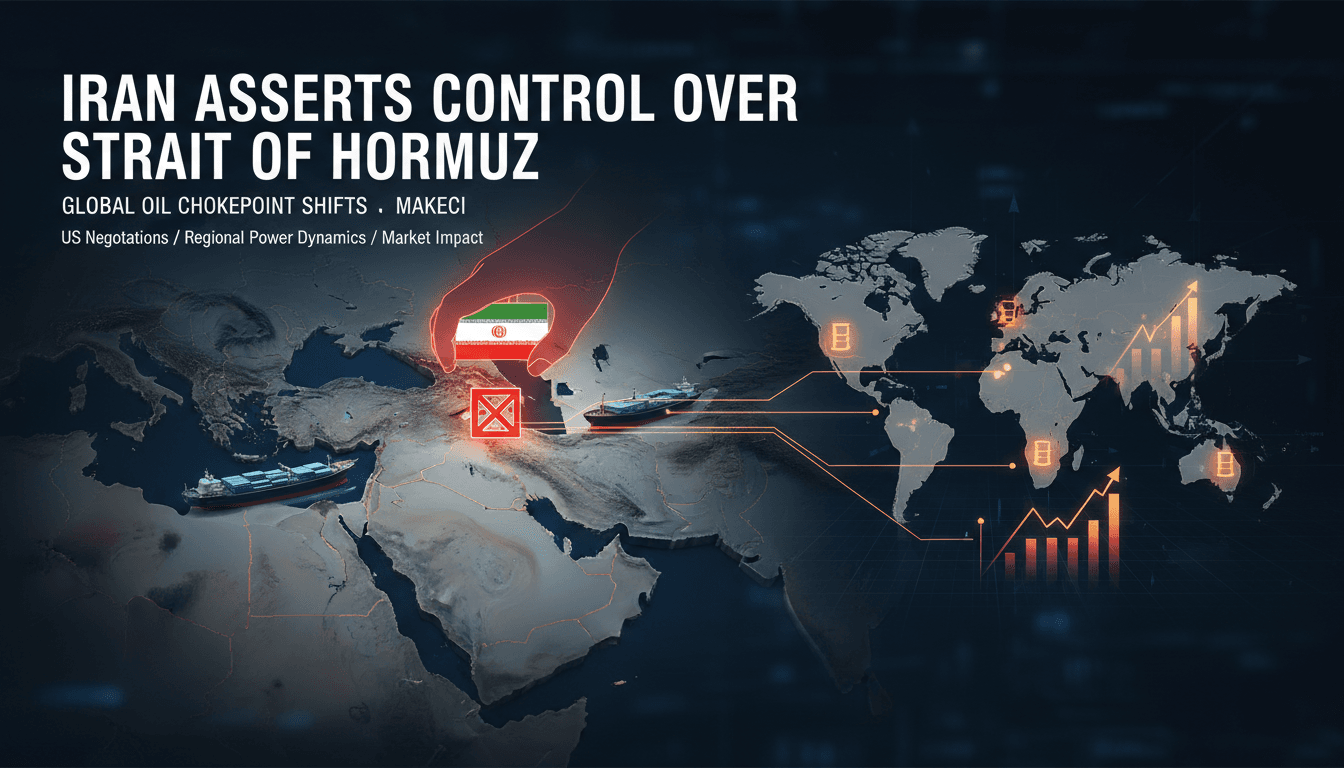
Iran Asserts Control Over Strait of Hormuz Amid U.S. Negotiations
Here's what it means for you.
Iran's firm stance on maintaining control over the Strait of Hormuz signals a significant shift in regional power dynamics, particularly affecting global oil markets. As the U.S. seeks to negotiate an end to the naval blockade of Iranian ports, the implications for international shipping routes and energy prices could be profound. Stakeholders in the oil industry and policymakers will need to closely monitor these developments, as they may influence market stability and geopolitical relations. The ongoing negotiations highlight the complexities of U.S.-Iran relations, with potential repercussions for maritime security in the region. Iran's insistence on retaining control over this critical waterway underscores its strategic interests and could lead to heightened tensions with the U.S. and its allies.
What happened
Iran's Foreign Minister, Abbas Araghchi, announced that control of the Strait of Hormuz will not revert to its pre-war status as part of a draft agreement with the U.S. This announcement comes amid ongoing negotiations aimed at ending a naval blockade of Iranian ports. The deal, while addressing the blockade, does not compromise Iran's claims over the strategic waterway.
Iranian officials have reiterated that the Strait of Hormuz will remain under their administration, emphasizing the importance of this maritime chokepoint for global oil shipments. The situation reflects Iran's strategic interests in the region following recent conflicts and military operations by the U.S. and Israel.
The Context
The Strait of Hormuz is a vital maritime chokepoint, serving as the only sea passage to the open ocean for oil from the Persian Gulf. Control over this waterway has significant implications for global oil markets and regional stability. The U.S. and Israel have conducted military operations in the area, which have impacted Iran's control and influence.
Iran's insistence on maintaining control over the Strait is indicative of its broader strategic interests in the post-conflict landscape. As negotiations progress, the dynamics between Iran, the U.S., and other regional players will be crucial in shaping the future of maritime security and energy supply routes.
Takeaway
As the negotiations unfold, the implications for regional stability and international shipping routes will be closely monitored. The U.S. and Israel's potential responses to Iran's claims could further complicate the situation. Future developments in U.S.-Iran relations will likely have a direct impact on maritime security and the global oil market.
Stakeholders should remain vigilant as the situation evolves, particularly regarding how Iran's firm stance may influence broader geopolitical dynamics in the region. The outcome of these negotiations could reshape power balances and affect global energy prices.
Global business headlines with AI angles.
"General business outlet that frequently covers AI."
— A47 Editor
Iranian State Outlet Says Agreement With U.S. Doesn't Include Giving Up Control Of Hormuz Strait
The Iranian state news agency IRNA reported that a draft agreement with the U.S. does not require Iran to relinquish control over the strategically vital Strait of Hormuz, a key maritime route for global oil shipments. This assertion comes amid ongoi...
European coverage of Middle East politics and security issues.
"France 24 offers international reporting with a European editorial perspective."
— A47 Editor
US deal covers ending naval blockade, Hormuz will not return to pre-war era, Iran’s FM says
Iranian Foreign Minister Abbas Araghchi announced that a draft deal with the United States includes provisions to end the naval blockade of Iran's ports, asserting that the administration of the Strait of Hormuz will not revert to pre-war conditions.
Coverage of current events and conflicts in the Middle East.
"France 24 is viewed as a globally focused outlet with balanced coverage and a European perspective."
— A47 Editor
US deal covers ending naval blockade, Hormuz will not return to pre-war era, Iran’s FM says
Iranian Foreign Minister Abbas Araghchi announced that a draft deal with the United States includes provisions to end the naval blockade of Iran's ports, asserting that the administration of the Strait of Hormuz will not revert to pre-war conditions.