
Democratic Committee Leaders Open Congressional Probe into Trump Administration Approval of Nvidia H200 Chip Sales to China
Why it matters
The monetization of export approvals via national security statutes challenges established cross-border trade standards and redefines the legal risk profile for international semiconductor distribution networks.
What happened (in 30 seconds)
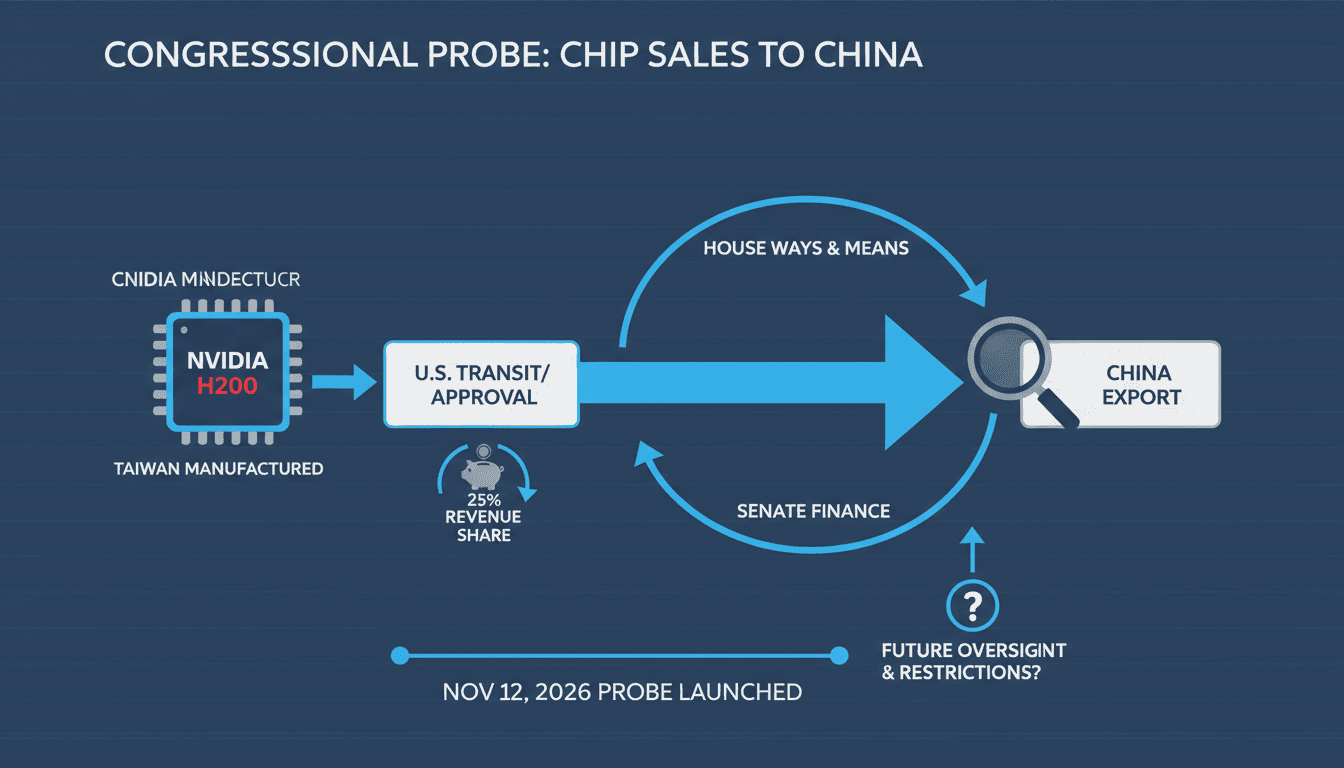
* Congressional leadership launched a probe: On November 12, 2026, ranking members on the House Ways and Means and Senate Finance Committees requested that Commerce Secretary Howard Lutnick preserve records regarding the licensing of Nvidia H200 chips to Chinese entities. * The administration implemented a 25 percent revenue cut: Advanced Taiwan-manufactured chips were permitted for export to China under Section 232 of the Trade Expansion Act of 1962, requiring transit through the United States to capture federal revenue shares. * Corporate leadership shifted under scrutiny: The inquiry follows the resignation of former Nvidia CEO Jensen Huang amid national security reports involving a suspected Chinese intelligence operative, alongside disclosures of $26 million in corporate donations to administration-related projects.
The context you actually need
* Export rules pivoted from bans to monetization: Federal policy previously barred advanced processing units from Chinese buyers to restrict artificial intelligence capabilities, before reversing course to permit sales of less advanced units with a 15 percent cut and H200 chips with a 25 percent cut. * Section 232 authority faces constitutional challenges: Lawmakers argue that applying statutory powers designed to restrict imports instead to facilitate and collect revenues on outbound exports functions as an unconstitutional export tax. * Buyer vetting mechanisms are under formal review: The congressional inquiry points to paused investigations into intermediaries such as Megaspeed and queries whether due diligence sufficiently screened Chinese purchasers for existing sanctions affiliations.
What's really happening
The operational mechanism underpinning the Nvidia H200 approvals reveals a structural departure from traditional trade controls. Historically, the U.S. Bureau of Industry and Security applied non-economic criteria to sensitive hardware: processors exceeding specific compute and interconnect thresholds were denied licenses to prevent military or state-level AI development. Under the December 2025 arrangement, this dynamic shifted into an incentive model centered on revenue extraction. By requiring Taiwan-manufactured H200 processors to transit through U.S. ports, the administration established a legal nexus to apply tariffs and fee mechanisms under Section 232 of the Trade Expansion Act of 1962, effectively charging a 25 percent cut on outbound shipments destined for Chinese buyers.
This structure altered corporate incentives. For hardware manufacturers facing access barriers in China—historically one of the world’s largest aggregate computing markets—the arrangement created a compliant path to ship advanced hardware, provided the federal government retained a quarter of the top-line proceeds. Prior arrangements involving lower-tier chips had established a precedent with a 15 percent fee. By expanding this pathway to the higher-performing H200 architecture, federal policy replaced binary export bans with a monetized clearinghouse model.
However, the framework introduced acute institutional vulnerabilities. Section 232 was codified to protect domestic industrial bases by curbing harmful foreign imports. Deploying it to direct, clear, and collect proceeds from outbound exports created immediate legal friction, specifically against constitutional prohibitions on taxing exports. Furthermore, routing hardware through an administrative revenue model created regulatory blind spots. The congressional inquiry led by Senator Ron Wyden and Representative Richard Neal highlights that conventional entity vetting was compromised, citing halted investigations into prospective distribution channels such as Megaspeed and insufficient checks on whether end-users carried state or military ties.
The arrangement also established complex exposure for multinational hardware vendors. The convergence of Nvidia’s reported $26 million in contributions to administration-related initiatives, Jensen Huang’s abrupt resignation amid counterintelligence scrutiny, and parallel investigations by Elizabeth Warren, Chris Coons, and the House Foreign Affairs Committee demonstrates that transaction-based export approvals carry severe systemic blowback. When market access relies on novel statutory interpretations rather than clear statutory standards, the resulting regulatory uncertainty ripples across the entire international hardware supply chain.
Who feels it first (and how)
* Semiconductor and Hardware Executives: Leadership teams must prepare for immediate oversight disruptions, volatile licensing pathways, and potential retroactive compliance liabilities on cross-border sales. * Global Enterprise AI Developers: Compute-dependent organizations face inventory delays and unpredictable delivery timelines as cross-border logistics frameworks come under congressional review. * International Trade and Compliance Counsel: Legal departments must re-evaluate contracts that rely on novel applications of Section 232 or transactional revenue-sharing mechanisms with federal agencies. * Institutional Equity Investors: Capital allocators exposed to advanced semiconductor equities face pricing corrections driven by governance risks, leadership turnover, and potential export license cancellations.
What to watch next
* Howard Lutnick's Commerce Department Response: Whether the agency complies with records preservation orders or defends the Section 232 revenue structure will signal whether the 25 percent framework remains operational. * Jensen Huang’s Congressional Testimony: The former executive's scheduled appearance before the House Foreign Affairs Committee will clarify corporate compliance choices and the specific security concerns surrounding foreign intelligence assets. * Legislative Action on Export Revenue Schemes: Watch for bipartisan statutory proposals seeking to explicitly ban revenue-sharing fee models on outbound dual-use technology.
The Commerce Department permitted Nvidia H200 chip sales to Chinese buyers under a 25 percent revenue-sharing model; ranking Democrats on the House Ways and Means and Senate Finance Committees launched a formal records inquiry; Jensen Huang resigned amid related intelligence scrutiny.
Scrutiny will expand across multiple committees, increasing compliance friction for hardware companies attempting to access restricted foreign markets through bespoke trade licenses.
Whether the current administration will maintain, alter, or revoke the H200 export licenses under bipartisan pushback, and whether federal courts will assess the constitutionality of using Section 232 to capture revenue on exports.
Frequently Asked Questions
- Why it matters?
- The monetization of export approvals via national security statutes challenges established cross-border trade standards and redefines the legal risk profile for international semiconductor distribution networks.
- What happened (in 30 seconds)?
- Congressional leadership launched a probe: On November 12, 2026, ranking members on the House Ways and Means and Senate Finance Committees requested that Commerce Secretary Howard Lutnick preserve records regarding the licensing of Nvidia H200 chips to Chinese entities. The administration implemented a 25 percent revenue cut: Advanced Taiwan-manufactured chips were permitted for export to China under Section 232 of the Trade Expansion Act of 1962, requiring transit through the United States to c
- What's really happening?
- The operational mechanism underpinning the Nvidia H200 approvals reveals a structural departure from traditional trade controls. Historically, the U.S. Bureau of Industry and Security applied non-economic criteria to sensitive hardware: processors exceeding specific compute and interconnect thresholds were denied licenses to prevent military or state-level AI development. Under the December 2025 arrangement, this dynamic shifted into an incentive model centered on revenue extraction. By requirin
- Who feels it first (and how)?
- Semiconductor and Hardware Executives: Leadership teams must prepare for immediate oversight disruptions, volatile licensing pathways, and potential retroactive compliance liabilities on cross-border sales. Global Enterprise AI Developers: Compute-dependent organizations face inventory delays and unpredictable delivery timelines as cross-border logistics frameworks come under congressional review. International Trade and Compliance Counsel: Legal departments must re-evaluate contracts that rely
- What to watch next?
- Howard Lutnick's Commerce Department Response: Whether the agency complies with records preservation orders or defends the Section 232 revenue structure will signal whether the 25 percent framework remains operational. Jensen Huang’s Congressional Testimony: The former executive's scheduled appearance before the House Foreign Affairs Committee will clarify corporate compliance choices and the specific security concerns surrounding foreign intelligence assets. Legislative Action on Export Revenue
Capitol Hill news, legislation, and policy insight.
"The Hill specializes in U.S. politics and policy, with a focus on Capitol Hill developments and a reputation for insider reporting."
— A47 Editor
Top trade committee Democrats launch probe into Trump administration approving Nvidia's chip sales to China
Top House and Senate trade committee Democrats, Sen. Ron Wyden (D-Ore.) and Rep. Richard Neal, have requested that the Commerce Department preserve its records on President Trump's late-last-year decision to allow Nvidia to sell its H200 chips to Chi...
Startup news with frequent AI coverage.
"Covers launches, funding, and product updates in AI."
— A47 Editor
Democrats launch Nvidia investigation, write scathing letter on Huang’s ‘scheme’ with Trump
Democrats have launched a congressional investigation into Nvidia's China chip sales and its dealings with President Trump, sending a sharply worded letter that characterizes Jensen Huang's conduct as a 'scheme.' The probe follows reports that Huang ...
Technology business and AI-related headlines.
"Data-driven tech newsroom with global scope."
— A47 Editor
Trump Asked to Preserve Nvidia Documents by Senators
On Thursday, Senators Elizabeth Warren and Chris Coons asked the Trump administration to preserve all records concerning the export of Nvidia's advanced semiconductors to China or to entities that may divert such chips, as Nvidia's board met to discu...
Technology business news, market impacts, and innovation trends.
"Bloomberg is a premier financial and tech news provider, respected for its in-depth reporting and analytical rigor."
— A47 Editor
Trump Asked to Preserve Nvidia Documents by Senators
On Thursday, Senators Elizabeth Warren and Chris Coons asked the Trump administration to preserve all records concerning the export of Nvidia's advanced semiconductors to China or to entities that may divert such chips, as Nvidia's board met to discu...
Curated tech headlines including AI stories.
"Influential aggregator surfacing the day’s top tech/AI links."
— A47 Editor
Letter: Sens. Elizabeth Warren and Chris Coons ask the Trump administration to preserve all documents tied to Nvidia's chip exports to China and Huang's affair (Wall Street Journal)
Sens. Elizabeth Warren and Chris Coons have written to the Trump administration asking that all documents tied to Nvidia's chip exports to China and to the reported affair of Nvidia CEO Jensen Huang be preserved, according to the Wall Street Journal....
Insights and news on social issues, policy, and political movements across the United States.
"The Wall Street Journal is known for its deep political coverage, especially at the intersection of policy, regulation, and social dynamics."
— A47 Editor
Democratic Sens. Elizabeth Warren and Chris Coons are asking the Trump administration to preserve all documents tied to Nvidia’s chip exports to China and the CEO’s affair with a suspected Chinese intelligence asset
Sens. Elizabeth Warren and Chris Coons have asked the Trump administration to preserve all documents tied to Nvidia's chip exports to China and to CEO Jensen Huang's alleged affair with a suspected Chinese intelligence asset, an early step that often...
Tech business coverage, major deals, product launches, and Silicon Valley trends.
"WSJ’s tech section offers authoritative reporting on the intersection of technology and business, including exclusive industry analysis."
— A47 Editor
Top Democrats Target Trump Administration’s Nvidia-China Records
Top Democratic senators, including Elizabeth Warren and Chris Coons, have asked the Trump administration to preserve records related to Nvidia's dealings with China, a step that often precedes formal congressional investigations. The request comes am...
U.S. business news, corporate developments, and economy.
"The Wall Street Journal is respected for deep financial and economic reporting with a center-right editorial perspective."
— A47 Editor
Top Democrats Target Trump Administration’s Nvidia-China Records
Sens. Elizabeth Warren and Chris Coons have asked for documents related to the Trump administration's dealings with Nvidia and China to be preserved, an often initial step ahead of formal congressional investigations, as scrutiny intensifies over Nvi...