
Iraq Approves Joint Security Redeployment in Jurf al-Sakhar Ending Kataib Hezbollah Exclusive Control
Why it matters
Reasserting state command over illicit pipeline routes curtails systematic commodity diversion, protecting sovereign revenue streams and stabilizing pipeline integrity across central Iraq.
What happened (in 30 seconds)
- A 12-year exclusive control ended: On November 18, 2026, Iraqi Prime Minister Ali al-Zaidi formally authorized a joint security redeployment to dismantle Kataib Hezbollah's sole administration of Jurf al-Sakhar in Babil province.
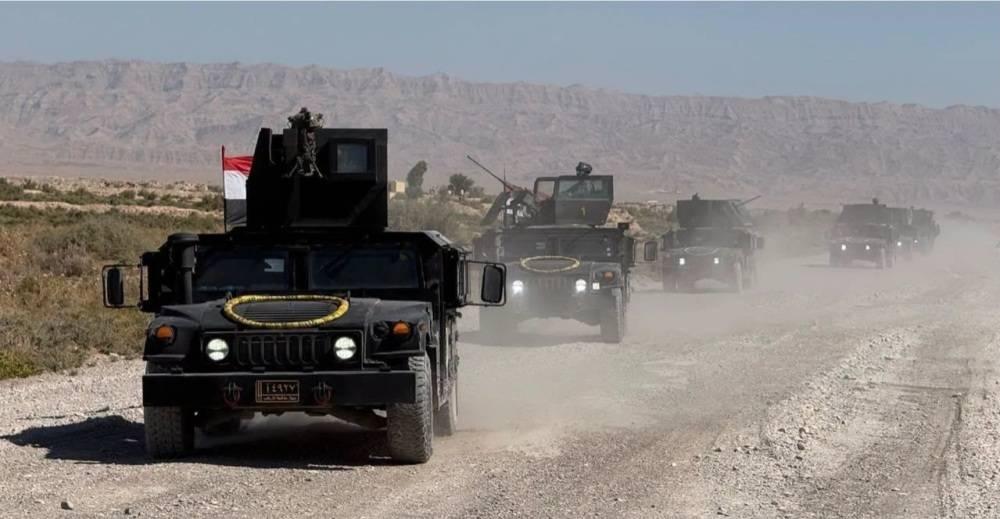
- Joint units moved in: Implementation began on November 20, 2026, mobilizing the Army’s 38th Brigade, Federal Police 17th Brigade, Energy Police, and the Popular Mobilization Forces (PMF) 72nd and 79th Brigades under an integrated headquarters.
- A phased withdrawal was brokered: Following mediation by Iranian Quds Force Commander Ismail Qaani, the armed faction stood down from alert status to accept a 30-day scheduled transition rather than engage state forces.
The context you actually need
- A decade of isolation: Located 50 to 60 kilometers south of Baghdad, Jurf al-Sakhar (also known as Jurf al-Nasr) functioned as an off-limits operational zone since its 2014 recapture from ISIS, barring civilian return and routine state oversight.
- Siphoned energy capital: Government probes confirmed that unauthorized pipeline taps in the sector extracted state-owned hydrocarbons, generating hundreds of millions of dollars in illicit off-book liquidity.
- Sovereign enforcement mechanisms: Prime Minister Zaidi’s administration issued an explicit withdrawal ultimatum backed by structural shifts, prioritizing legal prosecution, judicial referrals, and dismissals of compromised oil sector personnel.
What's really happening
The operation in Jurf al-Sakhar is not an isolated territorial sweep; it is an economic enforcement campaign executed through calculated structural incentives. For 12 years, the district sat outside the reach of federal auditing and civilian infrastructure management. That physical insulation allowed non-state networks to tap into major domestic pipeline corridors crossing Babil province, creating an extraction ecosystem worth hundreds of millions of dollars.
By framing this intervention around asset integrity and revenue retention, the central government altered the cost-benefit calculus for both armed actors and international brokers. Rather than deploying unilateral military power—which carried the risk of armed clashes along the strategic perimeter of Baghdad—the government established an integrated command architecture. The operational deployment balances the Army’s 38th Brigade, the Federal Police’s 17th Brigade, and specialized Energy Police units alongside vetted internal formations (the PMF’s 72nd and 79th Brigades). This tactical division denies any single entity unilateral control over infrastructure chokepoints while maintaining formal state oversight.
Mediation led by Iranian Quds Force Commander Ismail Qaani provided an off-ramp before a critical Friday operational deadline. The incentives for external de-escalation were straightforward: an armed dispute inside Babil would jeopardize broader political arrangements in Baghdad and disrupt energy transport networks that regional stakeholders rely on for predictability. In exchange for canceling heightened readiness, the militia secured a structured 30-day transitional departure rather than an abrupt, public eviction.
At the institutional level, the state paired troop movements with legal action. Targeted dismissals across the state oil bureaucracy and immediate judicial referrals cut off the administrative nodes that facilitated illicit distribution. Reopening long-shuttered transit arteries and preparing for the verified return of displaced populations permanently changes the terrain. Populated, open-transit zones monitored by multiple institutional branches present significantly higher operating friction for illicit commerce than depopulated, perimeter-locked garrisons. For energy infrastructure operators, this institutional maneuver replaces non-state protection costs with standardized state enforcement.
Who feels it first (and how)
- Gulf energy desks and crude traders: Downstream markets gain incremental delivery certainty as hydrocarbon volumes flow through monitored state networks rather than unmetered extraction points.
- Regional logistics and transport fleets: Cargo operators navigating federal transit routes south of Baghdad face lower transit unpredictability as closed military bypasses transition to standardized federal checkpoints.
- Displaced Babil agricultural communities: Former residents face a phased administrative verification process as security forces survey access roads to enable long-delayed civilian resettlement.
- Iraq's state treasury and petroleum auditors: Finance teams capture recovered crude volumes, closing significant fiscal leakages previously absorbed by shadow network budgets.
What to watch next
- The 30-day phased exit rate: The operational drawdown pace of entrenched militia hardware and fighters will reveal whether field units adhere strictly to the terms brokered during external mediation.
- Pipeline flow meters and audit filings: Watch for official output reports from Babil's Energy Police units to gauge the exact volume of restored crude returning to formal export and refining channels.
- Resettlement timelines for displaced civilians: Concrete dates for civilian access and commercial transit across reopened Jurf al-Sakhar thoroughfares will indicate whether federal administrative authority has genuinely replaced military zoning.
Prime Minister Zaidi signed the joint security reallocation map on November 18, 2026, leading to the standup of a joint operations center on November 20 featuring federal police, regular army, energy police, and selected PMF brigades.
Replacing single-faction dominance with mixed institutional patrols will curb systematic pipeline tapping, redirecting measurable barrel volumes back into formal state accounting over the coming quarters.
Whether the 30-day timeline will produce a comprehensive institutional withdrawal of non-state administrative cells, or if structural influence will merely pivot to peripheral zones outside the new command perimeter.
Frequently Asked Questions
- Why it matters?
- Reasserting state command over illicit pipeline routes curtails systematic commodity diversion, protecting sovereign revenue streams and stabilizing pipeline integrity across central Iraq.
- What happened (in 30 seconds)?
- A 12-year exclusive control ended: On November 18, 2026, Iraqi Prime Minister Ali al-Zaidi formally authorized a joint security redeployment to dismantle Kataib Hezbollah's sole administration of Jurf al-Sakhar in Babil province. Joint units moved in: Implementation began on November 20, 2026, mobilizing the Army’s 38th Brigade, Federal Police 17th Brigade, Energy Police, and the Popular Mobilization Forces (PMF) 72nd and 79th Brigades under an integrated headquarters. A phased withdrawal was br
- What's really happening?
- The operation in Jurf al-Sakhar is not an isolated territorial sweep; it is an economic enforcement campaign executed through calculated structural incentives. For 12 years, the district sat outside the reach of federal auditing and civilian infrastructure management. That physical insulation allowed non-state networks to tap into major domestic pipeline corridors crossing Babil province, creating an extraction ecosystem worth hundreds of millions of dollars. By framing this intervention around
- Who feels it first (and how)?
- Gulf energy desks and crude traders: Downstream markets gain incremental delivery certainty as hydrocarbon volumes flow through monitored state networks rather than unmetered extraction points. Regional logistics and transport fleets: Cargo operators navigating federal transit routes south of Baghdad face lower transit unpredictability as closed military bypasses transition to standardized federal checkpoints. Displaced Babil agricultural communities: Former residents face a phased administrativ
- What to watch next?
- The 30-day phased exit rate: The operational drawdown pace of entrenched militia hardware and fighters will reveal whether field units adhere strictly to the terms brokered during external mediation. Pipeline flow meters and audit filings: Watch for official output reports from Babil's Energy Police units to gauge the exact volume of restored crude returning to formal export and refining channels. Resettlement timelines for displaced civilians: Concrete dates for civilian access and commercial t
Arabic-language reporting on global and regional news.
"BBC Arabic is part of the BBC, generally regarded for editorial standards and broad international coverage."
— A47 Editor
من هي كتائب حزب الله العراقية وما علاقتها بأزمة جرف الصخر؟
Iraqi security forces have begun redeploying in the Jurf al-Sakhar area, a stronghold of the Iran-backed faction Kataib Hezbollah, after tensions between the government and the group over allegations of oil smuggling. The article examines how the gro...
Pan-Arab political news and analysis.
"Al-Quds Al-Arabi is a London-based Arabic newspaper known for political coverage."
— A47 Editor
العراق: القوات الاتحادية تدخل “جرف الصخر”… ووعود حكومية للمهجرين بالعودة قريباً
Federal Iraqi security forces entered the Jurf al-Sakhar (Al-Nasr) area north of Babylon province on Friday, in implementation of a federal decision transferring security responsibility for the zone from Kataib Hezbollah, which had controlled it for ...
Arabic-language coverage of international news and geopolitics.
"RT Arabic is a Russian state-funded outlet often criticized for promoting Kremlin-aligned narratives."
— A47 Editor
العراق.. بوادر انفراج في أزمة جرف الصخر
Iraq's government has approved a deployment plan for the army and the Popular Mobilization Forces in the Jurf al-Sakhar area, signaling early signs of easing a long-running security crisis in the region. The base report, published by RT Arabic, frame...
Arabic-language coverage of international news and geopolitics.
"RT Arabic is a Russian state-funded outlet often criticized for promoting Kremlin-aligned narratives."
— A47 Editor
الحكومة العراقية تعيد هيكلة الأمن في جرف الصخر
The Iraqi government has issued an order forming a unified security headquarters in the Jurf al-Sakhar subdistrict north of Babylon province, aimed at organizing command and control and redistributing field responsibilities. The move comes as authori...
Coverage of political affairs and regional developments from a Saudi perspective.
"Al Watan political coverage typically follows a mainstream Saudi framing of regional and national issues."
— A47 Editor
بغداد تعيد رسم الجرف والكتائب تستعرض مسيراتها
Iraq's government has approved a security plan that redistributes control of Jurf al-Sakhar, north of Babil, among official formations including the army, the Federal Police, the Popular Mobilization Forces and Energy Police, ending the exclusive man...
Pan-Arab political news and analysis.
"Al-Quds Al-Arabi is a London-based Arabic newspaper known for political coverage."
— A47 Editor
العراق: ما الحل المقترح لإنهاء أزمة جرف الصخر؟
Iraqi Prime Minister Ali al-Zaidi is insisting that federal forces enter the Jurf al-Sakhar–al-Nasr area by Friday evening, while Kataib Hezbollah insists on holding the ground and rejects accusations of oil smuggling from the area. Leaders within th...