
Trump Convenes Trilateral Nuclear Arms Control Talks in Shenzhen Yielding Joint Risk Reduction Pledge but No Binding Reductions
Why it matters
The formal shift from a bilateral arms-control model to a trilateral negotiation framework directly affects the long-term risk premiums priced into global commodities, currency reserves, and cross-border energy investments.
What happened (in 30 seconds)
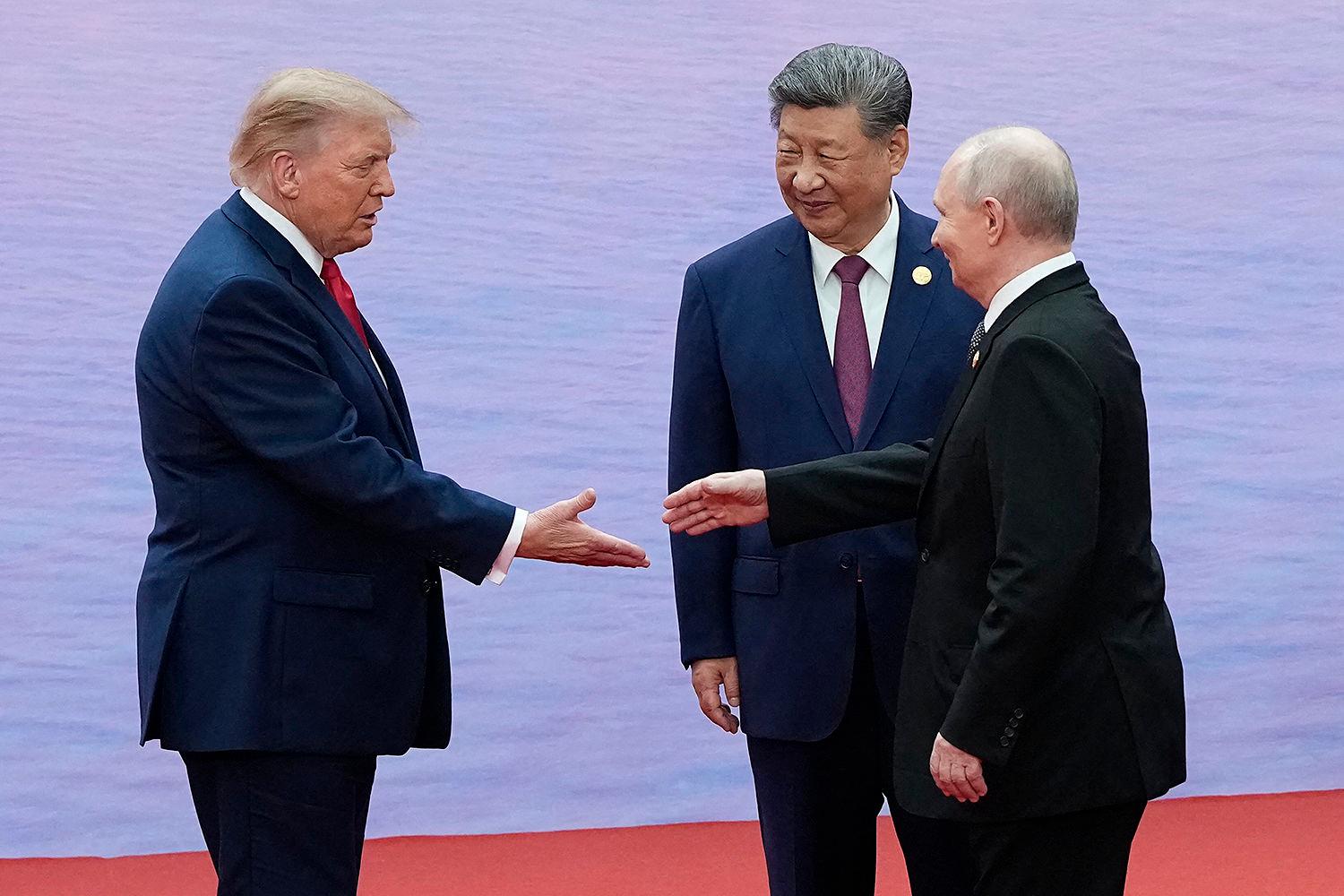
- A trilateral leaders' meeting: On November 19, 2026, U.S. President Donald Trump, Chinese President Xi Jinping, and Russian President Vladimir Putin convened for 70 minutes on the sidelines of the APEC summit in Shenzhen, China.
- A four-point joint declaration: The leaders issued a statement addressing international justice, refined energy supplies, United Nations reform, and nuclear risk reduction, reiterating that a nuclear war cannot be won and must never be fought.
- No binding limits: The session concluded without numerical caps, treaty signatures, or concrete reduction commitments for any of the participants' arsenals.
The context you actually need
- The bilateral framework expired: The New START treaty—the final major strategic arms accord between Washington and Moscow—expired in February 2026 after Russia suspended active participation in 2022.
- An asymmetry in warhead inventory: Combined global stockpiles among the three powers stand at an estimated 11,082 warheads, with the United States and Russia holding the vast majority while China expands its stockpile from an estimated 600 warheads.
- Diverging preconditions for talks: Beijing maintains that reductions must occur first between Washington and Moscow before trilateral limits apply, while Washington requires Beijing's inclusion as a prerequisite for any successor agreement.
What's really happening
The 70-minute summit in Shenzhen formalizes a structural transition in international diplomacy: the bilateral arms-control architecture built during the Cold War is officially obsolete, but its replacement does not yet exist.
To understand why a binding deal did not materialize, you have to follow the incentives of each participant.
For the United States, managing strategic stability through bilateral pacts with Moscow no longer addresses Pacific security realities. With China's warhead count expanding from an estimated 600, Washington faces a scenario where entering a bilateral ceiling with Russia leaves its strategic deterrence exposed to an unconstrained third power. The American push in Shenzhen was designed to lock all three players into a single accounting system.
For China, joining a tripartite ceiling under current inventory levels represents a strategic disadvantage. Because the United States and Russia hold the dominant share of the world's 11,082 warheads, agreeing to freeze or limit warhead numbers today would institutionalize numerical inferiority for Beijing. Chinese policy rests on the premise that parity must precede constraint; until Washington and Moscow cut their stockpiles toward Chinese levels, Beijing views participation in formal limits as an unnecessary operational cap.
For Russia, leverage rests on preservation of its remaining strategic parity. Having suspended New START participation in 2022, Moscow treats arms negotiations not as an isolated security issue, but as a bargaining chip tied to broader geopolitical trade-offs. Moscow has minimal incentive to pressure Beijing—its primary economic and diplomatic partner—into an accord that Washington prioritizes.
Despite these opposing baseline calculations, the summit delivered a four-point joint declaration covering energy supplies, UN reform, nuclear risk reduction, and international justice. Including commitments to support refined oil supplies alongside security commitments indicates that economic stability mechanisms were required to bring all three heads of state to the table.
Rather than producing a verified disarmament treaty, the Shenzhen session acted as a procedural reset. It established direct top-level dialogue, lowered immediate geopolitical friction, and set up a framework for multi-year technical engagement without imposing operational constraints on any party's weapons programs.
Who feels it first (and how)
- Energy trading desks: Energy markets absorbed commitments regarding refined oil supply coordination, leaving day-to-day commodity risk spreads steady rather than volatile.
- Defense procurement planners: Officials managing long-range military budgets in Washington, Beijing, and Moscow must continue planning around unconstrained arsenal developments rather than fixed treaty ceilings.
- Cross-border enterprise leadership: Corporate strategists operating across the Pacific and Eurasian corridors gain clarity that high-level direct communication channels remain functional, tempering baseline macro-uncertainty.
- Regional logistics and shipping hubs: Hubs in intermediate trade jurisdictions, such as Dubai, operate without near-term regulatory adjustments, as broader maritime security realities and shipping lanes remain governed by existing defense arrangements.
What to watch next
- Working-level risk reduction protocols: Monitor whether lower-level diplomatic and defense delegations schedule technical talks on launch-notification or crisis-communication procedures, which indicate institutional follow-through.
- Refined energy market flows: Watch for practical export adjustments matching the leaders' joint statement on refined oil supplies, which will signal whether economic agreements translate into trade policy.
- Stockpile transparency reporting: Track future official disclosures or independent estimates regarding China's warhead expansion rate, which dictates Washington's domestic pressure to expand strategic systems.
The leaders met for approximately 70 minutes in Shenzhen, issued a four-point declaration reaffirming that nuclear war cannot be won, and signed no binding arms-reduction frameworks.
Formal arms limits will remain stalled until technical working groups establish agreed terms of reference between bilateral cuts and trilateral caps.
Whether future dialogue will proceed via scheduled trilateral working groups or revert to ad hoc bilateral diplomacy on the sidelines of broader summits.
Frequently Asked Questions
- Why it matters?
- The formal shift from a bilateral arms-control model to a trilateral negotiation framework directly affects the long-term risk premiums priced into global commodities, currency reserves, and cross-border energy investments.
- What happened (in 30 seconds)?
- A trilateral leaders' meeting: On November 19, 2026, U.S. President Donald Trump, Chinese President Xi Jinping, and Russian President Vladimir Putin convened for 70 minutes on the sidelines of the APEC summit in Shenzhen, China. A four-point joint declaration: The leaders issued a statement addressing international justice, refined energy supplies, United Nations reform, and nuclear risk reduction, reiterating that a nuclear war cannot be won and must never be fought. No binding limits: The sess
- What's really happening?
- The 70-minute summit in Shenzhen formalizes a structural transition in international diplomacy: the bilateral arms-control architecture built during the Cold War is officially obsolete, but its replacement does not yet exist. To understand why a binding deal did not materialize, you have to follow the incentives of each participant. For the United States, managing strategic stability through bilateral pacts with Moscow no longer addresses Pacific security realities. With China's warhead coun
- Who feels it first (and how)?
- Energy trading desks: Energy markets absorbed commitments regarding refined oil supply coordination, leaving day-to-day commodity risk spreads steady rather than volatile. Defense procurement planners: Officials managing long-range military budgets in Washington, Beijing, and Moscow must continue planning around unconstrained arsenal developments rather than fixed treaty ceilings. Cross-border enterprise leadership: Corporate strategists operating across the Pacific and Eurasian corridors gain c
- What to watch next?
- Working-level risk reduction protocols: Monitor whether lower-level diplomatic and defense delegations schedule technical talks on launch-notification or crisis-communication procedures, which indicate institutional follow-through. Refined energy market flows: Watch for practical export adjustments matching the leaders' joint statement on refined oil supplies, which will signal whether economic agreements translate into trade policy. Stockpile transparency reporting: Track future official disclo
UAE-based English-language newspaper covering regional politics, economics, and global affairs.
"The National reflects Emirati policy perspectives while maintaining international editorial standards."
— A47 Editor
Trump invokes Yalta talks as he outlines vision for US, Russia and China nuclear co-operation
Donald Trump invoked the 1945 Yalta conference as he outlined his vision for nuclear cooperation among the United States, Russia and China, ahead of a rare trilateral meeting with Russian President Vladimir Putin and Chinese President Xi Jinping on t...
UAE-based newspaper covering Gulf politics, society, and international developments.
"Gulf News is one of the UAE’s most prominent English-language publications."
— A47 Editor
'No winners in nuclear war': Trump, Xi, Putin pledge dialogue after Shenzhen summit
Donald Trump, Xi Jinping and Vladimir Putin held a first-of-its-kind trilateral summit in Shenzhen, China, on the sidelines of the APEC forum, and the three leaders pledged to pursue dialogue, with the base coverage highlighting a statement that ther...
A curated Gulf News feed featuring major stories across news, business, opinion, and lifestyle.
"Gulf News is a major UAE newspaper whose featured stories feed reflects a broad editorial mix shaped for a Gulf audience."
— A47 Editor
'No winners in nuclear war': Trump, Xi, Putin pledge dialogue after Shenzhen summit
Donald Trump, Xi Jinping and Vladimir Putin held a first-of-its-kind trilateral summit in Shenzhen, China, on the sidelines of the APEC forum, and the three leaders pledged to pursue dialogue, with the base coverage highlighting a statement that ther...
Global news coverage with extensive reporting on Middle Eastern conflicts and geopolitics.
"Al Jazeera is a Qatar-based broadcaster known for wide regional coverage and alternative perspectives."
— A47 Editor
Trump wants to talk nuclear with Putin and Xi
Donald Trump said he plans to raise nuclear non-proliferation with Chinese President Xi Jinping and Russian President Vladimir Putin, as he arrived in China on a three-day Asia trip that began in Manila and was greeted on the tarmac in Shenzhen by Xi...
Comprehensive coverage of Middle Eastern and global issues.
"Al Jazeera is a prominent voice from the Global South, especially the Middle East, with an emphasis on underreported stories."
— A47 Editor
Trump wants to talk nuclear with Putin and Xi
Donald Trump said he plans to raise nuclear non-proliferation with Chinese President Xi Jinping and Russian President Vladimir Putin, as he arrived in China on a three-day Asia trip that began in Manila and was greeted on the tarmac in Shenzhen by Xi...
Regional coverage and analysis focused on politics, diplomacy, and business across the Middle East.
"Al-Monitor is known for analytical reporting on Middle East politics and policy developments."
— A47 Editor
US, China can help end Ukraine war, Trump tells Xi before trilateral with Putin
US President Donald Trump told Chinese President Xi Jinping on Thursday in Shenzhen that both countries should help end the war in Ukraine, ahead of an unprecedented trilateral meeting with Russian President Vladimir Putin on the sidelines of the APE...
Comprehensive coverage of global events, politics, and international issues.
"NBC News is a mainstream outlet known for comprehensive national and international coverage with a centrist to slightly left-leaning editorial tone."
— A47 Editor
Trump pushes for three-way nuclear deal as Russia and China show little interest
President Donald Trump pressed nonproliferation at the top of the agenda for an unprecedented trilateral meeting with Chinese President Xi Jinping and Russian President Vladimir Putin, but both counterparts showed little interest in committing to new...
National headlines across the United States including breaking stories and societal issues.
"NBC News is a mainstream media outlet known for comprehensive national and international news coverage with a centrist to slightly left-leaning editorial tone."
— A47 Editor
Trump pushes for three-way nuclear deal as Russia and China show little interest
President Donald Trump has placed nonproliferation near the top of the agenda for an unprecedented trilateral meeting with Chinese President Xi Jinping and Russian President Vladimir Putin, following a three-day Asia trip that began in Manila, Philip...