
UK Government Weighs Extending BBC Licence Fee to Streaming Subscribers Ahead of 2027 Charter Expiry
Why it matters
The proposal establishes a regulatory blueprint for subsidizing legacy national broadcasters by capturing revenue from on-demand streaming platforms facing their own subscriber retention pressures.
What happened (in 30 seconds)
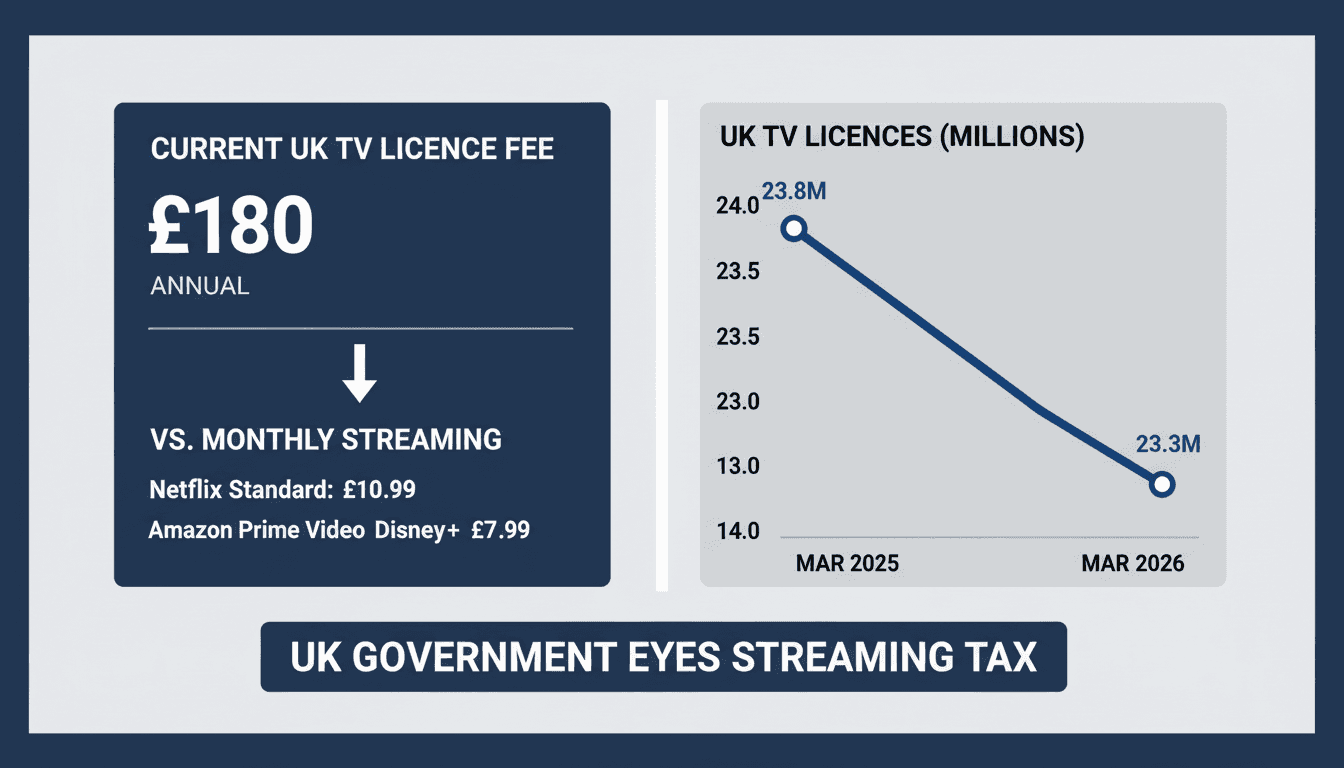
- A new funding proposal surfaced: On November 29, 2026, reports indicated that the UK government is weighing plans to extend the annual £180 BBC television licence fee to subscribers of major commercial streaming services such as Netflix, Amazon Prime Video, Disney+, HBO Max, and Discovery+.
- The policy decouples fee liability from BBC consumption: Under the proposed framework, UK households subscribing to qualifying on-demand services would be required to pay the £180 fee regardless of whether they ever watch BBC programming or access its iPlayer service.
- The decision timeline points to 2028: Culture Secretary Lisa Nandy is scheduled to outline options before December 25, 2026, though the Department for Culture, Media and Sport notes that no final policy is enacted ahead of the current royal charter's expiration on December 31, 2027.
The context you actually need
- Licence fee receipts are shrinking: Active UK television licences dropped from 23.8 million in March 2025 to 23.3 million in March 2026, reflecting a structural decline of 500,000 paying households in a single 12-month period.
- The current legal trigger is outdated: Under existing rules, households only require a licence if they watch live television broadcasts or stream content via BBC iPlayer, allowing consumers who watch strictly on-demand commercial services to legally opt out.
- Legislative backing has built throughout 2026: In October 2026, the cross-party Digital, Culture, Media and Sport Committee formally urged the UK government to modernize the licence fee structure to match prevailing consumer media habits.
What's really happening
The core tension driving this proposal is an accelerating structural mismatch between legacy public-service funding models and decentralized internet distribution. The BBC's operational model relies primarily on the £180 annual licence fee, a flat charge levied on households consuming live television. However, the migration of viewing hours toward private subscription video-on-demand (SVOD) platforms has severed the traditional link between screen ownership and public broadcast funding.
Between March 2025 and March 2026, the licence base contracted by 500,000 households. This pace of erosion threatens the broadcaster's baseline revenue trajectory ahead of the new royal charter term beginning January 1, 2028. To counter this attrition, the UK government is considering redefining the statutory definition of television consumption. Rather than attempting the technically complex task of monitoring encrypted on-demand viewing, the policy would create a proxy levy: holding any active paid video subscription becomes the legal trigger for the £180 public broadcasting fee.
This approach alters platform incentives. For subscription video giants like Netflix, Amazon, and Disney, a mandatory £180 annual levy imposed on their UK subscriber base functions as an artificial price hike. A standard ad-free streaming subscription costing £10 to £16 per month effectively carries an added state-mandated overhead of £15 per month. Consequently, private platforms face heightened churn risk among price-sensitive consumers who may cancel secondary streaming services to avoid the total cost barrier. Minor share price movements across major streaming operators following the November 29 reports reflect market recognition of this headwind.
Simultaneously, the regulatory design includes intentional carve-outs that highlight the administrative complexity of digital media taxation. Ad-supported and user-generated video platforms such as YouTube, TikTok, and Instagram are slated for exemption, alongside BBC radio and online text journalism. By narrowing the scope to long-form subscription entertainment, the proposal attempts to capture enterprise subscription revenue without taxing open web access.
Who feels it first (and how)
- Pure-play streaming households in the UK: Cord-cutters who consume exclusively Netflix, Disney+, or Prime Video face a new £180 annual overhead from 2028 if they maintain those subscriptions.
- SVOD platform operators: Commercial streaming providers face increased friction at point-of-sale and elevated cancellation rates in the UK market as consumers calculate the combined cost of commercial bundles plus the statutory fee.
- Public service media executives: BBC financial planners gain a potential mechanism to stabilize funding deficits created by the loss of 500,000 domestic licences over the prior fiscal year.
- Low-to-middle income UK consumers: Households balancing tight media budgets must decide whether maintaining a single £8–£12 monthly streaming account justifies the associated £180 annual state licence cost.
What to watch next
- The DCMS white paper release: Culture Secretary Lisa Nandy's formal presentation, anticipated before December 25, 2026, will specify whether the streaming fee operates as a direct household mandate or a platform-collected surcharge.
- Streaming platform lobbying positions: Formal representations from Netflix, Amazon, and Disney to the UK government will signal whether international media firms intend to contest the policy during the charter review window.
- UK churn and cancellation data: Tracking consumer cancellation metrics across top-tier UK streaming services throughout 2027 will reveal whether the prospect of an added £180 fee accelerates service consolidation.
The BBC's existing royal charter expires on December 31, 2027; active TV licences fell by 500,000 between March 2025 and March 2026; the current fee stands at £180 per year.
The UK government will face resistance from global streaming services concerned about pricing pressure and higher domestic subscriber attrition.
Whether the collection mechanism will rely on self-reporting by households, mandatory subscriber-data sharing by tech platforms, or a direct billing requirement integrated into streaming checkouts.
Frequently Asked Questions
- Why it matters?
- The proposal establishes a regulatory blueprint for subsidizing legacy national broadcasters by capturing revenue from on-demand streaming platforms facing their own subscriber retention pressures.
- What happened (in 30 seconds)?
- A new funding proposal surfaced: On November 29, 2026, reports indicated that the UK government is weighing plans to extend the annual £180 BBC television licence fee to subscribers of major commercial streaming services such as Netflix, Amazon Prime Video, Disney+, HBO Max, and Discovery+. The policy decouples fee liability from BBC consumption: Under the proposed framework, UK households subscribing to qualifying on-demand services would be required to pay the £180 fee regardless of whether th
- What's really happening?
- The core tension driving this proposal is an accelerating structural mismatch between legacy public-service funding models and decentralized internet distribution. The BBC's operational model relies primarily on the £180 annual licence fee, a flat charge levied on households consuming live television. However, the migration of viewing hours toward private subscription video-on-demand (SVOD) platforms has severed the traditional link between screen ownership and public broadcast funding. Between
- Who feels it first (and how)?
- Pure-play streaming households in the UK: Cord-cutters who consume exclusively Netflix, Disney+, or Prime Video face a new £180 annual overhead from 2028 if they maintain those subscriptions. SVOD platform operators: Commercial streaming providers face increased friction at point-of-sale and elevated cancellation rates in the UK market as consumers calculate the combined cost of commercial bundles plus the statutory fee. Public service media executives: BBC financial planners gain a potential me
- What to watch next?
- The DCMS white paper release: Culture Secretary Lisa Nandy's formal presentation, anticipated before December 25, 2026, will specify whether the streaming fee operates as a direct household mandate or a platform-collected surcharge. Streaming platform lobbying positions: Formal representations from Netflix, Amazon, and Disney to the UK government will signal whether international media firms intend to contest the policy during the charter review window. UK churn and cancellation data: Tracking c
Market-moving headlines impacting equities, bonds, and related risk assets.
"Real-time catalysts and volatility drivers across indices and sectors."
— A47 Editor
UK Netflix, Amazon viewers could face BBC license fee under reforms - Times
UK viewers of Netflix and Amazon could face a BBC licence fee under proposed reforms, according to a report in The Times, published via Investing.com. The base article indicates the reforms would extend the licence fee obligation beyond traditional b...
UK and global entertainment, showbiz, and culture stories.
"Sky News is a UK broadcaster known for rolling news and breaking entertainment stories."
— A47 Editor
Netflix users 'will have to pay BBC licence fee even if they don't watch its shows'
The education secretary told Sky News that the BBC needs to be "future-proofed" amid reports that viewers of some streaming services, such as Netflix, may have to pay the BBC licence fee even if they do not watch the corporation's programmes.
UK politics, business, and social stories.
"Sky News is a UK-based 24-hour channel known for fast-breaking news and political coverage."
— A47 Editor
Netflix users 'will have to pay BBC licence fee even if they don't watch its shows'
The education secretary told Sky News that the BBC needs to be "future-proofed" amid reports that viewers of some streaming services, such as Netflix, may have to pay the BBC licence fee even if they do not watch the corporation's programmes.
Technology business and AI-related headlines.
"Data-driven tech newsroom with global scope."
— A47 Editor
UK Streaming Services Viewers to Pay BBC License Fee, Times Says
The Sunday Times reported that UK viewers of streaming services such as Netflix and Amazon Prime Video would have to pay the BBC licence fee under plans to reform how the public service broadcaster is funded.
Technology business news, market impacts, and innovation trends.
"Bloomberg is a premier financial and tech news provider, respected for its in-depth reporting and analytical rigor."
— A47 Editor
UK Streaming Services Viewers to Pay BBC License Fee, Times Says
The Sunday Times reported that UK viewers of streaming services such as Netflix and Amazon Prime Video would have to pay the BBC licence fee under plans to reform how the public service broadcaster is funded.