
Israel to Maintain Troop Presence in Southern Lebanon Defying U.S.-Iran Agreement
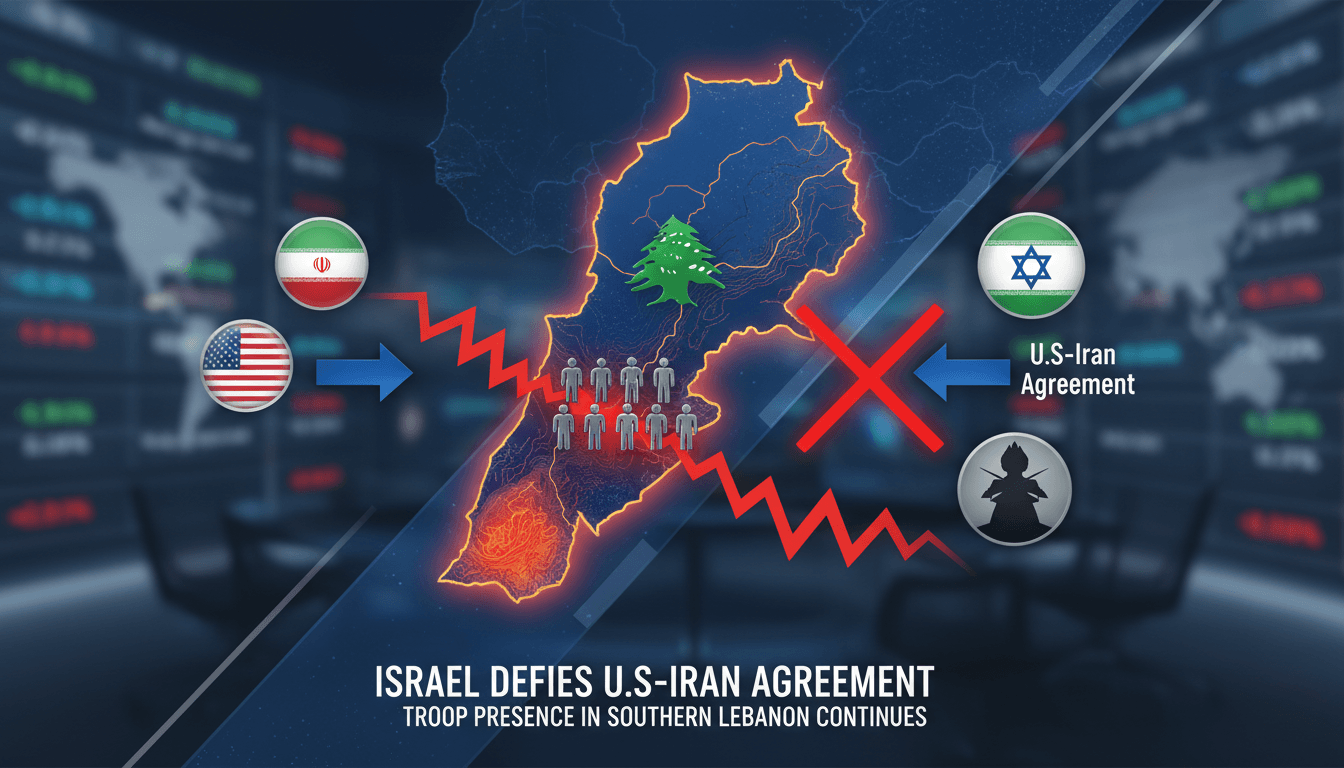
Here's what it means for you.
Israel's decision to maintain its military presence in southern Lebanon poses significant implications for regional stability and diplomatic relations. The ongoing occupation directly contradicts a recent U.S.-Iran agreement aimed at upholding Lebanon's sovereignty, potentially escalating tensions. Stakeholders in the region, including Iran and the U.S., may need to reassess their strategies in light of Israel's defiance. This situation could hinder future negotiations and complicate efforts to achieve lasting peace in Lebanon. As the dynamics evolve, the international community will be closely monitoring the reactions from Iran and the U.S.
What happened
Israel has confirmed that its troops will continue to occupy southern Lebanon indefinitely, opposing a recent U.S.-Iran agreement that emphasizes Lebanon's territorial integrity. This announcement was made by Israeli Prime Minister Benjamin Netanyahu, who asserted that the troop presence is necessary despite external pressures. The decision has drawn criticism from Iran, which views the withdrawal of Israeli troops as essential to the agreement.
Israeli officials are currently engaged in negotiations with the U.S. regarding the troop deployment. The ongoing military presence in southern Lebanon raises questions about the future of U.S.-Iran relations and the stability of the region.
The Context
The backdrop to this decision includes a recent interim pact signed between the U.S. and Iran on June 17, 2026, which focuses on Lebanon's sovereignty. The agreement aims to establish a framework for peace and stability in the region, but Israel's actions directly contradict its core principles. The timing of Israel's announcement, just one day after the U.S.-Iran agreement, highlights the complexities of the geopolitical landscape.
Iran's perspective is crucial, as it views the Israeli troop withdrawal as a key component of the agreement. The ongoing negotiations between Israel and the U.S. regarding troop deployment further complicate the situation, as both nations navigate their interests in the region.
Takeaway
The continued Israeli troop presence in southern Lebanon could lead to increased tensions, complicating future diplomatic negotiations. Observers should watch for potential reactions from Iran, which may respond to Israel's defiance with heightened rhetoric or actions. Additionally, developments in U.S.-Iran negotiations will be critical in assessing the impact on Lebanon's stability.
As the situation unfolds, the international community will be keenly interested in how these dynamics influence broader regional relations and the prospects for peace.
Global business headlines with AI angles.
"General business outlet that frequently covers AI."
— A47 Editor
Netanyahu Says Israeli Troops Will Stay In Lebanon As Long As Needed Despite Iranian Pressure
Israeli Prime Minister Benjamin Netanyahu has asserted that Israeli troops will remain in southern Lebanon as long as necessary, despite Iranian claims that a troop withdrawal is essential for a deal with the U.S. This statement reflects Israel's ong...
Conservative-leaning political and national coverage.
"The Washington Times is a conservative-leaning newspaper known for its political coverage and advocacy of right-of-center viewpoints."
— A47 Editor
Israel says its troops will stay in southern Lebanon, directly contradicting U.S.-Iran agreement
The Israeli Defense Forces announced that their troops will remain in southern Lebanon, directly contradicting a recent U.S.-Iran agreement aimed at reducing tensions in the region. This decision has drawn sharp criticism from Tehran, which views the...
Regional coverage and analysis focused on politics, diplomacy, and business across the Middle East.
"Al-Monitor is known for analytical reporting on Middle East politics and policy developments."
— A47 Editor
Israel in talks with US over continuing its Lebanon troop deployment, officials say
Israel is currently in negotiations with the United States regarding the continuation of its troop deployment in southern Lebanon, as confirmed by two Israeli officials close to Prime Minister Benjamin Netanyahu. This development follows a recent int...