
Trump and Aoun Discuss Strategies Against Hezbollah and Houthi Threats
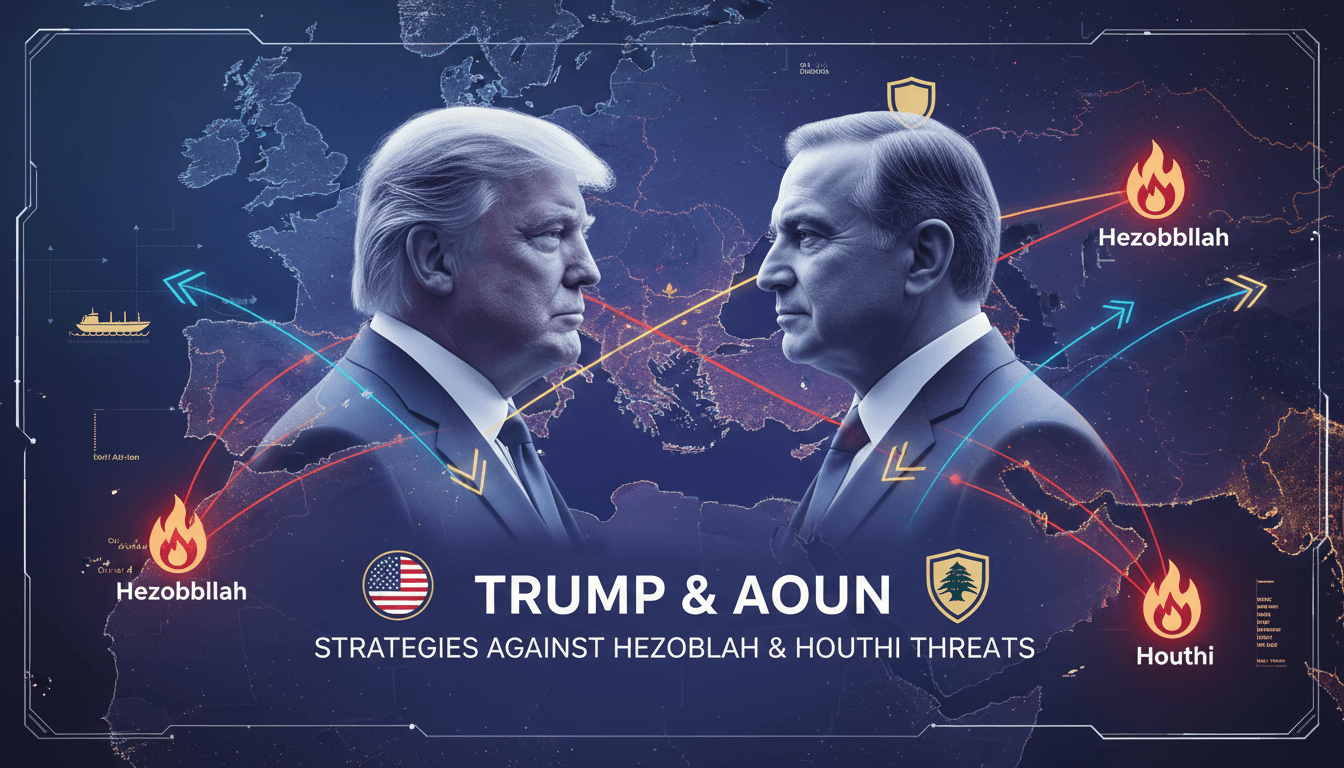
Here's what it means for you.
The recent meeting between President Trump and Lebanese President Joseph Aoun signals a pivotal moment in U.S. foreign policy regarding Middle Eastern stability. As tensions escalate with Hezbollah and Houthi rebels, the U.S. may enhance its military presence in the region, impacting both geopolitical dynamics and local governance in Lebanon. This engagement reflects a broader strategy to counter Iranian influence and ensure security in a volatile area. The implications for businesses and policymakers are significant, as increased military activity could affect trade routes and regional alliances. Stakeholders should prepare for potential shifts in diplomatic relations and economic conditions as the U.S. takes a more active role in Middle Eastern geopolitics.
What happened
President Trump met with Lebanese President Joseph Aoun to discuss the ongoing conflict involving Hezbollah and the regional security threats posed by Houthi rebels in Yemen. During the meeting, Trump emphasized the importance of disarming Hezbollah and maintaining stability in Lebanon. He also issued warnings against any blockade of the Red Sea by Houthi forces, indicating a potential for military action if necessary.
The discussions focused on strategies to combat Hezbollah and prevent Houthi interference in critical maritime routes. This meeting underscores the U.S. commitment to stabilizing Lebanon while addressing broader security challenges in the region.
The Context
Lebanon faces increasing pressure to disarm Hezbollah as part of a broader peace agreement with Israel, making this meeting particularly timely. The U.S. has been vocal about its stance against Houthi rebels, threatening military action if they disrupt Red Sea ports. This reflects ongoing U.S. efforts to support Lebanon's government and counteract Iranian influence in the region.
The backdrop of these discussions is a complex web of regional conflicts, where the U.S. aims to stabilize Lebanon while navigating the delicate balance of power among various stakeholders. The implications of this meeting extend beyond Lebanon, affecting U.S. relations with Iran and other regional actors.
Takeaway
As tensions continue to rise in the Middle East, the U.S. is poised to take a more active role in addressing the threats posed by Hezbollah and Houthi rebels. Observers should watch for potential U.S. military actions against Houthi forces in Yemen, which could escalate the conflict further. Additionally, developments in the disarmament of Hezbollah will be critical in shaping Lebanon's future and its relationship with Israel.
The U.S. strategy appears focused on ensuring regional stability while countering Iranian influence, which may lead to increased military presence and diplomatic efforts in the coming months. Stakeholders should remain vigilant as these dynamics evolve.
Conservative-leaning political and national coverage.
"The Washington Times is a conservative-leaning newspaper known for its political coverage and advocacy of right-of-center viewpoints."
— A47 Editor
Trump warns Houthi rebels not to block Red Sea ports and grapples with Hezbollah in Lebanon meeting
President Trump met with Lebanese President Joseph Aoun to address ongoing tensions involving Hezbollah and Israel, while warning Houthi rebels in Yemen against blocking Red Sea ports, threatening military action if necessary.
Arabic-language coverage of political affairs and current events.
"Okaz political coverage typically follows mainstream Saudi framing on national and regional affairs."
— A47 Editor
ترمب: لن نسمح للحوثي بإغلاق البحر الأحمر.. ولم ننتهِ بعد من إيران
U.S. President Donald Trump warned the Houthi movement against closing the Red Sea, stating that necessary actions would be taken if they attempted to do so. During a meeting with Lebanese President Joseph Aoun at the White House, Trump emphasized th...
Capitol Hill news, legislation, and policy insight.
"The Hill specializes in U.S. politics and policy, with a focus on Capitol Hill developments and a reputation for insider reporting."
— A47 Editor
The Memo: Lebanon crisis takes center stage with White House meeting
Lebanese President Joseph Aoun is set to meet with President Trump at the White House, marking a significant moment in the ongoing crisis in Lebanon. This meeting aims to bolster Aoun's position as he seeks to diminish Hezbollah's influence while dem...
Regional coverage and analysis focused on politics, diplomacy, and business across the Middle East.
"Al-Monitor is known for analytical reporting on Middle East politics and policy developments."
— A47 Editor
Lebanon's Aoun to meet Trump as pressure builds to disarm Hezbollah
Lebanese President Joseph Aoun is scheduled to meet with U.S. President Donald Trump in Washington to discuss the disarmament of Hezbollah and the withdrawal of Israeli forces from southern Lebanon. This meeting comes amid increasing pressure on Leba...
European coverage of Middle East politics and security issues.
"France 24 offers international reporting with a European editorial perspective."
— A47 Editor
Trump vows to help Lebanon with ‘Hezbollah problem’ in meeting with Aoun
Lebanese President Joseph Aoun met with U.S. President Donald Trump in Washington, D.C., marking the first official visit by a Lebanese head of state since 2009. The discussions centered on Lebanon's military operations aimed at disarming Hezbollah i...
Coverage of current events and conflicts in the Middle East.
"France 24 is viewed as a globally focused outlet with balanced coverage and a European perspective."
— A47 Editor
Trump vows to help Lebanon with ‘Hezbollah problem’ in meeting with Aoun
Lebanese President Joseph Aoun met with U.S. President Donald Trump in Washington, D.C., marking the first official visit by a Lebanese head of state since 2009. The discussions centered on Lebanon's military operations aimed at disarming Hezbollah i...