
US Revokes Waiver on Iranian Oil Sales Amid Escalating Military Tensions
Here's what it means for you.
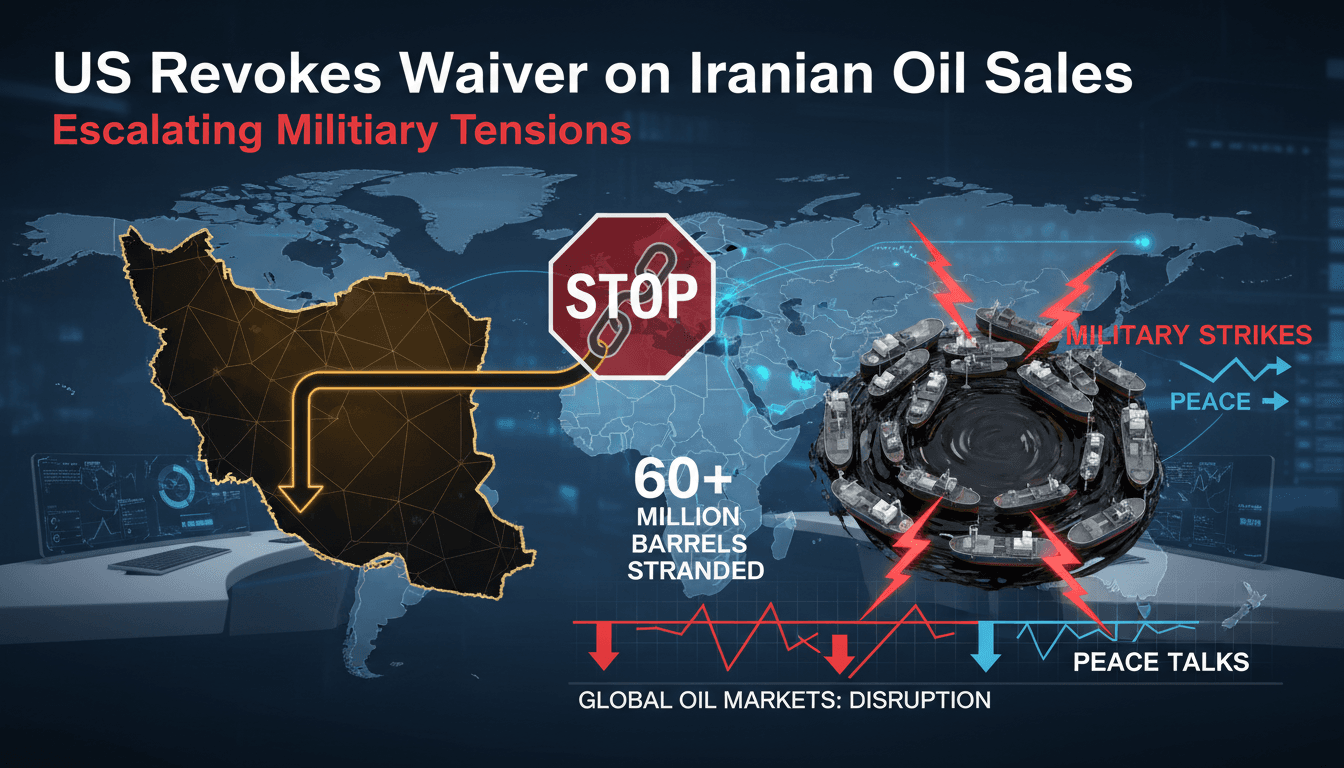
The U.S. decision to revoke the waiver on Iranian oil sales has significant implications for global oil markets and regional stability. With over 60 million barrels of Iranian crude stranded at sea, the economic impact on Iran could be profound, potentially leading to retaliatory measures. This escalation in military tensions complicates ongoing peace negotiations and raises the stakes for international stakeholders involved in the region. As the situation develops, businesses and policymakers must remain vigilant, as further military actions could disrupt supply chains and impact oil prices worldwide. The international community will be closely watching Iran's response to this latest U.S. action.
What happened
The U.S. has revoked a waiver that previously allowed Iran to sell oil, leaving over 60 million barrels of Iranian crude stranded at sea. This decision was announced on July 8, 2026, coinciding with military strikes conducted by the U.S. on over 80 sites in Iran. The revocation of the waiver eliminates a crucial incentive for Iran in ongoing peace negotiations, further complicating the fragile ceasefire in the region.
The military strikes and the waiver revocation are seen as tests of the current ceasefire, which has already been threatened by recent attacks on ships in the Strait of Hormuz. This series of events underscores the escalating tensions between the U.S. and Iran, raising concerns about the potential for increased conflict.
The Context
The revocation of the waiver comes amid a backdrop of heightened military activity and strained diplomatic relations between the U.S. and Iran. The U.S. strikes and the subsequent decision to revoke the waiver have intensified fears of a broader conflict in the Gulf region, particularly around the strategically vital Strait of Hormuz. This area is crucial for global oil transportation, making any disruption a matter of international concern.
The situation is further complicated by the involvement of various stakeholders, including regional allies and global powers, who are monitoring the developments closely. The timing of these actions suggests a strategic maneuver by the U.S. to assert its position in the ongoing negotiations and to pressure Iran into compliance.
Takeaway
Looking ahead, the international community will be focused on Iran's potential responses regarding the ceasefire and its oil sales. The revocation of the waiver may lead to further escalation in U.S.-Iran relations, which could have significant implications for global oil markets. Observers should also watch for any additional military actions in the Gulf region that could exacerbate tensions.
As the situation unfolds, the potential for diplomatic resolutions remains uncertain, but the stakes are high for all parties involved. The coming weeks will be critical in determining the trajectory of U.S.-Iran relations and the broader implications for regional stability.
Global business, markets, and technology policy/industry coverage.
"France 24 provides balanced international coverage with a European perspective."
— A47 Editor
US revokes waiver for Iranian oil sales amid renewed Gulf strikes
The US Treasury Department has revoked the waiver allowing Iranian oil sales in US dollars, coinciding with recent missile strikes on commercial vessels in the Strait of Hormuz. This decision has left over 60 million barrels of Iranian crude stranded...
24/7 international news from a French perspective in multiple languages.
"France 24 is viewed as a globally focused outlet with balanced coverage and a European perspective."
— A47 Editor
US revokes waiver for Iranian oil sales amid renewed Gulf strikes
The US Treasury Department has revoked the waiver allowing Iranian oil sales in US dollars, coinciding with recent missile strikes on commercial vessels in the Strait of Hormuz. This decision has left over 60 million barrels of Iranian crude stranded...
Global markets, investing, and macroeconomics from a premier financial newsroom.
"Bloomberg is respected for in-depth financial reporting and data-driven analysis."
— A47 Editor
Iranian Oil at Sea Left in Limbo After US Revokes 60-Day Waiver
The U.S. has revoked a 60-day waiver that previously allowed Iran to sell oil, leaving tens of millions of barrels of Iranian crude stranded on tankers. This decision follows recent missile attacks by Iran on commercial vessels in the Strait of Hormu...
Global markets, investing, and macroeconomics from a premier financial newsroom.
"Bloomberg is respected for in-depth financial reporting and data-driven analysis."
— A47 Editor
US Blocks Oil Sales in New Test of Ceasefire
The United States has conducted a new round of military strikes against Iran, targeting over 80 sites, and has revoked a waiver that allowed Iran to sell oil globally. This escalation follows a series of missile attacks by Iran on commercial vessels ...
Global political, business, and cultural coverage from WSJ international desks.
"The Wall Street Journal offers extensive international reporting with a reputation for financial insight and a center-right editorial stance."
— A47 Editor
U.S. and Iran Exchange Strikes in Latest Threat to Fragile Ceasefire
The United States and Iran have exchanged military strikes, escalating tensions in the region following the U.S. decision to revoke a waiver that allowed Iran to sell oil, a crucial aspect of the interim peace deal. This revocation comes after missil...
U.S. business news, corporate developments, and economy.
"The Wall Street Journal is respected for deep financial and economic reporting with a center-right editorial perspective."
— A47 Editor
U.S. and Iran Exchange Strikes in Latest Threat to Fragile Ceasefire
The United States has escalated military tensions with Iran by conducting airstrikes and revoking a waiver that allowed Iran to sell oil globally. This decision follows missile attacks by Iran on commercial vessels in the strategically important Stra...