
U.S. Military Escorts Commercial Vessels in Strait of Hormuz Amid Rising Tensions
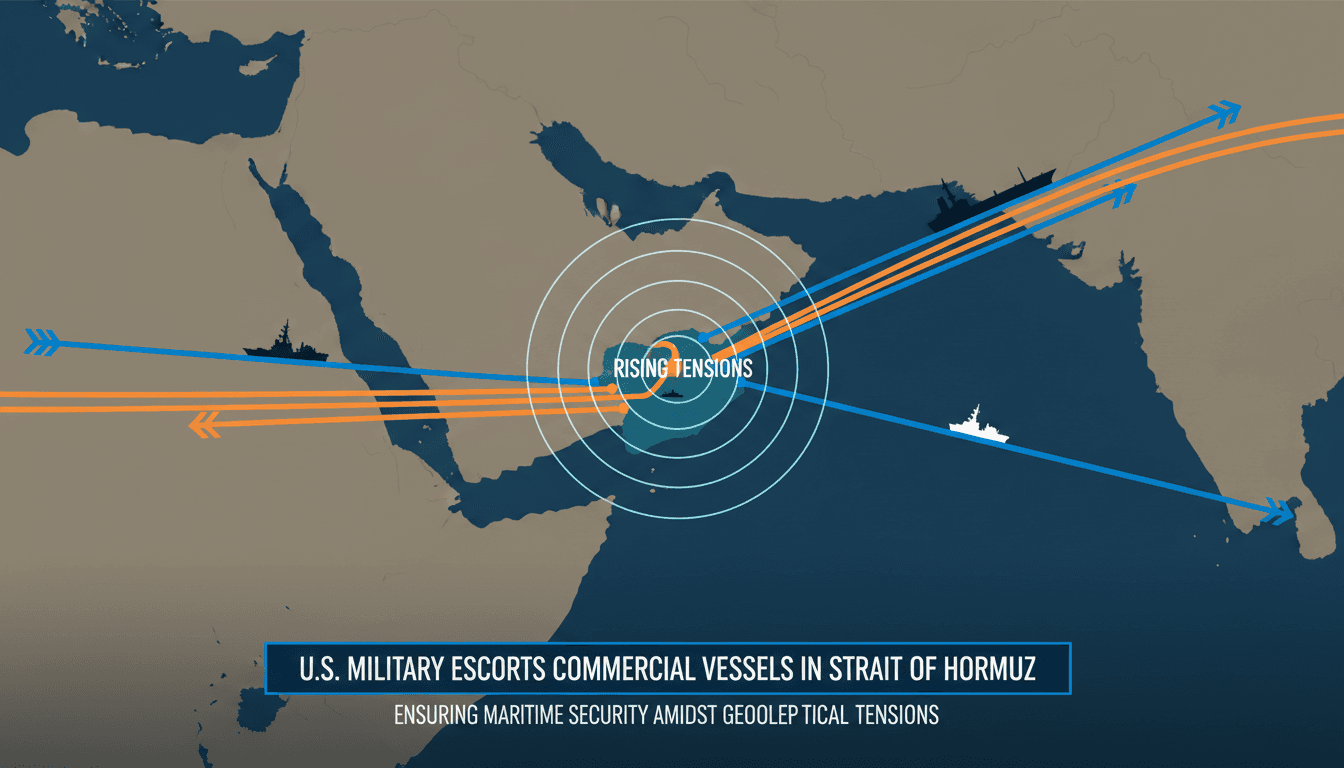
Here's what it means for you.
The U.S. military's recent escort of commercial vessels through the Strait of Hormuz highlights the ongoing commitment to maritime security in a region critical for global oil shipments. This operation not only ensures the safety of commercial shipping but also signals a robust U.S. presence amid rising geopolitical tensions, particularly concerning Iranian activities. Stakeholders in the oil market and international trade should remain vigilant as these developments could impact shipping routes and oil prices. The sustained military presence may also influence diplomatic relations in the region, as the U.S. seeks to deter potential threats. As tensions continue to evolve, the implications for global trade and security are significant.
What happened
In the last 24 hours, U.S. military forces have escorted approximately 20 commercial vessels through the Strait of Hormuz. This operation is a direct response to escalating tensions in the region, particularly related to Iranian activities. The U.S. Central Command has actively coordinated these escorts to ensure the safe passage of ships in this vital maritime corridor.
The escort operation underscores the strategic importance of the Strait of Hormuz, which is a critical passage for global oil shipments. Reports indicate that the U.S. military's involvement is aimed at maintaining stability and security in the face of rising geopolitical challenges.
The Context
The Strait of Hormuz is a crucial maritime passage, with a significant percentage of the world's oil supply transiting through it. Recent geopolitical factors, including heightened tensions with Iran, have prompted the U.S. to take proactive measures to safeguard commercial shipping. The U.S. Central Command has denied Iranian claims regarding military incidents in the area, further emphasizing the complexities of the situation.
As the U.S. military continues its escort operations, the implications for regional stability and international trade are profound. The ongoing tensions necessitate close monitoring of both U.S. and Iranian actions, as they could lead to further military engagement or diplomatic developments.
Takeaway
The ongoing U.S. military presence in the Strait of Hormuz suggests a continued commitment to ensuring maritime security amidst regional tensions. Observers should monitor further U.S. military operations in the area, as well as any responses from Iran regarding these naval activities. The situation remains fluid, with potential implications for global oil markets and shipping routes.
As geopolitical tensions persist, understanding the dynamics at play will be crucial for stakeholders in the region and beyond. The developments in the Strait of Hormuz will likely continue to shape international relations and economic stability.
Arabic-language coverage of international news and geopolitics.
"RT Arabic is a Russian state-funded outlet often criticized for promoting Kremlin-aligned narratives."
— A47 Editor
"أكسيوس": القوات الأمريكية قامت بمرافقة 20 سفينة في مضيق هرمز خلال اليوم الأخير
Axios reported that U.S. forces escorted 20 commercial vessels through the Strait of Hormuz in the last 24 hours, according to an American official on Sunday. This action highlights the ongoing military presence and operational readiness of U.S. forc...
Pan-Arab political news and analysis.
"Al-Quds Al-Arabi is a London-based Arabic newspaper known for political coverage."
— A47 Editor
أكسيوس: نحو 20 سفينة تجارية عبرت مضيق هرمز بتنسيق مع الجيش الأمريكي
Axios reported that approximately 20 commercial vessels have crossed the Strait of Hormuz in coordination with the U.S. military, highlighting ongoing maritime activities in a strategically vital region. This development underscores the importance of...
Egyptian politics, economy, and society coverage.
"Al Masry Al Youm is a major Egyptian newspaper with broad national coverage."
— A47 Editor
أكسيوس: نحو 20 سفينة تجارية عبرت مضيق هرمز خلال 24 ساعة
Axios reported that approximately 20 commercial vessels transited the Strait of Hormuz within a 24-hour period. The U.S. Central Command (CENTCOM) dismissed Iranian claims regarding casualties as propaganda.