
AI industry spending influences New York congressional primary outcome
Here's what it means for you.
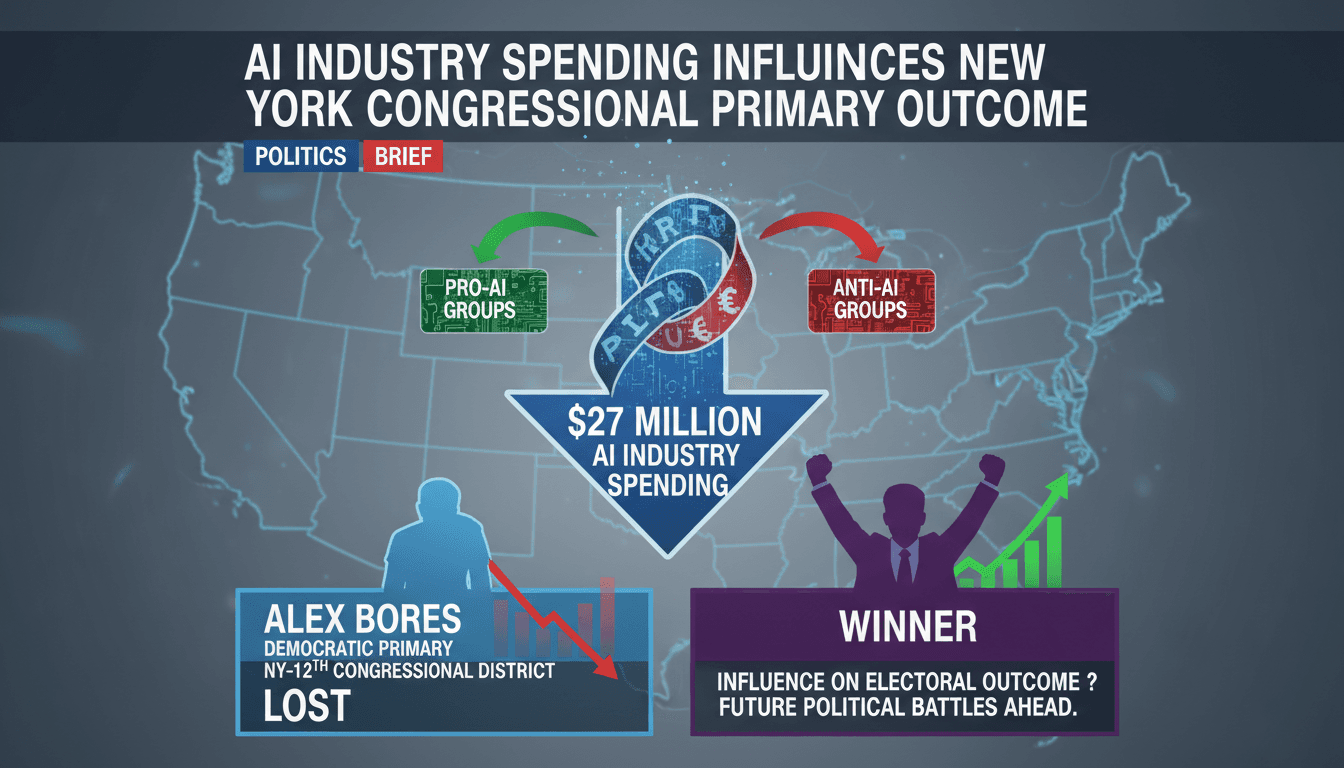
The recent Democratic primary in New York's 12th congressional district underscores the escalating financial influence of the AI industry in U.S. politics. With over $27 million spent, the outcome reflects how deeply entrenched AI interests are becoming in electoral processes. This trend may reshape future political landscapes, particularly as regulatory discussions around AI intensify. As the AI sector continues to grow, its impact on political campaigns is likely to increase, signaling a shift in how technology companies engage with legislative agendas. Stakeholders in both the pro-AI and anti-AI camps will need to navigate this evolving environment carefully.
What happened
Alex Bores lost the Democratic primary for New York's 12th congressional district, a race marked by intense financial competition fueled by AI industry interests. The campaign saw over $27 million in spending, with significant contributions from both pro-AI and anti-AI groups. Bores, a state assemblyman known for sponsoring an AI safety bill, became a target in this high-stakes contest.
The primary results were announced on June 24, 2026, revealing the narrow defeat of Bores amidst a backdrop of unprecedented campaign financing. Reports highlighted the substantial financial stakes involved, indicating a new era of political engagement driven by the AI sector.
The Context
The Democratic primary became a battleground for competing interests within the AI industry, showcasing the growing influence of technology in political campaigns. Bores faced opposition from pro-AI political action committees (PACs), which contributed over $8 million against him, while industry groups advocating for regulation spent more than $16 million to counteract these efforts. This financial dynamic illustrates the polarized views surrounding AI regulation and its implications for future legislation.
The timing of this primary is critical, as it reflects broader trends in U.S. politics where technology companies are increasingly involved in shaping electoral outcomes. The outcome of this race may set a precedent for how similar contests unfold in the future, particularly as the AI industry continues to assert its influence.
Takeaway
The results of the New York primary signal potential future political battles as the AI industry becomes more entrenched in electoral processes. Observers should monitor upcoming elections for similar spending patterns by tech industries, which may influence candidate viability and legislative priorities. Additionally, the implications of this race could lead to significant regulatory changes in AI legislation, driven by the outcomes of these political contests.
As the landscape evolves, stakeholders must remain vigilant about the shifting dynamics between technology interests and political representation. The growing financial stakes in campaigns may redefine how candidates approach issues related to AI and technology regulation.
Tech startup news, programming trends, and discussions shared by the developer community.
"Hacker News is a community-driven source highlighting influential tech discussions, startup launches, and programming insights."
— A47 Editor
The AI industry is pouring millions into US elections
The AI industry is significantly increasing its financial contributions to the US elections, reflecting a growing trend where technology companies are becoming more involved in political processes. This influx of funding is reshaping the landscape of...
UK and international business news, economics, and corporate coverage.
"The Guardian’s business section covers finance and markets with a progressive editorial tone."
— A47 Editor
Big tech spent millions on a single US congressional race. It won’t be the last time
The recent Democratic primary for New York's 12th congressional district became one of the most expensive races in the state's history, with over $24 million spent by pro- and anti-AI groups. The campaign primarily targeted candidate Alex Bores, who ...
News from the United States including domestic politics, society, and culture.
"The Guardian is known for its progressive editorial stance and in-depth analysis, often advocating for social justice, environmental issues, and liberal values."
— A47 Editor
Big tech spent millions on a single US congressional race. It won’t be the last time
In a highly competitive Democratic primary for New York's 12th congressional district, over $24 million was spent by pro- and anti-AI groups, marking one of the most expensive races in the state's history. The contest centered around candidate Alex B...
News and features on AI from The Guardian.
"Progressive-leaning international outlet with critical AI coverage."
— A47 Editor
Big tech spent millions on a single US congressional race. It won’t be the last time
The recent Democratic primary for New York's 12th congressional district became one of the most expensive races in the state's history, with over $24 million spent by pro- and anti-AI groups. The campaign primarily targeted candidate Alex Bores, who ...
International coverage from The Guardian's global desks.
"The Guardian is known for its progressive editorial stance and in-depth analysis."
— A47 Editor
Big tech spent millions on a single US congressional race. It won’t be the last time
In a highly competitive Democratic primary for New York's 12th congressional district, over $24 million was spent by pro- and anti-AI groups, marking one of the most expensive races in the state's history. The contest centered around candidate Alex B...
Consumer tech and culture with frequent AI coverage.
"Influential tech outlet covering AI products and policy."
— A47 Editor
The $27 million Al proxy war over Alex Bores ends in a draw
The $27 million political proxy war between Anthropic and OpenAI concluded in a draw as Alex Bores, a New York state Assemblyman, narrowly lost the Democratic primary for New York's 12th Congressional district. Bores gained significant popularity aft...
Tech news, reviews, and analysis of consumer electronics, science, art, and culture.
"The Verge is a technology-focused media outlet known for in-depth reporting, product reviews, and coverage of the intersection between technology and culture."
— A47 Editor
The $27 million Al proxy war over Alex Bores ends in a draw
The $27 million political proxy war between Anthropic and OpenAI concluded in a draw as Alex Bores, a New York state Assemblyman, narrowly lost the Democratic primary for New York's 12th Congressional district. Bores gained significant popularity aft...