
Israel officially recognizes Armenian Genocide, impacting Turkey relations
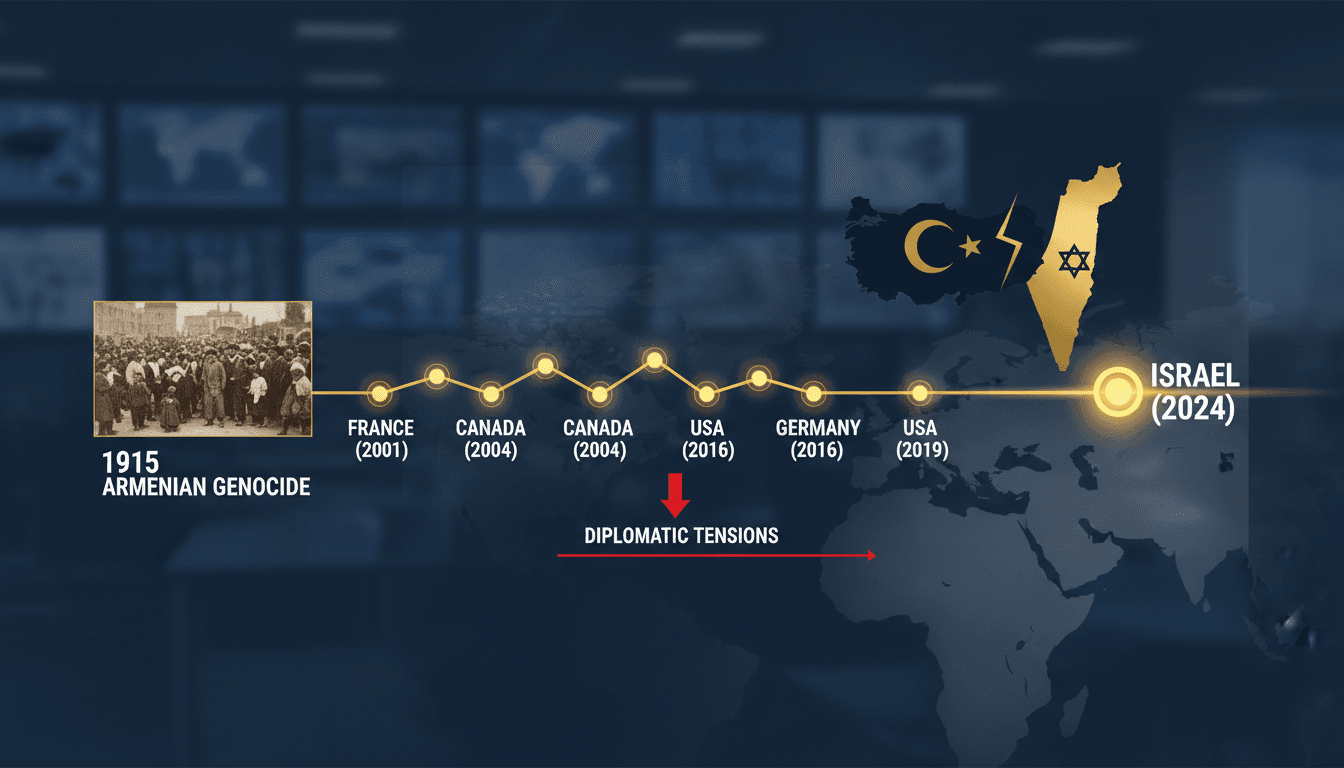
Here's what it means for you.
Israel's formal acknowledgment of the Armenian Genocide signifies a notable shift in its foreign policy, particularly regarding its historically complex relationship with Turkey. This decision could lead to increased diplomatic tensions, potentially reshaping alliances in the Middle East. Stakeholders in international relations should closely monitor the evolving dynamics between these two nations, as the implications may extend beyond bilateral ties.
What happened
On June 29, 2026, Israel's Cabinet approved a proposal to officially recognize the mass extermination of 1.5 million Armenian Christians during World War I as genocide. This recognition marks a significant moment in Israel's foreign policy, aligning it with other nations that have acknowledged the historical atrocity. The decision comes at a time when relations between Israel and Turkey have been deteriorating, raising concerns about future diplomatic interactions.
The recognition of the Armenian Genocide is seen as a direct challenge to Turkey, which has historically denied the events of that era. As tensions between the two nations escalate, this move is likely to exacerbate existing rifts, complicating regional diplomacy. The acknowledgment serves not only as a historical recognition but also as a potential catalyst for further conflict in the region.
The Context
Israel's decision to recognize the Armenian Genocide reflects a broader trend among countries acknowledging this historical atrocity. The timing is particularly significant, given the ongoing deterioration of relations between Israel and Turkey, which have faced increasing tensions in recent years. This recognition may be perceived as pouring oil on the fire of Turkish-Israeli relations, further complicating diplomatic efforts.
Turkey's longstanding denial of the genocide has been a point of contention in its foreign relations, particularly with nations that have chosen to recognize the events. The implications of Israel's decision could resonate throughout the Middle East, affecting not only bilateral relations but also regional alliances. As both countries navigate this sensitive issue, the international community will be watching closely.
Takeaway
The recognition of the Armenian Genocide by Israel may lead to heightened diplomatic tensions with Turkey, which could have significant implications for regional alliances and international relations in the Middle East. Observers should be alert to Turkey's potential response to this decision, as it may influence future diplomatic engagements. Additionally, the impact on Israel's relations with other nations regarding historical recognitions could shape broader geopolitical dynamics.
As the situation unfolds, the international community will likely witness a shift in how historical narratives are acknowledged and addressed in diplomatic discourse. The evolving relationship between Israel and Turkey will be critical to watch in the coming months, as both nations navigate the complexities of this recognition.
Pan-Arab news coverage spanning politics, business, sports, and regional affairs.
"Asharq Al-Awsat reflects a broad Arab editorial perspective with strong attention to regional geopolitics."
— A47 Editor
جدل «إبادة الأرمن» يصب زيتاً على نار الخلاف التركي - الإسرائيلي
The Israeli government's decision to recognize what it terms the 'Armenian genocide' perpetrated by the Ottoman Empire has intensified the already escalating tensions between Turkey and Israel over the past three years. This acknowledgment marks a si...
Conservative-leaning political and national coverage.
"The Washington Times is a conservative-leaning newspaper known for its political coverage and advocacy of right-of-center viewpoints."
— A47 Editor
Israel recognizes death of 1.5 million Armenian Christians in Ottoman Empire during WWI as genocide
The Israeli government has officially recognized the mass extermination of 1.5 million Armenian Christians in the Ottoman Empire during World War I as genocide. This decision, approved unanimously by Israel's Cabinet, marks a significant acknowledgme...
International stories from NPR’s global desk.
"NPR is an American public media organization known for thoughtful reporting and a slightly left-leaning editorial tone."
— A47 Editor
Israel moves to formally recognize Armenian WWI deaths as a genocide
Israel's Cabinet has approved a proposal to officially recognize the deaths of Armenians during World War I, caused by the Ottoman Empire, as a genocide. This decision marks a significant shift in Israel's stance and reflects the ongoing deterioratio...