
Study Reveals Manipulation in Polymarket's Bitcoin Prediction Contracts Causing $8.2 Million Losses for Retail Traders
Here's what it means for you.
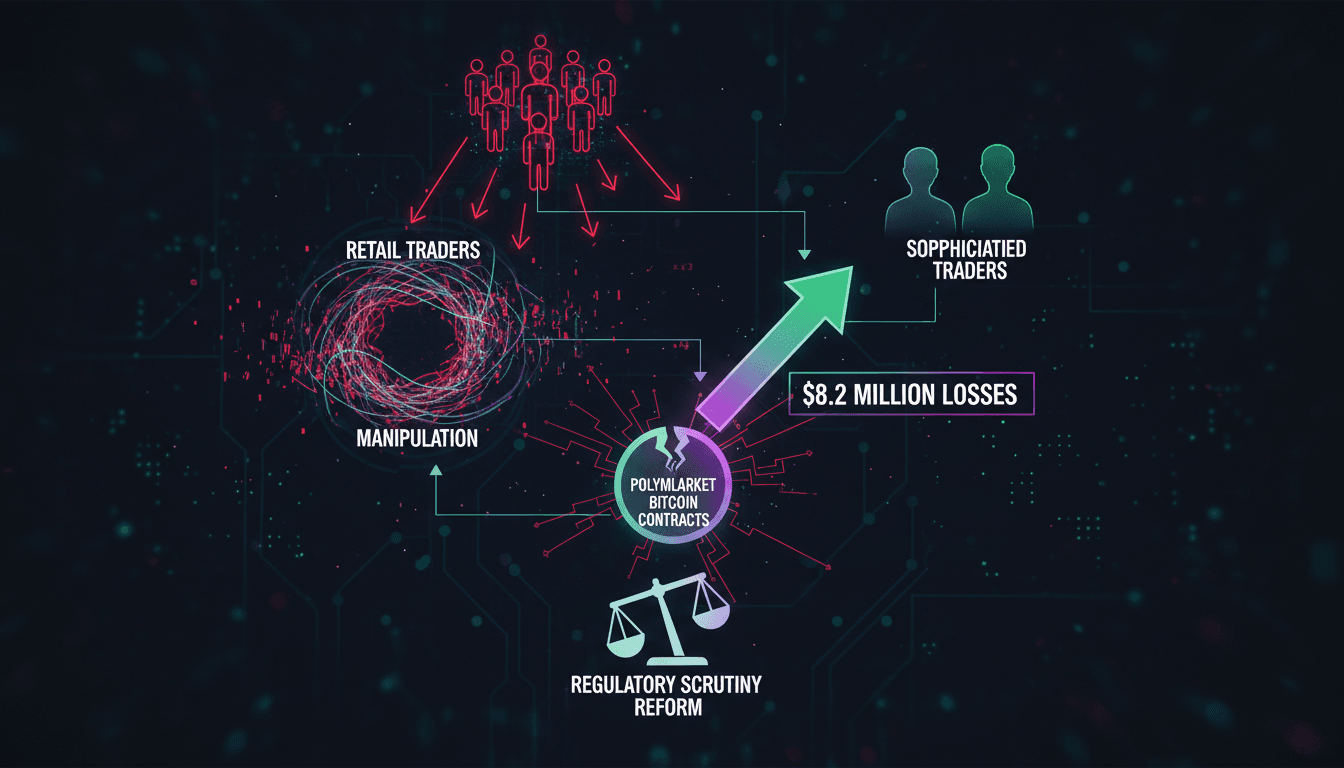
The recent findings from Stanford University and Singapore Management University highlight critical vulnerabilities in Polymarket's Bitcoin prediction contracts. Retail traders have suffered significant losses due to manipulation, raising concerns about the integrity of short-term trading mechanisms. This situation may lead to increased regulatory scrutiny and calls for reforms aimed at protecting investors. As the cryptocurrency market continues to evolve, the implications of these findings could reshape how prediction markets operate. Stakeholders must consider the balance between innovation and investor protection to foster a fair trading environment.
What happened
A recent study has uncovered significant manipulation within Polymarket's five-minute Bitcoin prediction contracts. This manipulation has resulted in substantial financial losses for retail traders, amounting to $8.2 million. The contracts are designed in a way that incentivizes sophisticated traders to exploit the system, distorting Bitcoin's spot price.
The study's findings indicate that the current structure of these contracts creates a wealth transfer from retail traders to manipulators. This situation raises serious questions about the fairness and integrity of such short-term trading mechanisms.
The Context
Polymarket's five-minute contracts have faced criticism for their design flaws, which allow for price manipulation that disproportionately affects retail traders. The study suggests that longer settlement windows could mitigate these issues, providing a potential solution to the manipulation problem.
As the cryptocurrency landscape evolves, the vulnerabilities exposed in this study highlight the need for greater oversight in prediction markets. The timing of these findings is crucial, as they may prompt regulatory bodies to take action to protect retail investors from exploitative practices.
Takeaway
The implications of this study may lead to increased scrutiny of prediction markets and a push for reforms aimed at safeguarding retail investors. Stakeholders should closely monitor potential regulatory responses to the findings, as well as any developments in Polymarket's contract structure or settlement processes.
As the market adapts to these revelations, the focus will likely shift toward ensuring a fair trading environment that minimizes manipulation risks for retail participants.
Real-time updates, analysis, and reports on the blockchain and cryptocurrency sectors.
"Crypto News delivers real-time updates, analysis, and reports on the blockchain and cryptocurrency sectors."
— A47 Editor
Stanford study exposes Polymarket flaw that rewards Bitcoin manipulation
A recent study by Stanford University and Singapore Management University has revealed that Polymarket's five-minute Bitcoin prediction contracts incentivize manipulation of spot prices, allowing sophisticated traders to profit at the expense of aver...
Covers blockchain, cryptocurrency news, project analysis, and market insights.
"Cointelegraph is a leading crypto-focused media outlet known for timely news, analysis, and educational content related to blockchain and digital assets."
— A47 Editor
Stanford study says 5-minute Bitcoin prediction markets enable settlement manipulation
A Stanford study has revealed that Polymarket's five-minute Bitcoin prediction markets create incentives for manipulation of spot prices around contract settlements. Researchers suggest that extending the settlement window could mitigate these issues...
News, analysis, and thought leadership focusing exclusively on Bitcoin.
"Bitcoin Magazine is one of the original publications devoted to Bitcoin, offering in-depth news, analysis, and commentary."
— A47 Editor
Traders Took $8.2 Million From Polymarket’s Five-Minute Bitcoin Bets, Study Found
A recent study revealed that Polymarket's five-minute Bitcoin betting contracts resulted in a significant wealth transfer, with traders losing $8.2 million to a small group of manipulators, raising concerns about market integrity and price distortion...