
Clashes Erupt in Mogadishu Amid Protests Against President's Term Extension
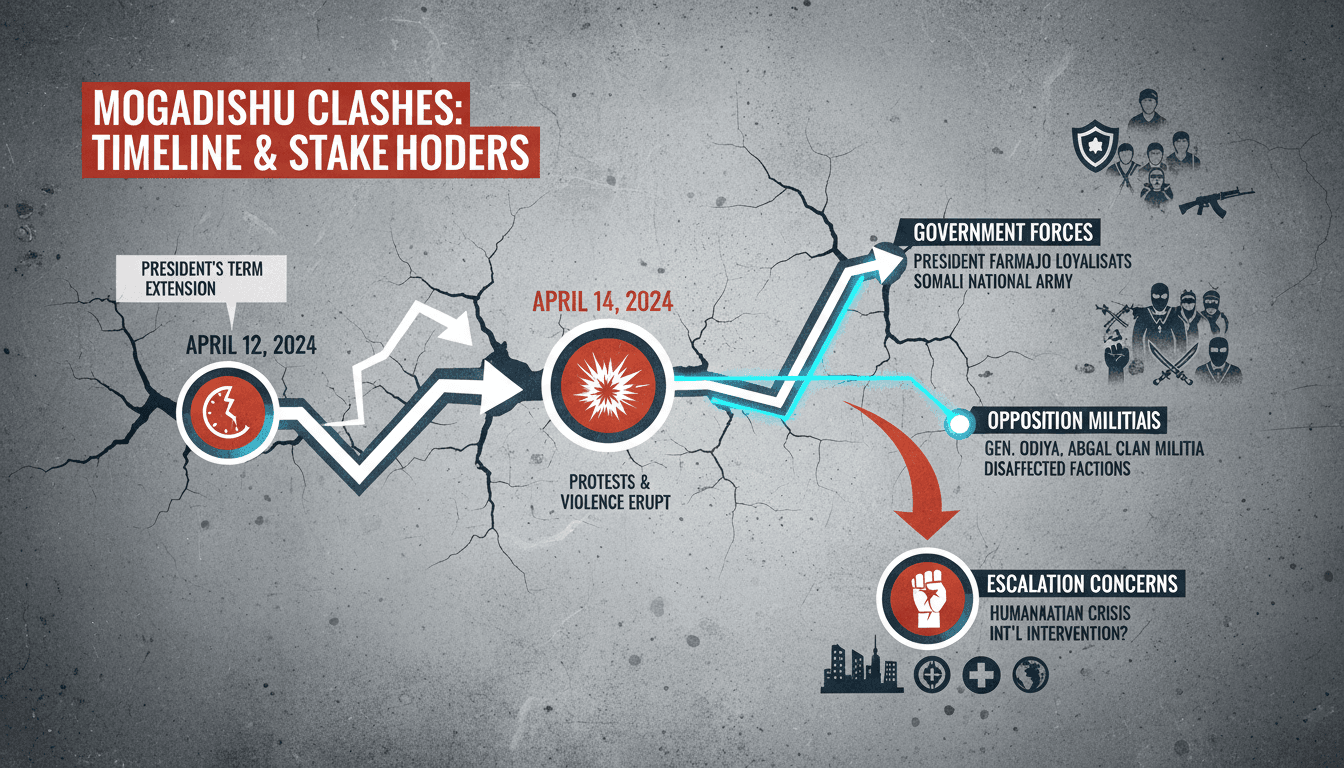
Here's what it means for you.
The recent violence in Mogadishu underscores the fragility of Somalia's political landscape, particularly as the president's term extension has ignited widespread unrest. This situation poses significant risks for local stability and could have broader implications for international relations and humanitarian efforts in the region. Stakeholders, including foreign governments and NGOs, must prepare for potential escalations that could necessitate intervention.
What happened
Fierce clashes erupted in Mogadishu as Somali government forces engaged with opposition militias. The violence was triggered by the president's controversial extension of his term, which has mobilized opposition leaders to organize protests. The fighting began on June 3, 2026, with opposition forces establishing positions in their clan strongholds, leading to significant property damage and civilian displacement.
Civilians are fleeing the violence, indicating a severe impact on the local population. As the situation escalates, the potential for a humanitarian crisis looms large, with many residents caught in the crossfire. The ongoing conflict highlights the deepening political crisis in Somalia's capital.
The Context
The president's term extension by one year has been a flashpoint for unrest, prompting opposition leaders to rally their supporters. The timing of the clashes coincides with planned protests set for June 4, 2026, which are expected to draw significant attention and participation. The involvement of clan-based militias adds complexity to the conflict, as these groups are deeply rooted in local dynamics and grievances.
This escalation of violence reflects broader tensions within Somali society, where political instability has long been a challenge. The potential for international intervention increases as the situation deteriorates, raising concerns about the humanitarian implications for civilians. The stakes are high, with both local and global actors closely monitoring developments.
Takeaway
The situation in Mogadishu is poised for further escalation as protests are planned and tensions remain high. Observers should closely monitor the outcomes of these protests, as they could significantly influence the trajectory of the conflict. Additionally, the international community's response to the violence will be crucial in determining whether external intervention becomes necessary.
As the crisis unfolds, the potential for a humanitarian disaster grows, with civilians bearing the brunt of the violence. Stakeholders must remain vigilant and prepared to respond to the evolving landscape in Mogadishu.
Arabic-language coverage of international news and geopolitics.
"RT Arabic is a Russian state-funded outlet often criticized for promoting Kremlin-aligned narratives."
— A47 Editor
اشتباكات مسلحة في مقديشو
Armed clashes erupted in Mogadishu between opposition supporters and Somali security forces ahead of an anti-government demonstration on Thursday. The violence highlights the ongoing tensions in the capital as political dissent grows among various fa...
International coverage of politics, culture, and current affairs.
"BBC News is widely regarded as a reputable international news organization, known for its impartial tone and public service mandate."
— A47 Editor
Heavy gunfire in Somali capital as row over election delay escalates
Heavy gunfire erupted in Mogadishu as tensions escalated over the Somali president's decision to extend his term by one year, prompting opposition calls for protests. The situation has led to significant unrest in the capital, with civilians caught i...
Top international stories selected by The Guardian editors.
"The Guardian is known for its progressive editorial stance and in-depth analysis."
— A47 Editor
Civilians flee Mogadishu as Somali troops and opposition-allied militias trade fire
Fierce clashes erupted in Mogadishu between Somali government troops and opposition-allied militias, resulting in significant property damage and prompting civilians to flee the capital. The violence coincided with rising tensions ahead of planned pr...