Trending

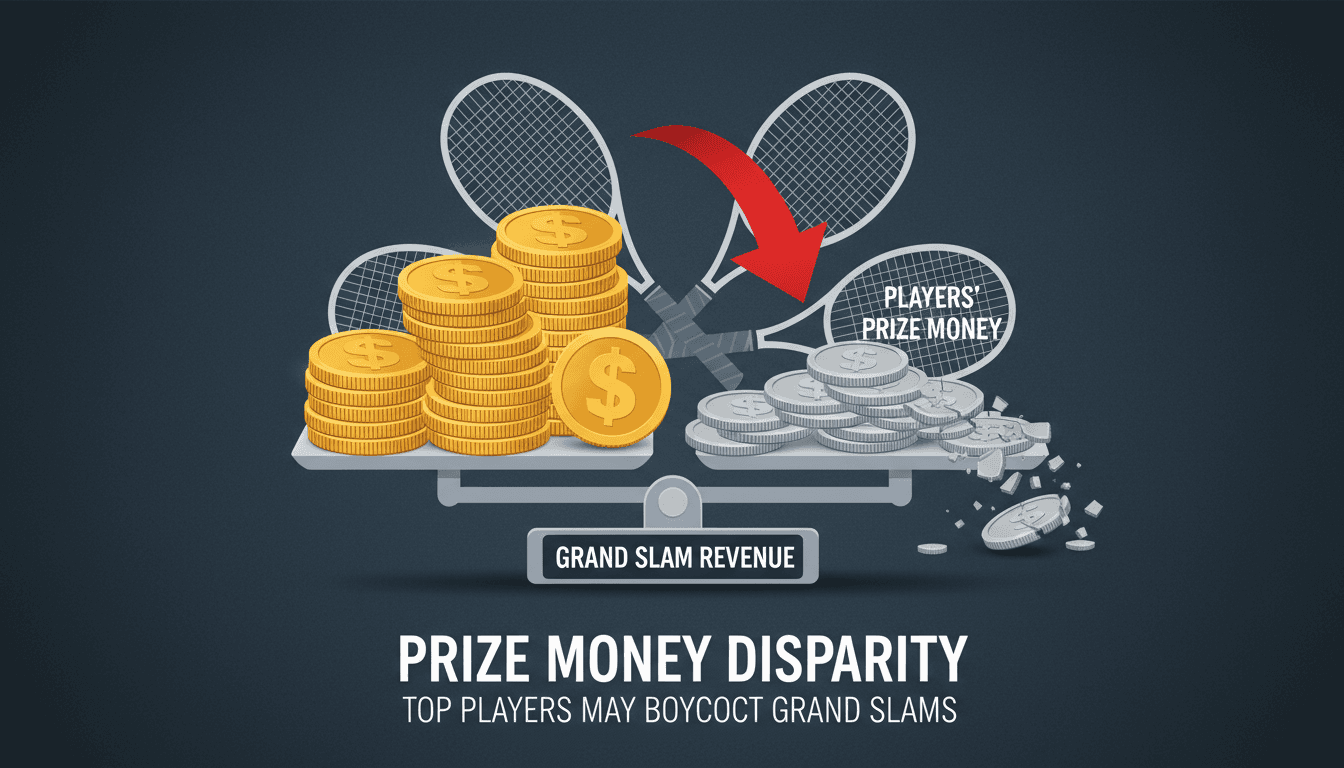
    Top Tennis Players Threaten Boycott Over Grand Slam Revenue Dispute

    Moderate7 articles covering this·7 news sources·Updated 9 days ago·World
    Share:
    Aryna Sabalenka speaking at a press conference about Grand Slam revenue share disputes.

    Here's what it means for you.

    If you're a tennis fan or player, the ongoing revenue share dispute could reshape the sport's financial landscape.

    Why it matters

    The financial sustainability of professional tennis is at stake, impacting players' livelihoods and the sport's future.

    What happened (in 30 seconds)

    • Aryna Sabalenka announced potential boycotts of Grand Slam tournaments to demand higher revenue shares.
    • Top players including Jannik Sinner and Coco Gauff joined her in criticizing the declining player revenue percentage at the French Open.
    • The French Open plans to increase total prize money by 10% but reduce the player share to 14.9%, igniting widespread discontent.

    The context you actually need

    • Historical equality: Grand Slam tournaments equalized men’s and women’s prize money decades ago, but recent revenue trends have sparked tensions.
    • Revenue growth: Despite rising revenues from media rights and sponsorships, player shares have stagnated or declined, leading to calls for reform.
    • Player unity: The current climate has prompted discussions about unionization and collective action among players, particularly among women.

    What's really happening

    The recent uproar over Grand Slam prize money reflects deeper systemic issues within professional tennis. While the sport has made strides toward gender equality in prize money, the financial distribution model is increasingly under scrutiny. The French Open's announcement of a 10% increase in total prize money to 61.7 million euros ($72.1 million) is overshadowed by a reduction in the player revenue share from 15.5% to 14.9%. This decline, despite an overall increase in funds, has triggered a backlash from top players who feel their contributions to the sport are undervalued.

    The players' grievances are rooted in a broader context of rising revenues from media rights and sponsorships, which have not translated into fair compensation for athletes. As the sport grows in popularity, the financial pie is expanding, yet the players' slice is shrinking. This discrepancy has led to calls for greater transparency in revenue distribution, improved health benefits, and pension plans, which are essential for long-term player welfare.

    Sabalenka's bold statement about potential boycotts is not merely a threat; it reflects a growing sentiment among players that they must take a stand to secure their rights. The idea of boycotting major tournaments could serve as a powerful leverage point, forcing governing bodies to reconsider their financial strategies. The support from other top players, including Djokovic and Gauff, indicates a united front that could reshape negotiations moving forward.

    Moreover, the Italian Tennis Federation President's backing of the players highlights a shift in the narrative, suggesting that even traditional institutions are beginning to recognize the need for reform. The absence of immediate responses from the French Open and other Grand Slam tournaments raises questions about their willingness to engage in dialogue. As the French Open approaches, the pressure is mounting for a resolution that addresses the players' demands.

    In essence, this situation is a microcosm of a larger struggle within professional sports, where athletes are increasingly advocating for their rights and financial security. The outcome of this dispute could set a precedent for how player compensation is structured across all sports, making it a pivotal moment in the evolution of professional tennis.

    Who feels it first (and how)

    • Professional players: Top-ranked players are directly impacted by prize money structures and potential boycotts.
    • Emerging talent: Lower-ranked players may face financial instability if major tournaments are disrupted.
    • Tennis organizations: Governing bodies like the ATP and WTA must navigate player demands while maintaining tournament viability.
    • Fans and sponsors: A boycott could affect fan engagement and sponsorship deals, altering the sport's financial ecosystem.

    What to watch next

    • Player negotiations: Watch for developments in discussions between players and tournament organizers, as they could lead to significant changes in revenue sharing.
    • Unionization efforts: Keep an eye on potential moves toward player unionization, which could reshape the power dynamics in professional tennis.
    • French Open response: The French Open's reaction to player demands will be crucial; any concessions could influence other Grand Slam tournaments.
    Known:

    The French Open's prize money structure is set to decrease player revenue share despite an overall increase in funds.

    Likely:

    Increased player solidarity and calls for reform will continue to grow, potentially leading to organized actions.

    Unclear:

    The long-term impact of potential boycotts on the sport's financial landscape remains uncertain.

    This article was generated by AI from 7 verified sources and reviewed by A47 editorial systems.

    Frequently Asked Questions

    Why it matters?
    The financial sustainability of professional tennis is at stake, impacting players' livelihoods and the sport's future.
    What happened (in 30 seconds)?
    Aryna Sabalenka announced potential boycotts of Grand Slam tournaments to demand higher revenue shares. Top players including Jannik Sinner and Coco Gauff joined her in criticizing the declining player revenue percentage at the French Open. The French Open plans to increase total prize money by 10% but reduce the player share to 14.9%, igniting widespread discontent.
    What's really happening?
    The recent uproar over Grand Slam prize money reflects deeper systemic issues within professional tennis. While the sport has made strides toward gender equality in prize money, the financial distribution model is increasingly under scrutiny. The French Open's announcement of a 10% increase in total prize money to 61.7 million euros ($72.1 million) is overshadowed by a reduction in the player revenue share from 15.5% to 14.9%. This decline, despite an overall increase in funds, has triggered a b
    Who feels it first (and how)?
    Professional players: Top-ranked players are directly impacted by prize money structures and potential boycotts. Emerging talent: Lower-ranked players may face financial instability if major tournaments are disrupted. Tennis organizations: Governing bodies like the ATP and WTA must navigate player demands while maintaining tournament viability. Fans and sponsors: A boycott could affect fan engagement and sponsorship deals, altering the sport's financial ecosystem.
    What to watch next?
    Player negotiations: Watch for developments in discussions between players and tournament organizers, as they could lead to significant changes in revenue sharing. Unionization efforts: Keep an eye on potential moves toward player unionization, which could reshape the power dynamics in professional tennis. French Open response: The French Open's reaction to player demands will be crucial; any concessions could influence other Grand Slam tournaments.
    7 Articles
    Gulf News

    Sabalenka threatens Grand Slam boycott over prizemoney row

    Aryna Sabalenka has threatened to boycott Grand Slam tournaments due to ongoing disputes over prize money, highlighting significant dissatisfaction among players regarding financial rewards in professional tennis. This statement reflects a growing co...

    Gulf News

    Sabalenka threatens Grand Slam boycott over prizemoney row

    Aryna Sabalenka has threatened to boycott Grand Slam tournaments due to ongoing disputes over prize money, highlighting significant dissatisfaction among players regarding financial rewards in professional tennis. This statement reflects a growing co...

    Al Jazeera

    Top tennis players could boycott French Open over prize money: Sabalenka

    Top tennis players, including Aryna Sabalenka, have indicated a potential boycott of the French Open due to dissatisfaction with the prize money offered at Grand Slam tournaments. This sentiment reflects a growing frustration among female athletes re...

    Al Jazeera

    Top tennis players could boycott French Open over prize money: Sabalenka

    Top tennis players, including Aryna Sabalenka, have indicated a potential boycott of the French Open due to dissatisfaction with the prize money offered at Grand Slam tournaments. This sentiment reflects a growing frustration among female athletes re...

    Fox News

    Aryna Sabalenka calls on players to boycott Grand Slams if they don't get higher share of tournament revenues

    Tennis star Aryna Sabalenka has called for a boycott of Grand Slam tournaments if players do not receive a larger share of tournament revenues. This statement highlights ongoing concerns among athletes regarding financial disparities in professional ...

    Asharq Al-Awsat

    Players Would Boycott French Open Over Prize Money Dispute, Says Sabalenka

    Aryna Sabalenka has indicated that top tennis players may boycott the French Open due to ongoing disputes over prize money, reflecting significant dissatisfaction among athletes regarding financial rewards in professional tennis.

    Asharq Al-Awsat

    سابالينكا مستعدة لمقاطعة «غراند سلام» من أجل توزيع عادل للعائدات

    Aryna Sabalenka, the world number one tennis player from Belarus, expressed her willingness to boycott Grand Slam tournaments in order to advocate for a fairer distribution of revenues. This statement was made on Tuesday, highlighting her commitment ...

    Yahoo Sports

    Aryna Sabalenka: Players could boycott grand slams over prize money dispute

    Aryna Sabalenka has raised concerns about the fairness of prize money distribution in tennis, suggesting that players may consider boycotting grand slam tournaments to advocate for a larger share of revenue. This statement was made during a press con...

    The Guardian

    Sabalenka believes players will boycott grand slams to ‘fight for our rights’

    Aryna Sabalenka has expressed her belief that top tennis players may resort to boycotting grand slam tournaments to advocate for a larger share of the revenue generated by these events. During a press conference at the Italian Open, she stated, "I th...

    The Guardian – Sport

    Sabalenka believes players will boycott grand slams to ‘fight for our rights’

    Aryna Sabalenka, the world No. 1 tennis player, has indicated that players may resort to boycotting grand slam tournaments to advocate for a larger share of the revenue generated by these events. This statement was made during her pre-tournament pres...