
Trump Claims Military and Economic Progress in Iran Deal Amid Ongoing Tensions
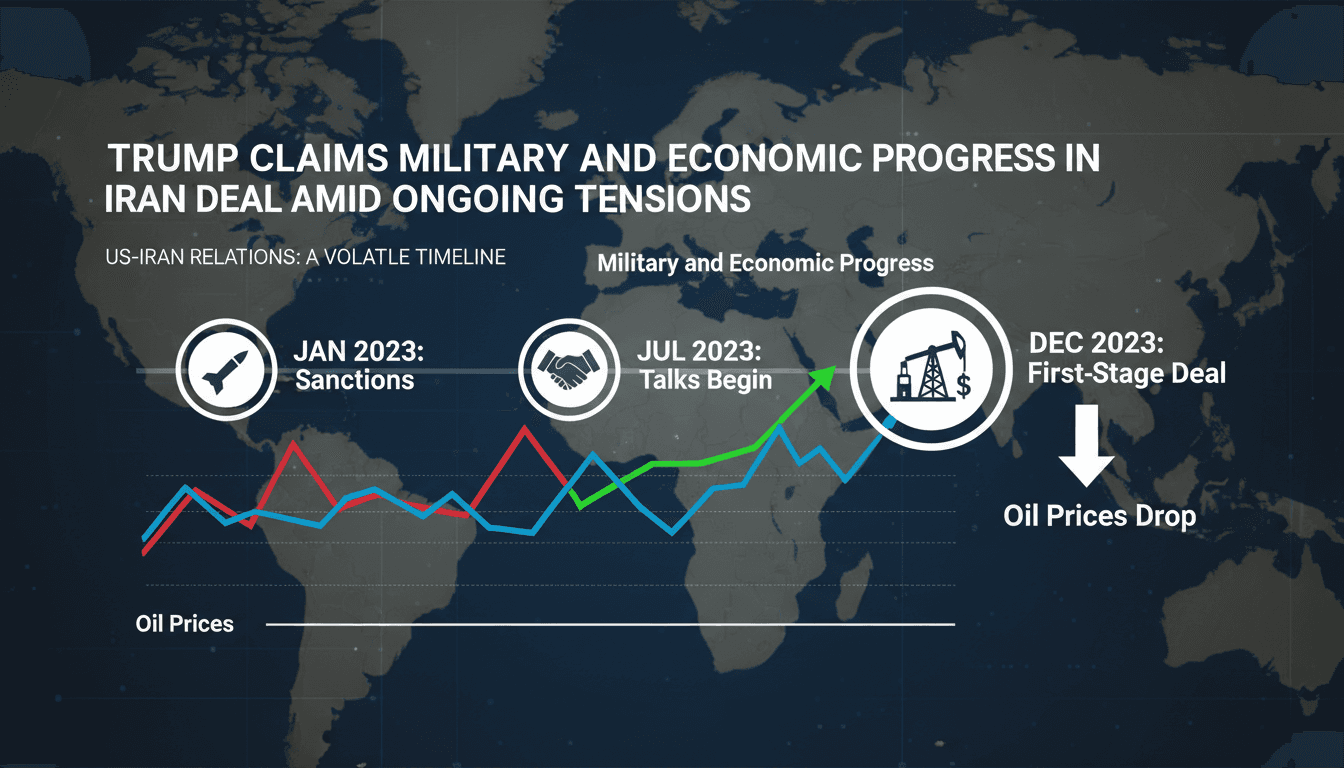
Here's what it means for you.
President Trump's announcement of a first-stage deal with Iran signals potential shifts in military and economic dynamics in the region. The assertion of falling oil prices could influence global markets, particularly for energy-dependent economies. However, the backdrop of ongoing geopolitical tensions suggests that stability remains elusive, impacting both policy and market strategies. The implications of this deal extend beyond immediate economic relief, as the fluctuating nature of US-Iran relations continues to pose risks. Stakeholders in the oil market and international diplomacy will need to remain vigilant as developments unfold.
What happened
President Trump has claimed military and economic victories following a first-stage deal with Iran, emphasizing a drop in oil prices as a result. This announcement comes amidst ongoing conflicts and geopolitical tensions that challenge global stability and economic recovery. The deal is framed as a significant step toward curtailing Iran's nuclear ambitions while asserting military success against the regime.
Despite the positive rhetoric, the reality of US-Iran relations remains complex, with recent peace talks experiencing cancellations and reinstatements. The situation is further complicated by the strategic importance of the Strait of Hormuz, through which 20% of the world's oil supply passes.
The Context
Trump's initial goals regarding Iran included dislodging the regime and limiting its nuclear program, which have been central to US foreign policy. The fluctuating nature of US-Iran peace talks reflects the ongoing tensions that characterize the region, with both sides navigating a precarious diplomatic landscape. The Strait of Hormuz remains a critical focal point, underscoring the strategic stakes involved in any agreement.
The recent military actions initiated by Trump in February 2026 set the stage for this deal, which was announced in June 2026. As the geopolitical landscape evolves, the implications for global oil supply and market stability are significant.
Takeaway
The situation in the region remains fluid, with potential for both economic recovery and renewed conflict. Observers should monitor developments in US-Iran peace talks closely, as these will likely influence oil prices and market reactions. The ongoing geopolitical tensions suggest that while progress may be made, the risk of escalation remains a constant concern.
As diplomatic efforts continue, the outlook for the region is uncertain, with the possibility of both breakthroughs and heightened tensions that could impact global markets. Stakeholders must remain alert to the evolving dynamics as they unfold.
Global political, business, and cultural coverage from WSJ international desks.
"The Wall Street Journal offers extensive international reporting with a reputation for financial insight and a center-right editorial stance."
— A47 Editor
We Parsed Trump’s Shifting Rhetoric on the Iran War
President Donald Trump has shifted his rhetoric regarding the Iran conflict, moving from a stance focused on regime change and military action to advocating for a peace deal aimed at limiting Iran's nuclear ambitions and reopening the Strait of Hormu...
UK and international business news, economics, and corporate coverage.
"The Guardian’s business section covers finance and markets with a progressive editorial tone."
— A47 Editor
Trump hails Iran deal but conflict continues to cast long shadow over global economy
President Donald Trump recently praised a new peace deal with Iran, asserting that it has positively impacted Wall Street and helped stabilize the global economy amid ongoing conflicts in the Middle East. Despite initial optimism, peace talks in Swit...