
US and Iran Reach Preliminary Agreement to End Hostilities Impacting Oil Supply Chains
Here's what it means for you.
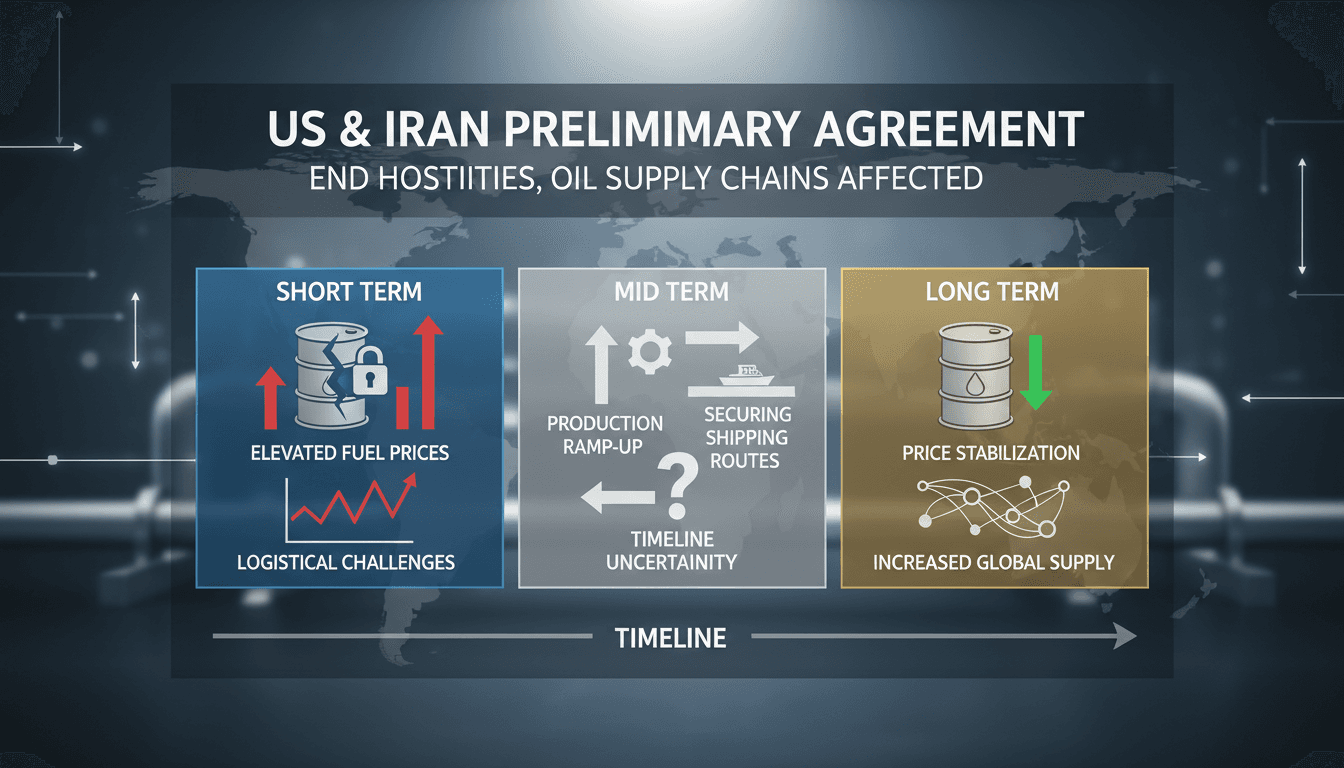
The recent preliminary agreement between the US and Iran to end hostilities is poised to have significant implications for global oil and gas supply chains. While the potential for increased production exists, experts caution that logistical challenges will likely prolong elevated fuel prices. This situation underscores the importance of monitoring production rates and shipping security in the coming months. As the agreement unfolds, stakeholders in the energy sector will need to navigate the complexities of ramping up production amidst ongoing demand pressures. The normalization of fuel prices will be a gradual process influenced by various factors, including geopolitical stability and logistical efficiency.
What happened
The US and Iran have reached a preliminary agreement aimed at ending their ongoing conflict, which has significant implications for oil and gas supply chains. This agreement was announced on June 15, 2026, and is expected to facilitate the reopening of the Strait of Hormuz for oil and gas shipments. Experts have begun assessing the potential impacts on supply normalization, indicating that it will take several months for oil and gas supplies to stabilize.
Despite the agreement's promise, experts warn that logistical bottlenecks will hinder a quick ramp-up of production. High demand and uncertainties surrounding shipping security are likely to keep fuel prices elevated both in the US and globally. The complexities of the situation suggest that a swift return to normal supply levels is not feasible.
The Context
The agreement between the US and Iran comes at a critical time for the global energy market, where supply chain disruptions have already been a concern. The Strait of Hormuz is a vital shipping route for oil and gas, and its reopening is expected to ease some logistical challenges. However, experts emphasize that the normalization of supply will not happen overnight due to existing port bottlenecks and ongoing demand pressures.
The geopolitical landscape surrounding this agreement is complex, with various stakeholders invested in the outcome. The focus will be on how quickly producers can increase output and secure shipping routes, which will ultimately determine the timeline for price stabilization. The implications of this agreement extend beyond immediate supply concerns, affecting global energy policies and market dynamics.
Takeaway
Looking ahead, it will be essential to monitor changes in oil production rates from major producers as they respond to the new agreement. Additionally, updates on shipping security in the Strait of Hormuz will be critical in assessing the overall impact on fuel prices. Experts predict that the normalization of fuel prices will be a gradual process influenced by both production capabilities and logistical factors.
As the situation develops, stakeholders in the energy sector should remain vigilant about the evolving dynamics of supply and demand. The interplay between geopolitical stability and logistical efficiency will play a crucial role in determining the future of oil and gas prices.
Arabic-language coverage of Saudi, regional, and international affairs.
"Al Bilad offers mainstream Saudi newspaper coverage across domestic and broader Arab topics."
— A47 Editor
خبراء: عودة إمدادات النفط والغاز إلى معدلاتها الطبيعية تحتاج لأشهر
Despite the recent announcement of an agreement between the United States and Iran to end hostilities and the reopening of the Strait of Hormuz for oil and gas shipments, energy experts predict it will take several months for oil companies to resume ...
Global news coverage with extensive reporting on Middle Eastern conflicts and geopolitics.
"Al Jazeera is a Qatar-based broadcaster known for wide regional coverage and alternative perspectives."
— A47 Editor
US fuel prices to take ‘months’ to normalise after US-Iran deal to end war
A recent peace deal between the United States and Iran aims to end hostilities and reopen the strategically vital Strait of Hormuz, which has led to a significant drop in oil prices. However, U.S. fuel prices are expected to remain elevated for month...
Comprehensive coverage of Middle Eastern and global issues.
"Al Jazeera is a prominent voice from the Global South, especially the Middle East, with an emphasis on underreported stories."
— A47 Editor
US fuel prices to take ‘months’ to normalise after US-Iran deal to end war
The recent peace deal between the United States and Iran aims to end ongoing military operations and reopen the strategically vital Strait of Hormuz, which has led to a significant drop in oil prices. However, experts warn that it will take months fo...
Pan-Arab news coverage spanning politics, business, sports, and regional affairs.
"Asharq Al-Awsat reflects a broad Arab editorial perspective with strong attention to regional geopolitics."
— A47 Editor
خبراء: عودة إمدادات النفط والغاز لمعدلاتها الطبيعية تحتاج أشهراً
Experts indicate that despite the recent decline in oil and gas prices, the issue of high gasoline prices will not be resolved quickly, even following the preliminary agreement between the United States and Iran to end hostilities.