
U.S. Senate Reverses Decision on Trump's Military Powers Regarding Iran
Here's what it means for you.
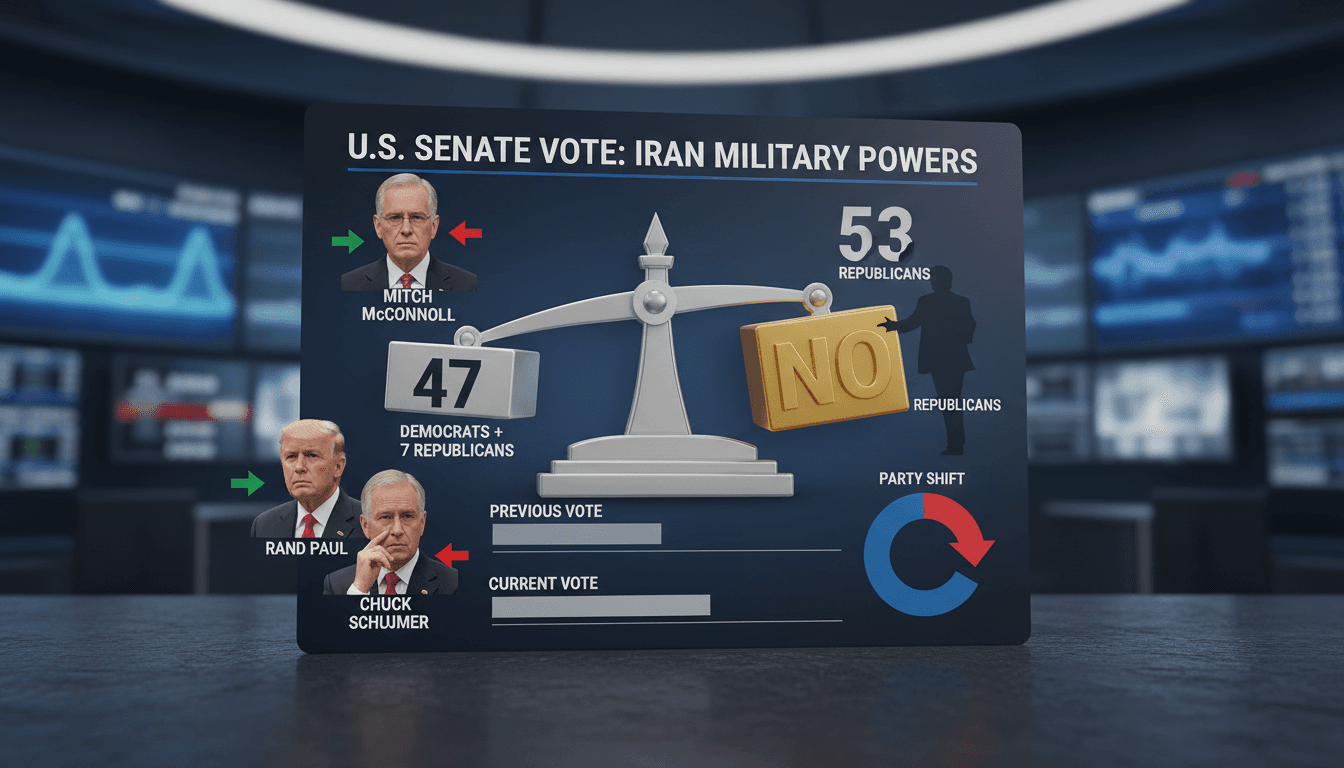
The U.S. Senate's recent vote against limiting President Trump's military powers regarding Iran signals a significant shift in congressional oversight of military engagement. This decision reflects the ongoing tension between the executive and legislative branches, particularly concerning U.S. foreign policy in the Middle East. As bipartisan concerns about military actions persist, the implications for future military strategy and congressional authority are profound. The narrow vote margin of 47-50 indicates deep divisions within the Senate, suggesting that future resolutions on military engagement may face similar challenges. The influence of President Trump on Republican senators highlights the complexities of party loyalty and individual legislative priorities.
What happened
The U.S. Senate voted against a resolution aimed at limiting President Trump's military powers concerning Iran. This decision marks a reversal from a previous stance that sought to restrict his authority, following pressure from Trump on Republican senators to change their votes. The earlier resolution had garnered bipartisan support in the House of Representatives, reflecting widespread concerns over military actions against Iran.
The final vote count was 47 in favor and 50 against the resolution, illustrating a significant division within the Senate. Notably, Senators Rand Paul and Bill Cassidy shifted their positions from supporting to opposing the resolution, further complicating the legislative landscape.
The Context
The Senate's decision comes amid ongoing tensions between the Trump administration and Congress regarding military engagement. The earlier resolution, which passed in the House, indicated a growing bipartisan concern over the potential for military conflict with Iran. Trump's criticism of Republican senators who supported limiting his powers underscores the political pressures at play.
This vote follows a previous resolution passed on June 23, which called for the withdrawal of U.S. forces from operations against Iran. The evolving dynamics between the executive branch and Congress will likely continue to shape U.S. foreign policy and military strategy in the region.
Takeaway
The ongoing debate over military authority suggests that future conflicts regarding U.S. engagement in Iran may remain contentious. As tensions with Iran persist, the relationship between the Trump administration and Congress will likely evolve, with potential implications for military strategy. Observers should watch for potential future resolutions regarding military engagement in the Middle East and the reactions from both Republican and Democratic senators following this vote.
The complexities of congressional oversight in military matters will continue to be tested as the political landscape shifts.
Arabic-language coverage of political affairs and current events.
"Okaz political coverage typically follows mainstream Saudi framing on national and regional affairs."
— A47 Editor
بعد ضغوط ترمب.. «الشيوخ» يتراجع عن تقييد صلاحياته تجاه إيران
President Donald Trump successfully influenced the U.S. Senate to retract its position on limiting his military powers regarding Iran. In the early hours of Thursday, the Senate decided not to proceed with a new war powers resolution after Trump expr...
Arabic-language coverage of international news and geopolitics.
"RT Arabic is a Russian state-funded outlet often criticized for promoting Kremlin-aligned narratives."
— A47 Editor
مجلس الشيوخ الأمريكي يصادق على قرار وقف الحرب ضد إيران
The U.S. Senate approved a resolution on Tuesday urging President Donald Trump to cease military actions against Iran. This decision reflects a significant legislative move aimed at influencing the executive branch's foreign policy regarding Iran.
Pan-Arab news coverage spanning politics, business, sports, and regional affairs.
"Asharq Al-Awsat reflects a broad Arab editorial perspective with strong attention to regional geopolitics."
— A47 Editor
الكونغرس يتبنى قراراً رمزياً يدعو إلى سحب القوات الأميركية من العمليات ضد إيران
The U.S. Senate approved a symbolic resolution on Tuesday calling for the withdrawal of American troops from military operations against Iran, marking a setback for President Donald Trump, as the resolution is not legally binding.