
U.S. Secretary of State Marco Rubio to Visit Kuwait, UAE, and Bahrain Next Week
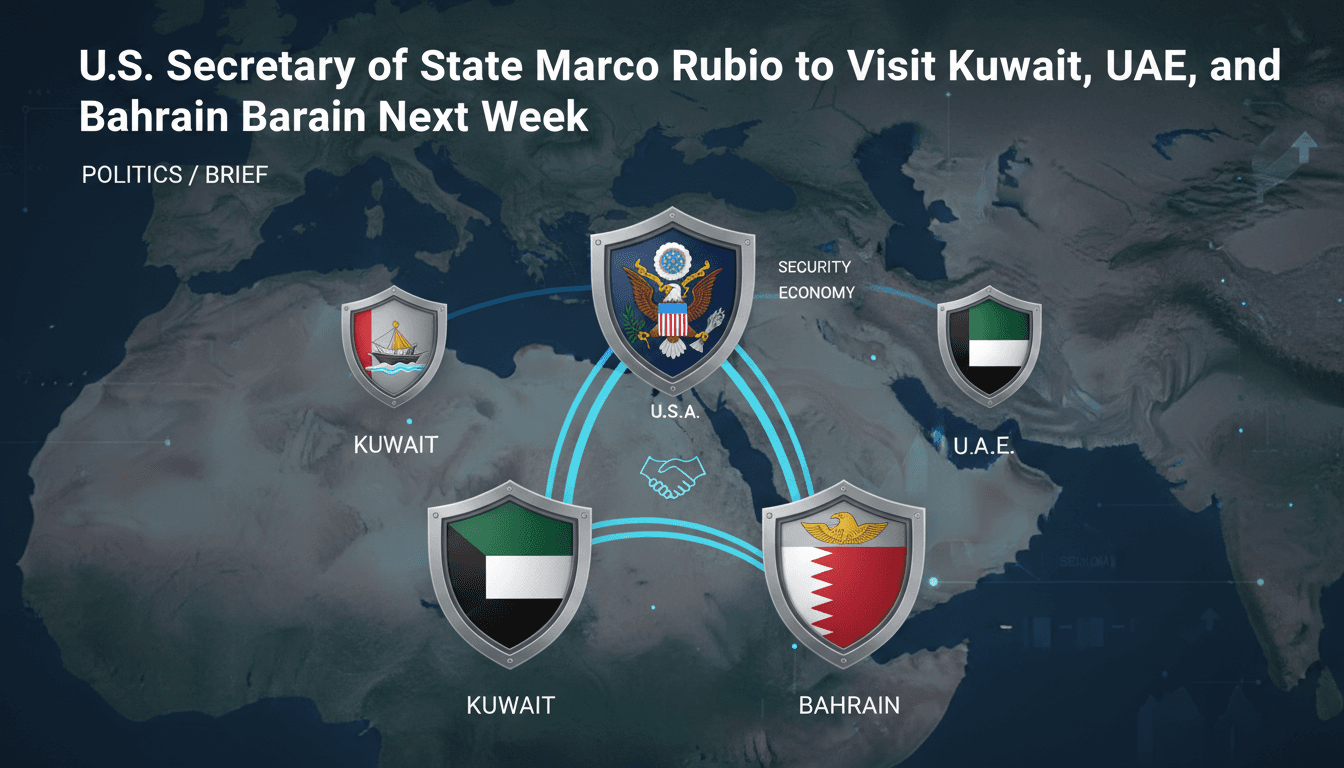
Here's what it means for you.
The upcoming visit by U.S. Secretary of State Marco Rubio to Kuwait, the UAE, and Bahrain signifies a strategic effort to reinforce U.S. diplomatic relations in the Middle East. This engagement is crucial as it comes amid rising geopolitical tensions in the region, highlighting the importance of collaboration on security and economic fronts. Stakeholders in international relations and regional stability will be closely monitoring the outcomes of this visit. As the U.S. seeks to strengthen ties with key allies, the implications for foreign policy and economic partnerships could be significant. The visit may lead to renewed commitments that enhance cooperation and address mutual concerns among these nations.
What happened
Marco Rubio is scheduled to visit Kuwait, the UAE, and Bahrain next week as part of ongoing U.S. diplomatic efforts in the Middle East. This trip follows recent discussions focused on regional security and cooperation, indicating a proactive approach to addressing current geopolitical challenges. The visit underscores the U.S. commitment to engaging with its allies in the region.
Rubio's itinerary includes three key nations, emphasizing the importance of these relationships in U.S. foreign policy. The timing of the visit is particularly relevant given the heightened tensions in the area, making it a pivotal moment for diplomatic engagement.
The Context
The visit is part of a broader strategy by the U.S. to enhance diplomatic relations with key Middle Eastern allies. By engaging with Kuwait, the UAE, and Bahrain, the U.S. aims to address shared concerns and foster collaboration on security and economic development. This diplomatic engagement is essential as the geopolitical landscape in the region continues to evolve.
Recent discussions among these nations have highlighted the need for stronger cooperation, particularly in light of ongoing tensions. Rubio's visit is expected to reinforce these dialogues and may lead to significant announcements regarding U.S. foreign policy in the region.
Takeaway
As Secretary Rubio prepares for his visit, observers will be looking for potential announcements that could shape U.S. foreign policy in the Middle East. The reactions from the governments of Kuwait, the UAE, and Bahrain following the visit will also be critical in assessing the impact of this diplomatic engagement. This trip may pave the way for deeper collaboration and influence future initiatives aimed at enhancing regional stability.
The outcomes of Rubio's discussions could signal a renewed commitment by the U.S. to engage with its Middle Eastern partners on pressing security and economic issues, setting the stage for future diplomatic efforts.
Arabic-language coverage of international news and geopolitics.
"RT Arabic is a Russian state-funded outlet often criticized for promoting Kremlin-aligned narratives."
— A47 Editor
"أكسيوس": روبيو يخطط لزيارة الشرق الأوسط الأسبوع المقبل
Axios reported that U.S. Secretary of State Marco Rubio plans to visit Kuwait, the United Arab Emirates, and Bahrain next week, according to sources. This visit is part of ongoing diplomatic engagements in the Middle East region.
Jordanian news and regional updates.
"Roya News is a Jordanian outlet focused on breaking news and local affairs."
— A47 Editor
أكسيوس: وزير الخارجية الأمريكي يعتزم زيارة الشرق الأوسط الأسبوع المقبل
U.S. Secretary of State is scheduled to visit the Middle East next week, as reported by Axios. This visit is expected to address key diplomatic issues in the region and strengthen U.S. relations with Middle Eastern countries.
Pan-Arab political news and analysis.
"Al-Quds Al-Arabi is a London-based Arabic newspaper known for political coverage."
— A47 Editor
أكسيوس: روبيو يعتزم زيارة الشرق الأوسط الأسبوع المقبل
Axios reports that Marco Rubio is planning to visit the Middle East next week, with potential stops in Kuwait, the UAE, and Bahrain. This visit is expected to focus on strengthening diplomatic relations and addressing regional issues.