
Yemen escalates military response to Iranian flights amid sovereignty concerns
Here's what it means for you.
The Yemeni government's military actions against Iranian flights signal a significant shift in regional dynamics, particularly concerning airspace sovereignty. This escalation may lead to increased military confrontations, impacting both local and international stakeholders. Businesses and policymakers should monitor the situation closely, as further developments could influence diplomatic relations and security in the region.
What happened
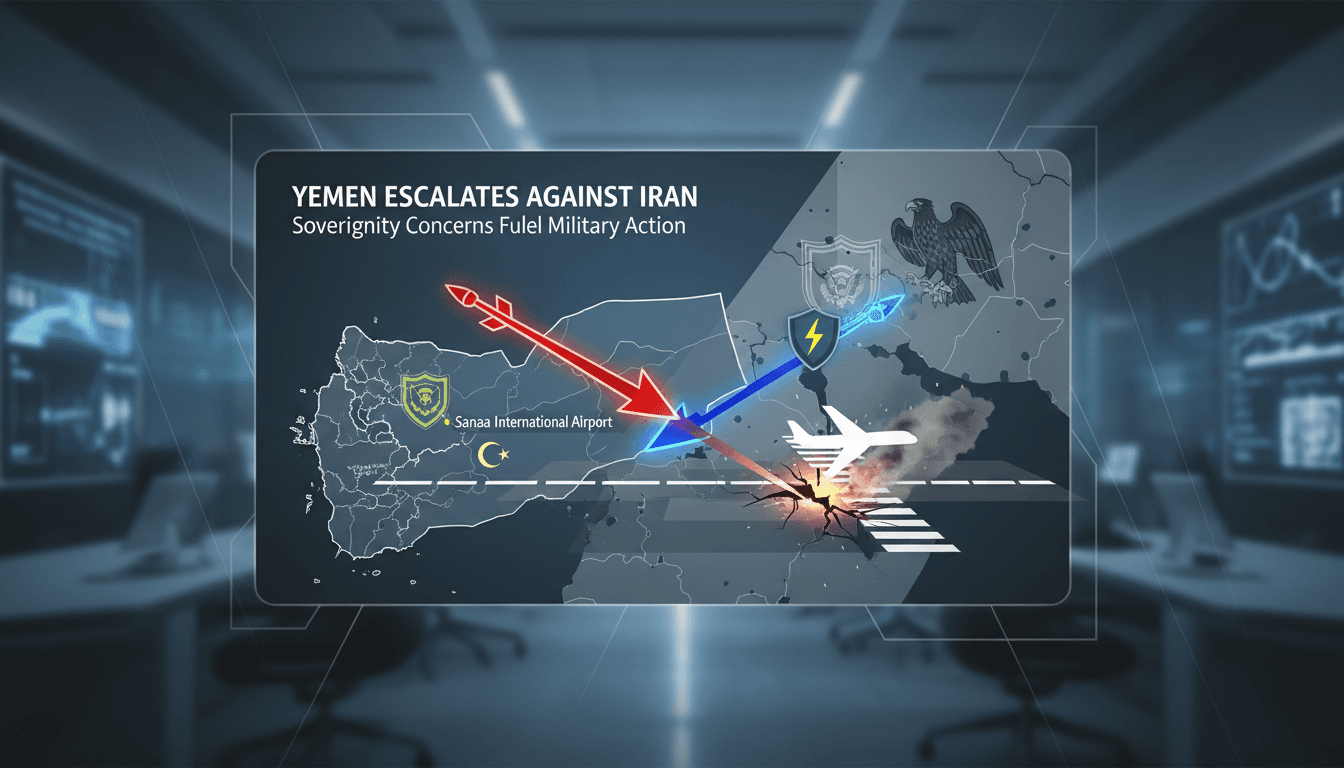
Yemeni forces have targeted the runway of Sanaa International Airport to block an Iranian flight, marking a notable escalation in tensions between Yemen and Iran. This military strike was executed to prevent unauthorized aircraft from entering Yemeni airspace, which the government views as a violation of its sovereignty. Following this action, Iranian aircraft have been redirected to Al Hudaydah Airport, indicating a direct response to the Yemeni military's directive.
The Yemeni government has publicly declared its stance against Iranian flights, asserting that they support the Houthi movement. President Rashad Al-Alimi has instructed military forces to enhance their readiness and protect national airspace from further violations. This situation underscores the ongoing conflict involving the Houthis and their Iranian backers.
The Context
The Yemeni government, supported by Saudi Arabia and the United Nations, has accused Iran of exacerbating regional tensions through its support of the Houthi movement. This backdrop of conflict has heightened the stakes for Yemen, as the government seeks to assert its sovereignty over its airspace. The military directive from President Al-Alimi reflects a broader strategy to counter perceived threats from Iranian influence in the region.
The timing of these military actions is critical, as they coincide with ongoing discussions about airspace violations and regional stability. The Yemeni government's firm stance may provoke further military responses from Iran, potentially escalating the conflict. As the situation develops, international diplomatic responses may also emerge, particularly from the UN Security Council.
Takeaway
The situation in Yemen is poised for further escalation if Iran continues to support the Houthis and Yemen maintains its military response. Observers should watch for potential international diplomatic interventions aimed at stabilizing the region. The Yemeni government's commitment to enforcing its airspace sovereignty suggests that military confrontations could become more frequent.
As tensions rise, the need for diplomatic solutions becomes increasingly urgent. The international community's response will be crucial in determining the trajectory of this conflict and its implications for regional security.
International coverage from The Guardian's global desks.
"The Guardian is known for its progressive editorial stance and in-depth analysis."
— A47 Editor
Iranian flights to Yemen are violation of sovereignty, says Yemeni official
A Yemeni official, Abdullah al-Alimi, has condemned Iranian flights to Yemen as a violation of the country's sovereignty, particularly after a plane carrying a Houthi delegation from Tehran was forced to divert due to Yemeni government airstrikes on ...
English-language reporting on Saudi politics, policy, and society.
"Saudi Gazette reflects mainstream Saudi institutional perspectives."
— A47 Editor
Yemeni president vows to block unauthorized flights after airport strike
Yemeni President Rashad Al-Alimi announced a firm stance against unauthorized flights into Yemen's airspace following a military strike on the runway of Sanaa International Airport, which is controlled by the Houthis. This action was taken to prevent...
Pan-Arab news coverage spanning politics, business, sports, and regional affairs.
"Asharq Al-Awsat reflects a broad Arab editorial perspective with strong attention to regional geopolitics."
— A47 Editor
تلويح عسكري يمني وتحرك دبلوماسي ضد إيران
The Yemeni government has escalated its stance regarding Iranian flights to Sana'a, threatening to respond to any aerial incursions. This move coincides with a diplomatic initiative led by President Rashad al-Alimi ahead of a United Nations Security ...