
US escalates military actions against Iran following maritime aggression
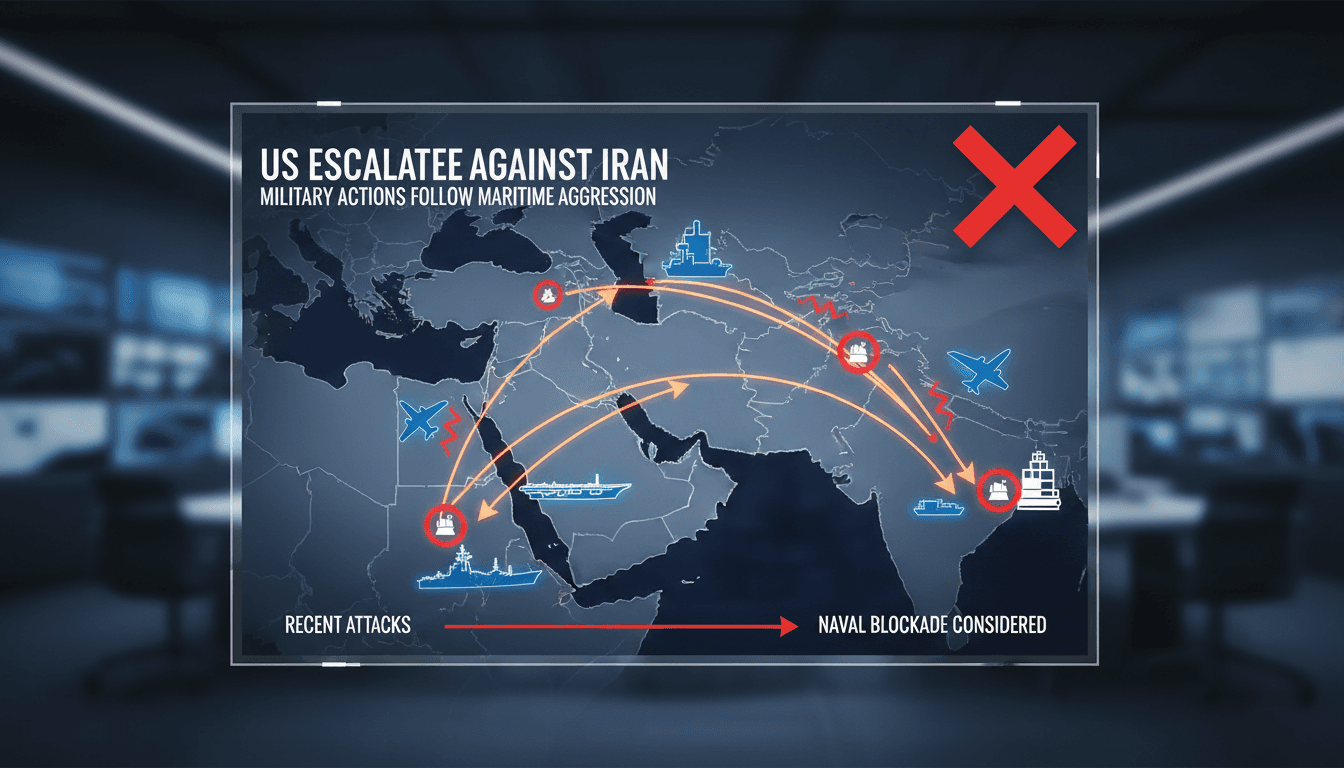
Here's what it means for you.
The recent escalation in U.S. military actions against Iran signals a significant shift in geopolitical dynamics, particularly in the Strait of Hormuz, a critical maritime route for global oil shipments. This development may impact international markets, especially oil prices, as tensions rise and military presence increases in the region. Stakeholders should prepare for potential disruptions in trade and shipping routes, which could have broader economic implications. As the U.S. considers a naval blockade, businesses operating in or reliant on Middle Eastern trade routes may need to reassess their risk exposure and contingency plans. The situation underscores the importance of monitoring U.S.-Iran relations closely, as further military actions could provoke retaliatory measures from Iran.
What happened
The United States has launched airstrikes targeting Iranian military assets in direct response to a series of attacks on commercial vessels in the Strait of Hormuz. These airstrikes were executed following President Trump's indication of a potential naval blockade of Iranian ports, marking a significant escalation in military engagement. U.S. Central Command reported that over 80 sites were targeted, reflecting a robust military response to Iranian aggression.
The airstrikes were described as a necessary measure against what the U.S. termed "unwarranted aggression" by Iranian forces. This military action comes amid heightened tensions and a buildup of U.S. naval forces in the region, including the deployment of 20 warships and two aircraft carriers.
The Context
Tensions between the United States and Iran have been escalating for some time, particularly due to aggressive actions by Iranian forces against commercial shipping. The Strait of Hormuz is a vital passage for global oil trade, making any military conflict in this area particularly concerning for international markets. President Trump's administration has adopted a hardline stance, mobilizing military assets to deter further Iranian provocations.
The timing of these airstrikes coincides with a broader strategy to assert U.S. dominance in the region and protect vital shipping lanes. As both nations navigate this precarious situation, the potential for miscalculation and further conflict remains high, with significant implications for regional stability.
Takeaway
Looking ahead, the potential for further military actions by the U.S. in the region remains significant, as both sides may respond to provocations. The U.S. military presence is likely to continue, with ongoing operations aimed at deterring Iranian aggression. Observers should watch for Iran's responses to the airstrikes and the U.S. military buildup, as these could shape the next phase of this conflict.
The situation is fluid, and developments in U.S.-Iran relations will be critical to monitor in the coming days. Stakeholders should remain vigilant as the geopolitical landscape evolves, with the possibility of increased military engagement looming.
Breaking news, politics, business, and entertainment from the U.S. and around the world.
"The New York Post is a tabloid-format newspaper known for its sensationalist headlines and conservative-leaning editorial tone."
— A47 Editor
CENTCOM sends 20 US warships — and two aircraft carriers —toward Iran after Trump threatens to reinstate naval blockade
The U.S. Central Command (CENTCOM) has deployed an armada of 20 warships, including two aircraft carriers, near Iran following President Trump's indication of a potential reinstatement of a naval blockade on Iranian ports. This military maneuver come...
Capitol Hill news, legislation, and policy insight.
"The Hill specializes in U.S. politics and policy, with a focus on Capitol Hill developments and a reputation for insider reporting."
— A47 Editor
The Memo: Trump’s tough talk on Iran raises big question — will the U.S. return to war?
The United States has launched a new wave of airstrikes against Iran, marking the second consecutive night of military action following President Trump's declaration that the ceasefire with Iran is effectively over. This escalation comes in response ...
Capitol Hill news, legislation, and policy insight.
"The Hill specializes in U.S. politics and policy, with a focus on Capitol Hill developments and a reputation for insider reporting."
— A47 Editor
US strikes came after 'unwarranted aggression by Iranian forces' CENTCOM says
The U.S. military has conducted airstrikes against Iranian targets in the Strait of Hormuz, following what the Trump administration described as 'unwarranted aggression by Iranian forces' after attacks on three commercial oil vessels. The strikes tar...