
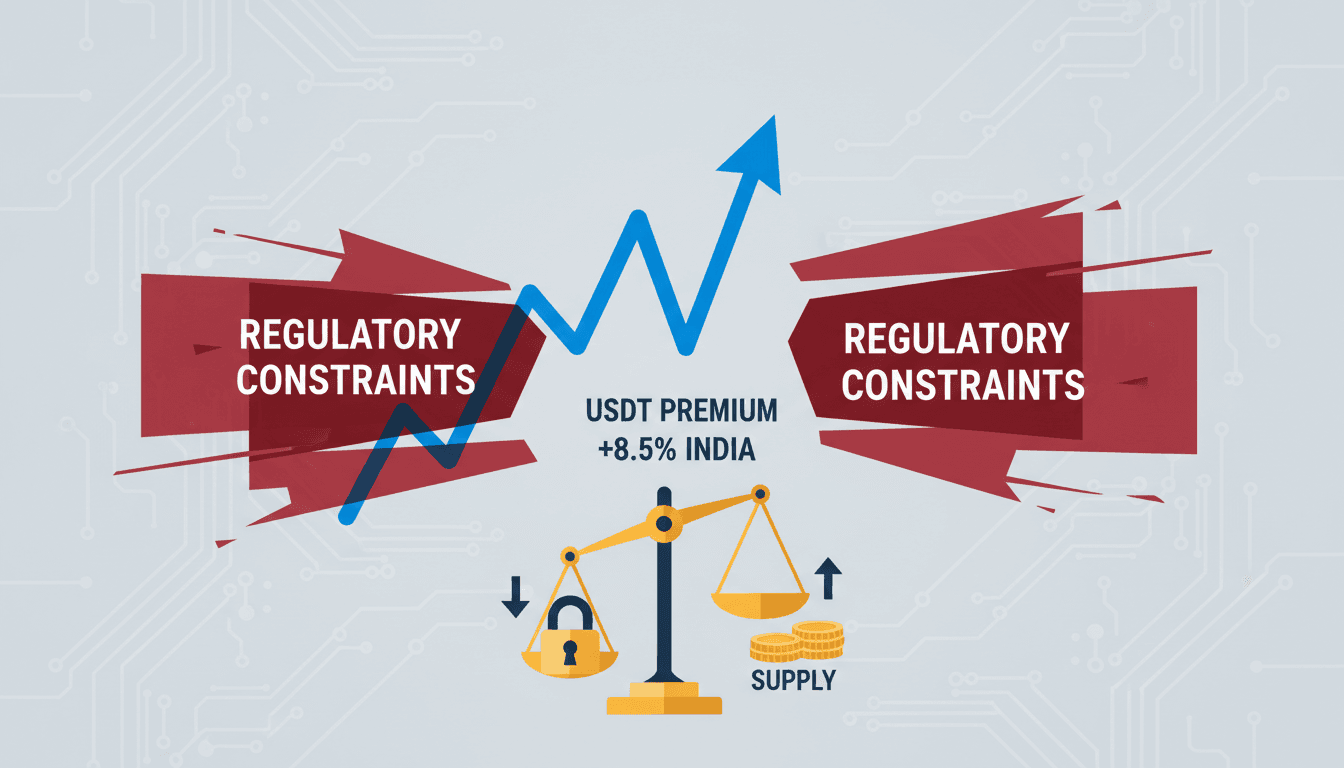
Tether's USDT premium in India exceeds 8.5% amid regulatory supply constraints
Here's what it means for you.
The surge in Tether's USDT premium in India signals a significant shift in the local cryptocurrency landscape, driven by regulatory pressures and supply constraints. Investors may need to reassess their strategies as the pricing of stablecoins becomes increasingly volatile. This situation could lead to heightened caution among market participants, impacting overall investor confidence. As the regulatory environment evolves, the implications for crypto remittance firms and their operations could be profound. Stakeholders must remain vigilant to navigate the complexities of this changing market.
What happened
Tether's USDT premium in India has skyrocketed to over 8.5%, more than double its typical level. This dramatic increase is attributed to a supply squeeze and intensified regulatory actions affecting crypto remittance firms. Major exchanges, including CoinDCX and CoinSwitch, have confirmed that local liquidity issues are driving this premium.
The price of USDT has surged to 102.88 INR amid these supply constraints, reflecting a significant demand-supply imbalance in the Indian cryptocurrency market. As regulatory scrutiny continues, the pricing dynamics of stablecoins like USDT may experience further fluctuations.
The Context
The current situation in India's cryptocurrency market is shaped by recent regulatory actions that have disrupted the domestic supply of USDT. These measures have created a challenging environment for crypto remittance firms, which are essential for facilitating transactions in the local market. The premium on USDT highlights the urgent need for clarity and stability in regulatory frameworks.
As the demand for stablecoins remains high, the imbalance between supply and demand has led to notable price increases. This scenario raises concerns about the overall stability of the cryptocurrency market in India, as investors grapple with the implications of ongoing regulatory enforcement.
Takeaway
Looking ahead, it is crucial to monitor further developments in India's cryptocurrency sector, particularly regarding regulatory actions. The ongoing scrutiny may continue to impact the supply and pricing of stablecoins, including USDT, which could have broader implications for market dynamics.
Investors should stay informed about changes in USDT supply dynamics and their potential effects on local premiums. The evolving landscape may require adaptive strategies to navigate the complexities of the market.
Covers blockchain, cryptocurrency news, project analysis, and market insights.
"CoinDesk is a well-established cryptocurrency and blockchain news provider, offering comprehensive insights, market data, and industry research."
— A47 Editor
Tether trades at 7% to 10% premium in India. Exchanges say it's just supply and demand
Tether's USDT stablecoin is currently trading at a premium of 7% to 10% in India, attributed to a demand-supply imbalance and limited local liquidity, as noted by executives from CoinDCX and CoinSwitch.
Covers Bitcoin plus altcoin news, market updates, and educational resources.
"Bitcoin.com provides news, market data, and guides focused on Bitcoin and the wider crypto industry."
— A47 Editor
USDT Premium in India Jumps Past 8.5% as Stablecoin Supply Tightens
The premium for Tether's USDT in India has surged past 8.5%, more than double its usual level, due to a tightening supply of the stablecoin following regulatory actions that have impacted crypto remittance firms. This increase reflects heightened dem...
Real-time updates, analysis, and reports on the blockchain and cryptocurrency sectors.
"Crypto News delivers real-time updates, analysis, and reports on the blockchain and cryptocurrency sectors."
— A47 Editor
India’s USDT premium doubles as regulatory action tightens supply
India's USDT premium has surged to over 8.5%, more than double its typical level, following regulatory actions that have disrupted the supply of the stablecoin. This increase reflects heightened demand amid tighter restrictions on crypto remittance f...