
U.S. Treasury Secretary outlines stringent conditions for Iran deal
Here's what it means for you.
The U.S. administration's firm stance on Iran negotiations signals a cautious approach that could influence global oil markets and geopolitical relations. With specific conditions set for any potential agreement, stakeholders must prepare for prolonged discussions that may affect economic strategies. The emphasis on resilience in the U.S. economy highlights the administration's intent to navigate potential challenges effectively.
What happened
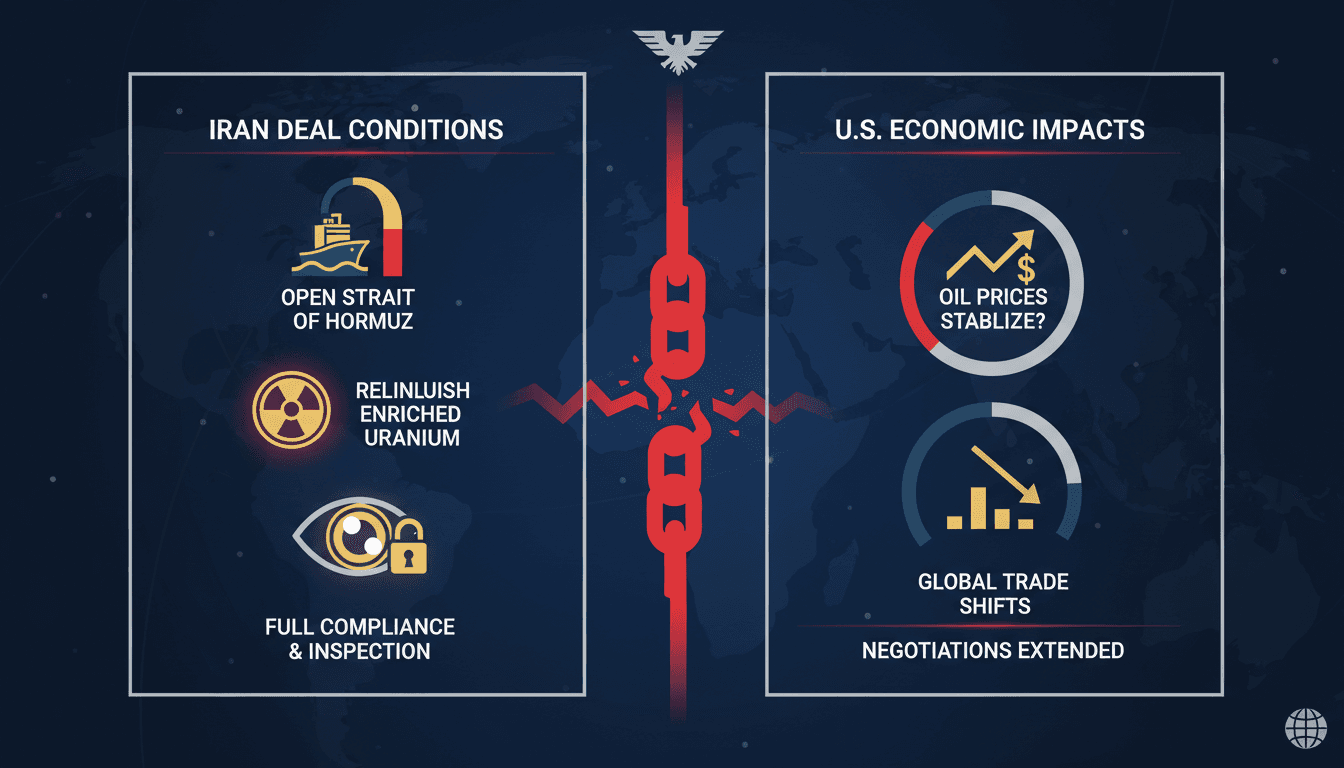
U.S. Treasury Secretary Scott Bessent addressed the media regarding the ongoing U.S.-Iran negotiations during a White House press briefing. He emphasized that President Trump will not accept a bad agreement, outlining specific conditions that Iran must meet for any deal to be considered. These conditions include opening the Strait of Hormuz and relinquishing enriched uranium, which are critical to U.S. national security interests.
Bessent's remarks reflect a broader strategy aimed at maintaining economic stability while navigating complex international negotiations. His comments come amid reports of a pending 60-day truce extension that requires President Trump's approval, further underscoring the administration's cautious approach.
The Context
The discussions surrounding the U.S.-Iran deal are set against a backdrop of fluctuating oil prices, which have significant implications for the U.S. economy. Bessent highlighted the importance of resilience in the face of these economic challenges, indicating that the administration is prepared to take a firm stance on Iran's nuclear capabilities. The focus on specific conditions for negotiations illustrates the administration's commitment to ensuring that any agreement aligns with U.S. strategic interests.
As the negotiations unfold, the implications for both domestic and international stakeholders are considerable. The outcome of these discussions could reshape geopolitical relations and influence economic policies moving forward.
Takeaway
As the U.S. administration continues to negotiate with Iran, the firm stance articulated by Bessent may lead to extended discussions. Stakeholders should monitor developments closely, particularly any official announcements from President Trump regarding the proposed truce extension. Additionally, economic indicators related to oil prices will be crucial in assessing the impact on U.S. economic resilience.
The administration's approach suggests a careful balancing act between diplomatic negotiations and maintaining national security interests, which will be pivotal in shaping future U.S.-Iran relations.
Stock market news, investing ideas, and trading analysis.
"TheStreet provides market news and retail-investor-focused analysis."
— A47 Editor
Scott Bessent sends stark message on oil price, economy
U.S. Treasury Secretary Scott Bessent emphasized the importance of 'resilience' during a recent Cabinet meeting, as captured by a Reuters photographer. This single word, underlined in his notes, reflects the administration's focus on maintaining econ...
Capitol Hill news, legislation, and policy insight.
"The Hill specializes in U.S. politics and policy, with a focus on Capitol Hill developments and a reputation for insider reporting."
— A47 Editor
Bessent sidesteps questions on tentative US, Iran deal
Treasury Secretary Scott Bessent addressed reporters during a White House press briefing, where he avoided direct questions regarding a tentative memorandum of understanding between U.S. and Iranian negotiators, which has yet to receive formal approv...
Global markets, investing, and macroeconomics from a premier financial newsroom.
"Bloomberg is respected for in-depth financial reporting and data-driven analysis."
— A47 Editor
Bessent Says Trump Won’t Accept a Bad Deal on Iran: Full Briefing
Treasury Secretary Scott Bessent stated that President Trump will not accept a bad deal regarding Iran, emphasizing the need for Iran to open the Strait of Hormuz, relinquish enriched uranium, and abandon nuclear weapon pursuits before any agreement ...