
US Supreme Court Rules President Can Fire Independent Agency Leaders
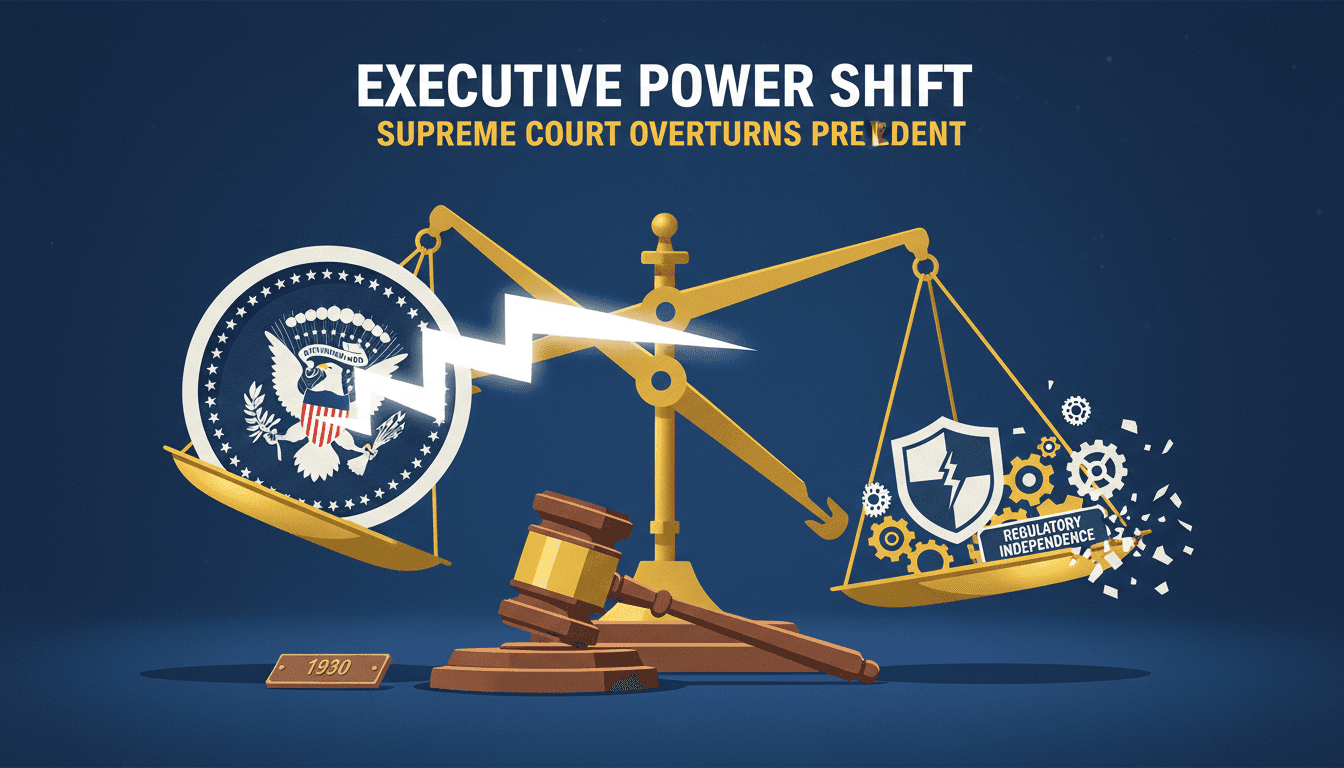
Here's what it means for you.
The recent ruling by the US Supreme Court significantly alters the landscape of executive power, allowing the President to dismiss leaders of independent agencies. This decision could lead to increased political influence over regulatory bodies, impacting their operational independence. Stakeholders in various sectors should prepare for potential shifts in regulatory practices as administrations change. The implications of this ruling extend beyond the immediate case, potentially reshaping the relationship between the presidency and independent agencies for years to come. As the balance of power shifts, the operational dynamics of these agencies may become more politically motivated.
What happened
The US Supreme Court has ruled that President Donald Trump possesses the authority to fire leaders of independent agencies, effectively overturning a 90-year precedent that safeguarded these officials from political dismissal. This landmark decision, made in the case of Trump v. Slaughter, was passed with a 6-3 vote, indicating a clear majority in favor of expanding executive power. The ruling directly follows Trump's firing of FTC member Rebecca Slaughter, which prompted legal challenges.
This decision marks a significant shift in the balance of power between the executive branch and independent regulatory bodies. The ruling allows for greater presidential control over agencies that were previously insulated from political influence, raising questions about the future independence of these entities.
The Context
The Supreme Court's ruling comes in the context of a broader debate about the role and independence of regulatory agencies in the United States. Historically, these agencies have operated with a degree of autonomy to ensure that regulatory decisions are made based on expertise rather than political pressure. However, the recent decision signals a shift towards increased presidential oversight.
Dissenting opinions were voiced by Justices Sotomayor, Jackson, and Kagan, highlighting the ideological divide within the court regarding the limits of executive power. The ruling not only affects the Federal Trade Commission but also sets a precedent that could influence other independent agencies in the future.
Takeaway
The implications of this ruling could reshape the operational dynamics of independent agencies, potentially leading to more politically motivated decisions in regulatory practices. Future administrations may leverage this newfound authority to influence agency leadership and direction, raising concerns about the integrity of regulatory processes.
As the landscape evolves, it will be crucial to monitor potential challenges to the ruling from independent agencies or affected officials. Additionally, upcoming Supreme Court cases may further define the limits of executive power, making this a pivotal moment in the ongoing discussion about the relationship between the presidency and regulatory bodies.
Editor-curated FT homepage stories spanning markets, business, world, and opinion.
"The Financial Times is a globally respected business publication with a centrist/center-left tone and strong markets focus."
— A47 Editor
Supreme Court blocks Trump from sacking Fed governor Cook
The U.S. Supreme Court has ruled that former President Donald Trump cannot fire Federal Reserve Governor Lisa Cook, affirming her position amid ongoing legal disputes. This decision emphasizes the necessity for evidence of misconduct before any dismi...
Consumer tech and culture with frequent AI coverage.
"Influential tech outlet covering AI products and policy."
— A47 Editor
Supreme Court allows firing of FTC commissioners, ends agency independence
The Supreme Court ruled in a 6-3 decision that President Donald Trump has the authority to fire the two Democratic commissioners of the Federal Trade Commission (FTC), effectively ending the agency's independence. This ruling marks a significant depa...
Tech news, reviews, and analysis of consumer electronics, science, art, and culture.
"The Verge is a technology-focused media outlet known for in-depth reporting, product reviews, and coverage of the intersection between technology and culture."
— A47 Editor
Supreme Court allows firing of FTC commissioners, ends agency independence
The Supreme Court ruled in a 6-3 decision that President Donald Trump has the authority to fire the two Democratic commissioners of the Federal Trade Commission (FTC), effectively ending the agency's independence. This ruling marks a significant depa...
News from the United States including domestic politics, society, and culture.
"The Guardian is known for its progressive editorial stance and in-depth analysis, often advocating for social justice, environmental issues, and liberal values."
— A47 Editor
US supreme court rules Trump can fire leaders of independent agencies
The U.S. Supreme Court has ruled that former President Donald Trump has the authority to fire leaders of independent agencies, a decision that overturns nearly a century of precedent limiting executive power. This ruling stems from the case involving...
International coverage from The Guardian's global desks.
"The Guardian is known for its progressive editorial stance and in-depth analysis."
— A47 Editor
US supreme court rules Trump can fire leaders of independent agencies
The US Supreme Court ruled that former President Donald Trump has the authority to fire leaders of independent agencies, overturning nearly a century of precedent that limited executive power. This decision arose from the case concerning the March 20...
Business, investment, entrepreneurship, leadership, and innovation.
"Forbes is known for its coverage of business leaders, market trends, and entrepreneurial ventures with a pro-business editorial stance."
— A47 Editor
Trump Gets More Power As Supreme Court Lets Him Fire Independent Officials
The U.S. Supreme Court has issued a ruling that allows President Trump to dismiss independent officials, overturning a 90-year-old precedent that previously protected these officials from political interference. This decision marks a significant shif...