
Hyperliquid's SpaceX perpetual contract suffers 45% flash crash liquidating $1.5 million in positions
Here's what it means for you.
The recent flash crash of Hyperliquid's synthetic SpaceX perpetual contract serves as a stark reminder of the volatility inherent in trading synthetic assets. With over $1.5 million in leveraged positions liquidated, retail traders faced significant losses in a matter of minutes. This incident may prompt increased scrutiny from regulators as they assess the risks associated with decentralized exchanges. As the market grapples with this event, traders are advised to remain vigilant and reassess their strategies in light of the risks involved. The resilience of other tokens, such as HYPE, suggests a complex trading environment that requires careful navigation.
What happened
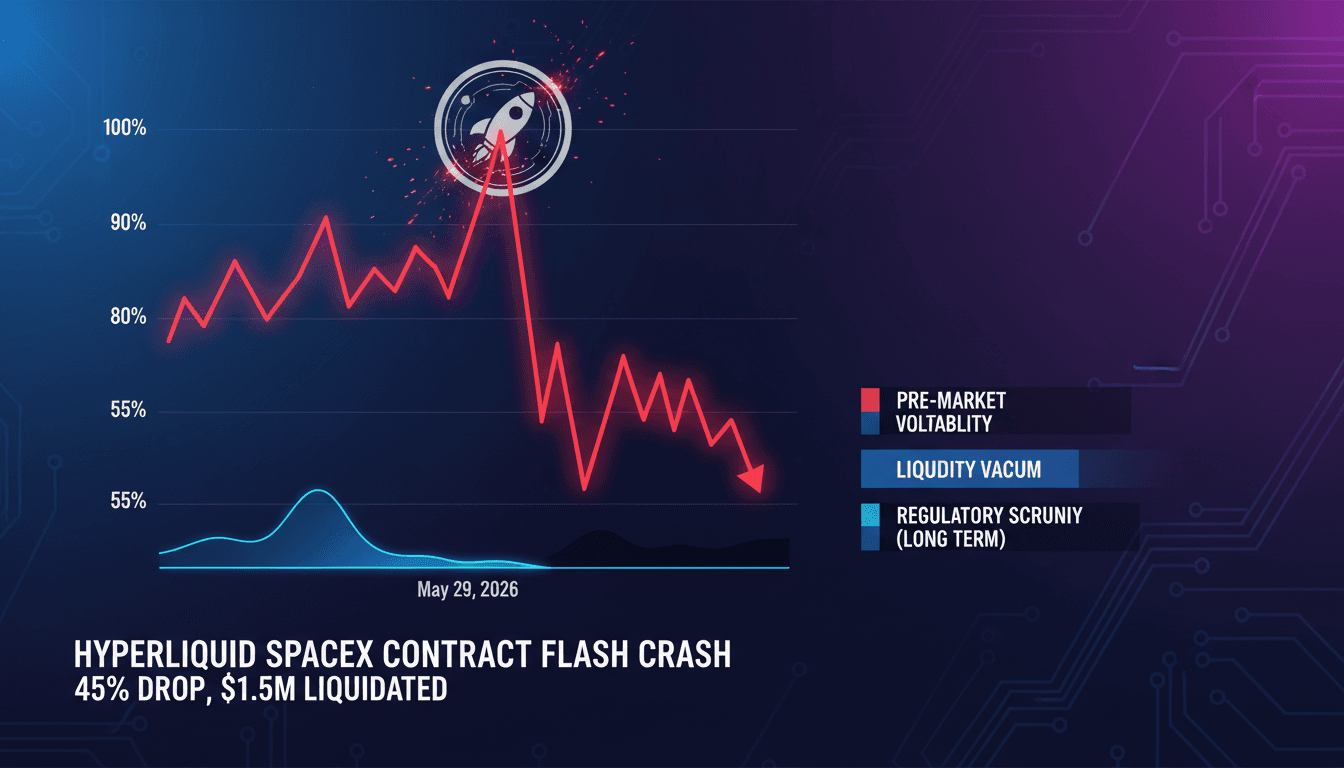
On May 29, 2026, Hyperliquid's synthetic SpaceX perpetual contract experienced a dramatic 45% flash crash, resulting in the liquidation of over $1.5 million in leveraged positions. The crash was triggered by a severe liquidity vacuum in the pre-market contract, which left many retail traders vulnerable. In just 30 minutes, a significant number of positions were liquidated, highlighting the rapid pace at which market conditions can change.
Despite the turmoil in the perpetual contract, the HYPE token surprisingly rose by 8%, indicating mixed reactions within the market. This juxtaposition of events underscores the unpredictable nature of trading in decentralized finance.
The Context
The SpaceX perpetual contract opened at $2,277 before plummeting to a low of $1,254, illustrating the extreme volatility that can occur in synthetic asset trading. The event occurred shortly after the initial trading began on May 28, 2026, emphasizing the risks associated with new financial products. The lack of sufficient liquidity to absorb the market shock played a crucial role in the severity of the crash.
As retail traders were heavily impacted, the incident raises questions about the protections available to them in decentralized exchanges. The potential for regulatory responses may increase as authorities seek to address the challenges posed by synthetic assets and their trading environments.
Takeaway
In the aftermath of the flash crash, traders should remain cautious about the inherent risks associated with synthetic asset trading, particularly in volatile market conditions. Monitoring liquidity levels in decentralized exchanges will be essential for gauging market stability moving forward.
Additionally, the incident may prompt exchanges to enhance their liquidity measures to prevent similar occurrences in the future. As the market evolves, stakeholders will need to adapt their strategies to navigate the complexities introduced by such events.
Covers Bitcoin plus altcoin news, market updates, and educational resources.
"Bitcoin.com provides news, market data, and guides focused on Bitcoin and the wider crypto industry."
— A47 Editor
$1.5 Million Wiped Out as Hyperliquid’s SpaceX Pre-Market Perpetual Flash Crashes 45%
Hyperliquid's pre-market perpetual contracts linked to SpaceX experienced a dramatic 45% flash crash, resulting in the liquidation of $1.5 million from retail traders within just 30 minutes. This sudden selloff was attributed to insufficient market l...
Real-time updates, analysis, and reports on the blockchain and cryptocurrency sectors.
"Crypto News delivers real-time updates, analysis, and reports on the blockchain and cryptocurrency sectors."
— A47 Editor
SpaceX pre-IPO bet crashes 45% while HYPE holds near highs
Hyperliquid's pre-IPO perpetual contracts linked to SpaceX experienced a significant 45% crash, resulting in the liquidation of $1.5 million from retail traders within a short timeframe. This sharp decline has raised concerns about market stability a...
Covers blockchain, cryptocurrency news, project analysis, and market insights.
"CoinDesk is a well-established cryptocurrency and blockchain news provider, offering comprehensive insights, market data, and industry research."
— A47 Editor
Hyperliquid's pre-IPO SpaceX contracts suffers 45% flash crash, liquidating $1.5 million
Hyperliquid's pre-IPO contracts linked to SpaceX experienced a dramatic 45% flash crash, resulting in the liquidation of $1.5 million from retail traders within a mere 30 minutes. This selloff was attributed to a lack of sufficient cash in the market...