
Netanyahu's Claims of Christian Villages Seeking Annexation in Lebanon Rejected by Local Leaders
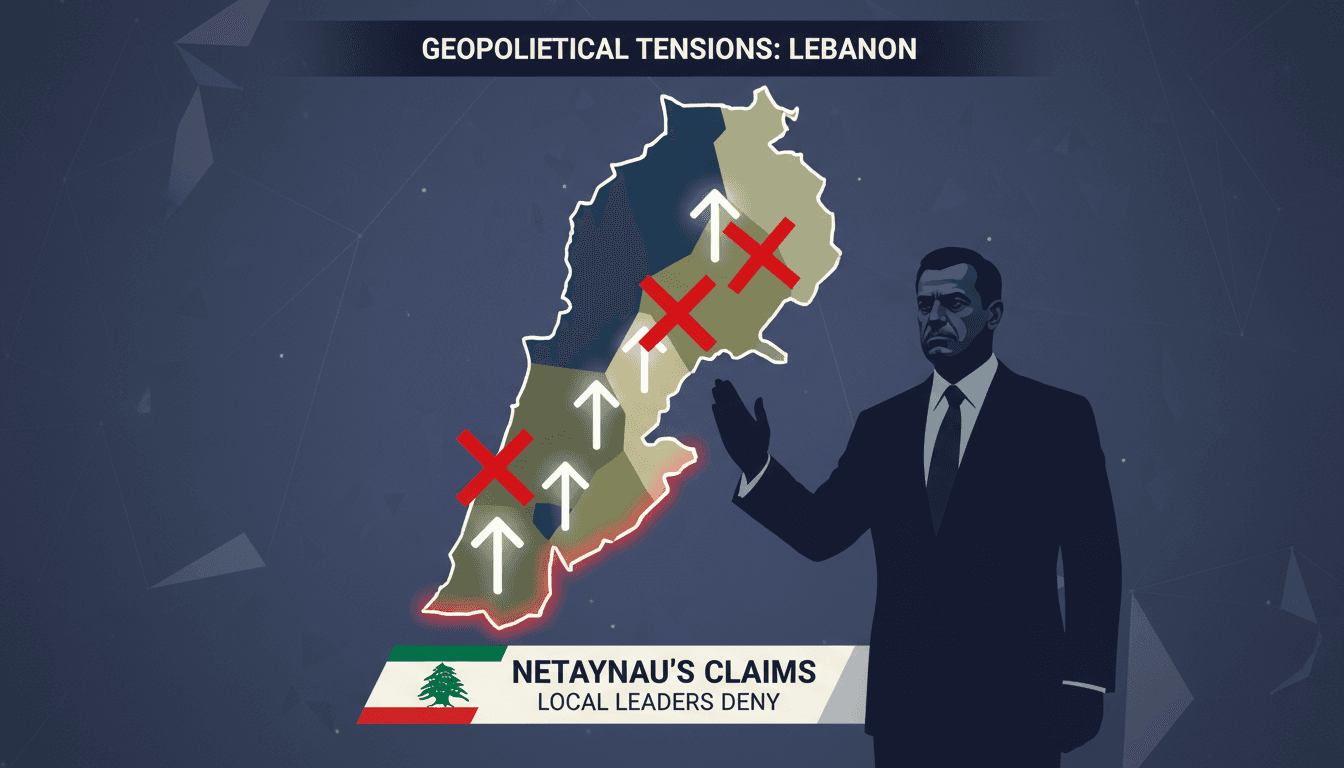
Here's what it means for you.
Israeli Prime Minister Benjamin Netanyahu's recent claims regarding Christian villages in southern Lebanon seeking annexation have significant implications for regional stability and identity. The firm rejection by local leaders underscores a commitment to national unity amidst external pressures. This incident highlights the delicate balance of allegiance in a region already grappling with humanitarian crises and military actions. As tensions rise, the response from local communities may influence future interactions between Lebanon and Israel, particularly in the context of ongoing conflicts. Observers should monitor how these developments affect local governance and community resilience.
What happened
Israeli Prime Minister Benjamin Netanyahu claimed that certain Christian villages in southern Lebanon requested annexation by Israel for protection against Hezbollah. This assertion was met with strong denial from local Christian leaders, who reaffirmed their loyalty to Lebanon. The public refutation of Netanyahu's claims occurred shortly after his statements, emphasizing the commitment of these communities to their national identity.
The situation is further complicated by ongoing Israeli military actions in the region, which have resulted in significant casualties and displacement. Reports indicate that there have been 4,304 casualties in Lebanon since the onset of the current conflict, highlighting the severe humanitarian impact of the situation.
The Context
Lebanese Christian communities have a long history of coexistence with various factions, including Hezbollah, which adds layers of complexity to the current narrative. The ongoing conflict has exacerbated humanitarian challenges, making the assertion of annexation particularly sensitive. Netanyahu's comments are perceived as an attempt to exploit internal divisions within Lebanon, potentially undermining the fragile unity among its diverse communities.
As the conflict continues, the resilience of local communities in maintaining their identity and unity will be crucial. The rejection of external narratives that threaten internal cohesion reflects a broader struggle for national identity in a region marked by conflict.
Takeaway
The firm rejection of Netanyahu's claims by Lebanese Christian leaders indicates a strong commitment to national identity, despite external pressures. Moving forward, it will be important to monitor further statements from Lebanese leaders regarding national unity and how these may shape the political landscape. Additionally, developments in Israeli military operations in southern Lebanon will likely influence the dynamics of local communities and their responses to external narratives.
As the humanitarian crisis deepens, the ability of local communities to navigate these challenges while maintaining their identity will be critical in the coming months.
Global news coverage with extensive reporting on Middle Eastern conflicts and geopolitics.
"Al Jazeera is a Qatar-based broadcaster known for wide regional coverage and alternative perspectives."
— A47 Editor
Netanyahu’s Christian comments ‘aimed at sowing strife’: Lebanese analysts
Israeli Prime Minister Benjamin Netanyahu's recent comments regarding Lebanese Christians have sparked significant backlash in Lebanon, with analysts labeling him a liar. Netanyahu claimed that some Christian villages in southern Lebanon sought annex...
Comprehensive coverage of Middle Eastern and global issues.
"Al Jazeera is a prominent voice from the Global South, especially the Middle East, with an emphasis on underreported stories."
— A47 Editor
Netanyahu’s Christian comments ‘aimed at sowing strife’: Lebanese analysts
Israeli Prime Minister Benjamin Netanyahu's recent comments regarding Lebanese Christians have sparked significant backlash in Lebanon, with analysts labeling him a liar. Netanyahu claimed that some Christian villages in southern Lebanon sought annex...
English-language reporting on Saudi politics, policy, and society.
"Saudi Gazette reflects mainstream Saudi institutional perspectives."
— A47 Editor
Lebanon's Christian leaders dismiss Netanyahu's Israel annexation claim as fabricated
Christian leaders from villages along Lebanon's southern border have categorically rejected Israeli Prime Minister Benjamin Netanyahu's assertion that they sought annexation by Israel, labeling his claims as fabricated and disconnected from reality. ...
Pan-Arab news coverage spanning politics, business, sports, and regional affairs.
"Asharq Al-Awsat reflects a broad Arab editorial perspective with strong attention to regional geopolitics."
— A47 Editor
لماذا اخترع نتنياهو «طلباً مسيحياً» لضم قرى لبنانية؟
Israeli Prime Minister Benjamin Netanyahu has reiterated the claim that 'Christians want Israel,' suggesting a fabricated request for the annexation of Lebanese villages. This statement reflects ongoing tensions in the region and highlights Netanyahu...
Pan-Arab news coverage spanning politics, business, sports, and regional affairs.
"Asharq Al-Awsat reflects a broad Arab editorial perspective with strong attention to regional geopolitics."
— A47 Editor
بلدات جنوب لبنان المسيحية تُجهض لعب نتنياهو على «وتر الانقسامات»
Recent developments in southern Lebanon reveal that Christian towns are actively countering Israeli Prime Minister Netanyahu's attempts to exploit internal divisions within the country. Historically, Israel has leveraged these divisions as a structur...
English-language reporting on Saudi politics, policy, and society.
"Saudi Gazette reflects mainstream Saudi institutional perspectives."
— A47 Editor
Lebanese Christian communities refute Netanyahu's claim, deny seeking Israeli annexation
Israeli Prime Minister Benjamin Netanyahu claimed that certain Christian villages in southern Lebanon requested to be annexed by Israel, a statement that was promptly denied by local leaders, including Rmeish's mayor, Hanna al-Amil, who emphasized th...