
AI Enables Reading of Ancient Texts from Herculaneum Scrolls
Here's what it means for you.
The successful application of artificial intelligence in reading ancient texts marks a significant advancement in archaeology and historical research. This breakthrough not only enhances our understanding of ancient philosophies but also opens new avenues for discovering lost literature. As AI technology continues to evolve, it may lead to further revelations about human thought and culture from antiquity.
What happened
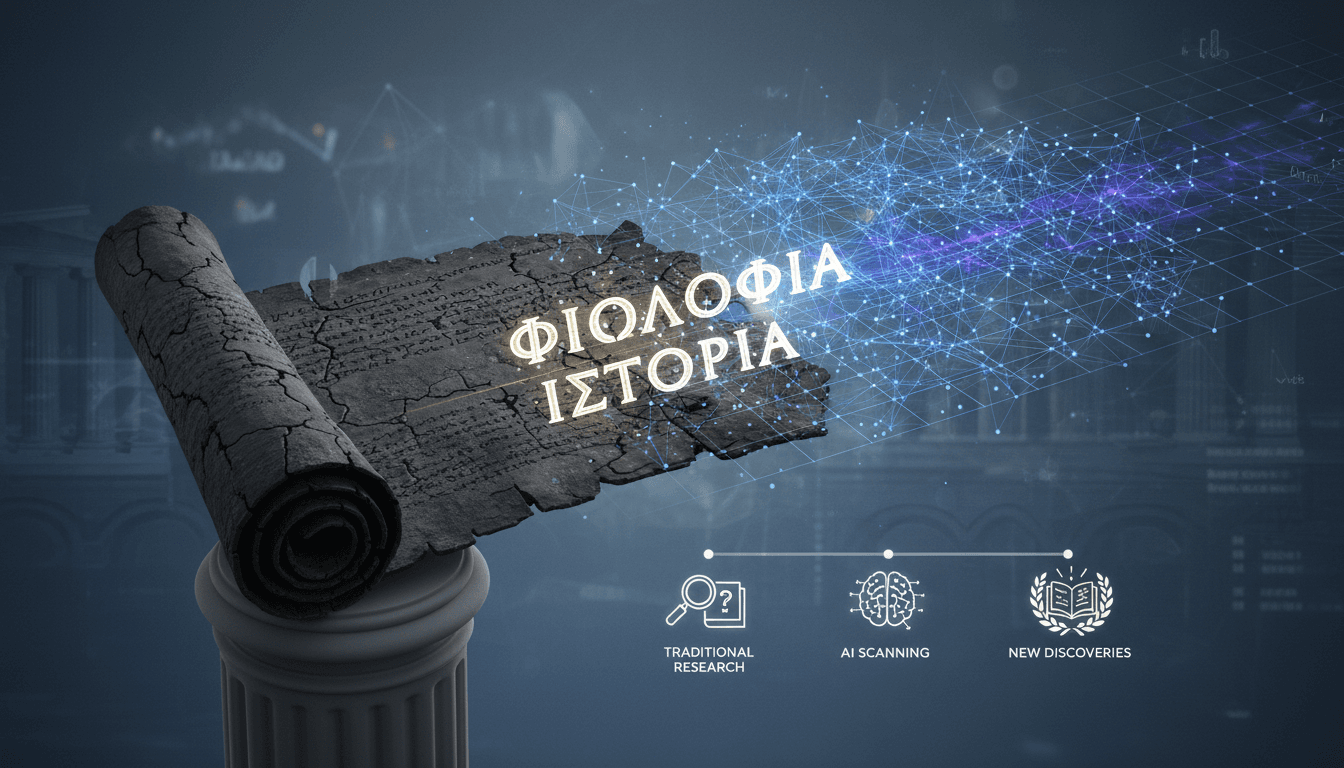
Researchers have successfully utilized artificial intelligence to read previously hidden text from a charred papyrus scroll carbonized during the eruption of Mount Vesuvius nearly 2,000 years ago. This scroll is part of the Roman library of Herculaneum and has remained unreadable until now. The AI technology enabled the team to uncover insights into ancient stoic philosophy, ethics, art, and human behavior.
This marks the first time the texts have been read in their entirety since they were buried. The researchers uncovered 20 columns of text, providing significant insights into ancient literature and thought. The scrolls date back to the second or late-third century BC, offering a glimpse into the intellectual landscape of that era.
The Context
The scrolls were carbonized during the eruption of Mount Vesuvius in 79 AD, a catastrophic event that preserved them in a unique state. The use of advanced scanning and AI software has made it possible to interpret these artifacts, which were previously deemed unreadable. This development is crucial for historians and archaeologists, as it enhances our understanding of life and literature in the first century.
The implications of this research extend beyond mere academic interest; they touch on the broader understanding of ancient cultures and philosophies. As technology continues to advance, the potential for uncovering more ancient texts and understanding historical contexts will likely expand. This breakthrough highlights the intersection of technology and humanities, showcasing how modern tools can illuminate the past.
Takeaway
The application of AI in archaeology opens new avenues for understanding ancient texts that were previously considered lost. Ongoing research may reveal additional insights into ancient philosophies and cultures, further enriching our comprehension of human history. As researchers continue to explore the capabilities of AI, we can expect more discoveries that challenge our understanding of the ancient world.
Future advancements in AI technology may lead to the discovery of more lost texts, enhancing our grasp of historical narratives. This breakthrough not only contributes to academic scholarship but also invites public interest in the rich tapestry of human thought and culture.
Consumer tech news, reviews, and buying guides for gadgets and electronics.
"TechRadar is known for comprehensive buying advice, hardware reviews, and consumer tech news targeted at mainstream audiences."
— A47 Editor
AI just helped researchers read a 2,000-year-old Mount Vesuvius scroll that’s too charred to ever be opened — as X-ray images reveal ancient stoic philosophy
Researchers have successfully utilized artificial intelligence to virtually unroll and read a charred papyrus scroll that was damaged during the eruption of Mount Vesuvius nearly 2,000 years ago, revealing insights into ancient stoic philosophy.
Discoveries, research, environment, and health innovations.
"New Scientist is a well-respected publication offering accessible science news, commentary, and expert analysis."
— A47 Editor
Lost books by ancient philosophers recovered from 'unreadable' scrolls
Scrolls from the ancient Roman library of Herculaneum, carbonised by a volcanic eruption, have been fully read for the first time using advanced scanning technology and AI software. This breakthrough allows scholars to access lost works by ancient ph...
News and features on AI from The Guardian.
"Progressive-leaning international outlet with critical AI coverage."
— A47 Editor
AI helps read papyrus scroll burnt to crisp during Vesuvius eruption
Researchers have successfully utilized artificial intelligence to virtually unroll and read a charred papyrus scroll that was damaged during the eruption of Mount Vesuvius nearly 2,000 years ago. This groundbreaking work revealed 20 columns of previo...
Reports on science policy, discoveries, and public debate in the scientific realm.
"The Guardian’s science section is known for thoughtful and critical reporting on global research, ethics, and public understanding of science."
— A47 Editor
AI helps read papyrus scroll burnt to crisp during Vesuvius eruption
Researchers have successfully utilized artificial intelligence to virtually unroll and read a charred papyrus scroll that was damaged during the eruption of Mount Vesuvius nearly 2,000 years ago. This groundbreaking work revealed 20 columns of previo...
Tech culture, product news, and critical takes on the tech industry's social impact.
"The Guardian's tech coverage blends mainstream news, critical analysis, and cultural commentary on emerging technologies and digital trends."
— A47 Editor
AI helps read papyrus scroll burnt to crisp during Vesuvius eruption
Researchers have successfully utilized artificial intelligence to virtually unwrap and read a charred papyrus scroll that was burnt during the eruption of Mount Vesuvius nearly 2,000 years ago. This groundbreaking work revealed 20 columns of previous...
News and current affairs from across Europe.
"The Guardian is known for its progressive editorial stance and in-depth analysis."
— A47 Editor
AI helps read papyrus scroll burnt to crisp during Vesuvius eruption
Researchers have successfully utilized artificial intelligence to virtually unroll and read a charred papyrus scroll that was damaged during the eruption of Mount Vesuvius nearly 2,000 years ago. This groundbreaking work revealed 20 columns of previo...